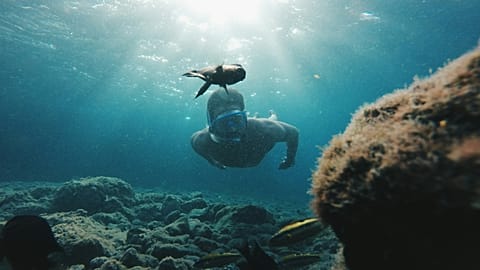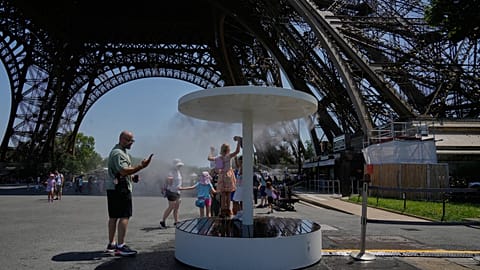
















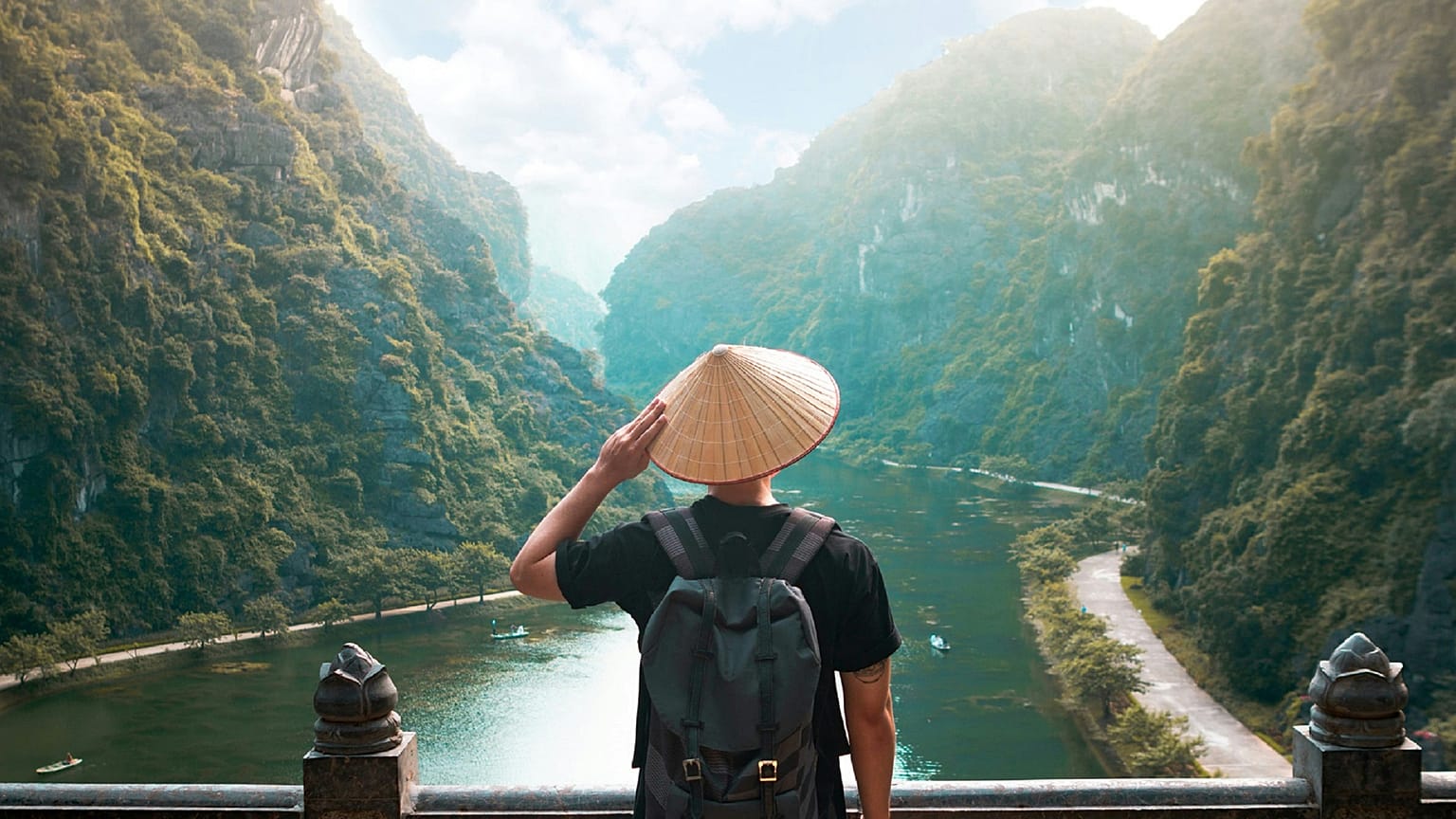













Travel platforms are rushing to praise slow travel as the must‑try trend for 2026, citing its potential environmental and psychological benefits. But can everyone afford it?
A new anglicism is doing the rounds in Spain’s tourism industry and among marketing agencies. What used to be a straightforward Sunday outing to the Monastery of Santo Domingo de Silos, the birthplace of Castilian Spanish, is now marketed as a "refuge amid the silence". Going for a walk in Sierra Cebollera, in La Rioja’s Cameros region? A natural setting where you can "lose yourself".
 ADVERTISEMENT
ADVERTISEMENT
ADVERTISEMENT
In the latest twist to promote ‘unusual’ destinations in a country that welcomed 96.8 million tourists (almost twice its population) in 2025, even Spain’s official tourism portal has jumped on the ‘slow tourism’ bandwagon, meaning travel without rushing.
Industry gurus define this new strand as a "tourism model that encourages savouring the experience, centred on consumption, through slow travel patterns".
Bodies specialising in this niche argue that a more leisurely form of tourism can be an opportunity to promote smaller or rural destinations, supporting local communities and working with them so they can grow sustainably.
From a public policy perspective, this makes sense: tourist hordes tend to flock to a handful of places and governments (with recent campaigns in France and Japan) are increasingly trying to lure them to other corners of their territory to ease overcrowding and share out the spoils of one of the world’s most lucrative sectors.
In Spain itself, half of all travellers are concentrated in just three regions – Catalonia, the Canary Islands and the Balearic Islands – despite it being the third largest country in Europe.
Social media has paved the way for this phenomenon, although at times it distorts the concept in favour of aesthetics.
Influencers such as Sonia Mota (@simplyslowtraveler) have amassed 1.1 million followers on Instagram with a feed built on neutral tones, Mediterranean clichés and plenty of money spent. A simple Google search already throws up up-and-coming travel agencies trying to jump on the bandwagon with "personalised" group experiences.
However, several essayists stress that this phenomenon, despite the amplification it enjoys today, is nothing new and carries certain sociological connotations regarding how people position themselves in relation to their role as tourists and to the local population.
The pros and cons of ‘slow’ travel
In "The Tourist: A New Theory of the Leisure Class" (1976), Dean MacCannell introduced the concept of "staged authenticity": tourist spaces build a simulacrum of genuine local life. In other words, the traveller may become aware that what they are being offered is a performance far removed from locals’ everyday routines, yet they accept it.
In "Time to transform the way we travel?", a team of academics from Australia and China highlight, on the one hand, the benefits of slow travel: the desire to reduce environmental impact; to try to squeeze out an authentic and meaningful experience (despite the contradictions pointed out by MacCannell) or to forge a bond with the place visited.
The experts also underline another of the arguments most frequently cited by advocates of slow travel: the search for wellbeing or introspection in an accelerated world. However, they raise a series of questions that need to be considered. Can you really radically change how sustainable a trip is if the tourist depends on a plane to get there?
Even if you accept giving up flights, does this type of travel end up being restricted to the wealthier parts of the planet, which can afford other forms of transport?
It is not the same, for example, to try to get around Europe by train or camper van, one of the smallest and richest continents in the world, as it is to travel in South America, where the lack of infrastructure and the vast distances make it impossible not to fly if you want to travel in a short space of time.
In response, some argue that you could simply extend your stay in a single destination instead of trying to get to several tourist hotspots. That is the case with platforms such as Tintablanca, a travel-focused publishing house that argues for choosing a single destination and “squeezing it to the full”.
"It is about renting a small flat in Rome’s Trastevere or in the Marais in Paris and living the local routine," they write.
But can a tourist on a low income and with few days’ holiday really afford, as this publication romanticises, "to go down to the same bakery every morning, learn how to greet the waiter in the corner café in their language or memorise the exact sound of the bells of the nearest church"?
With an average of 22 days of holiday a year (14.3 of which are used for travel) and a median salary in Spain of 24,500 euros in 2024, the debate is wide open.