

















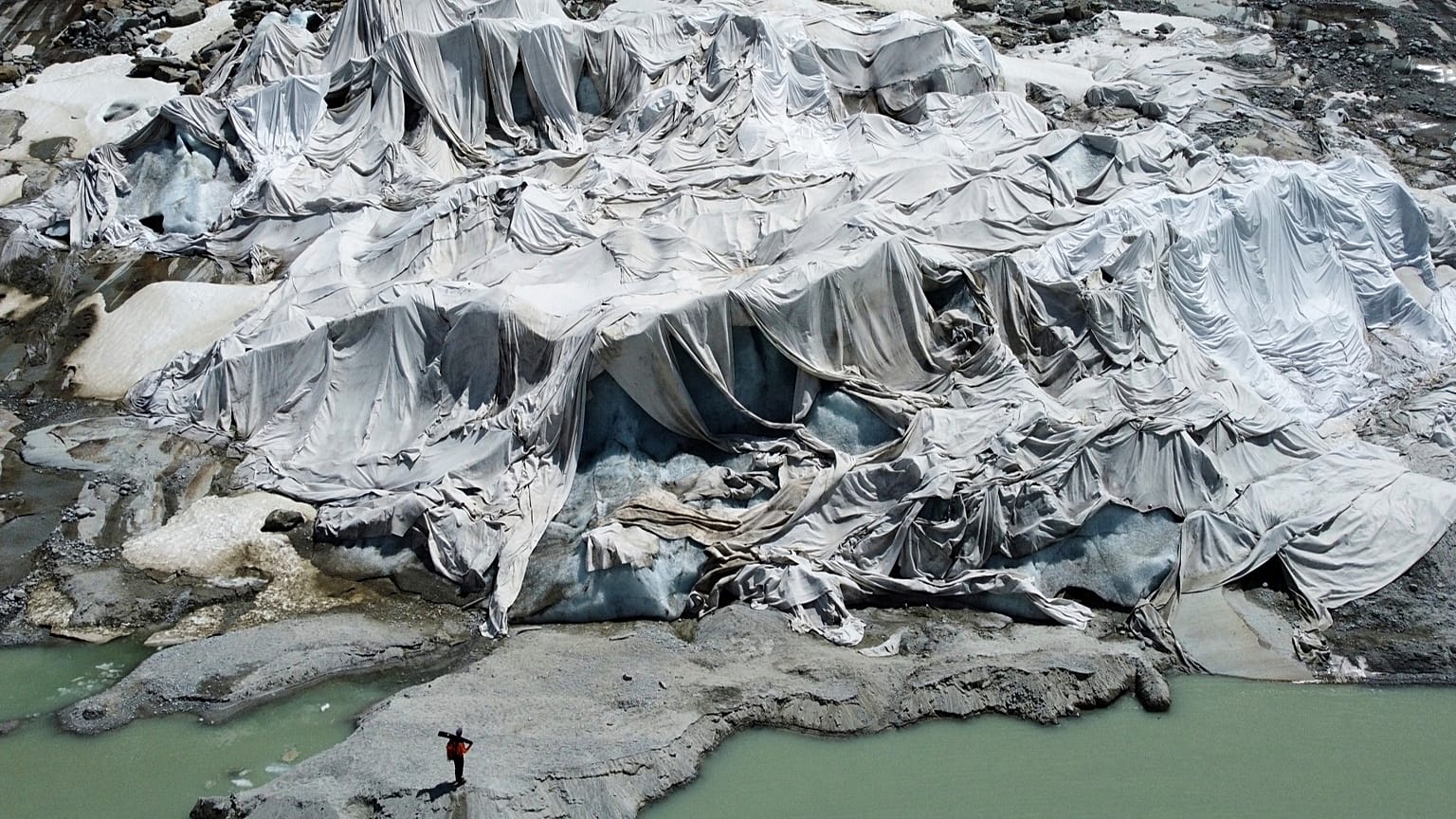














All snow and ice accumulated over the past winter is expected to have melted by Monday. Over the past century, this tipping point usually only arrives in mid-August on average.
The snow and ice accumulated by Swiss glaciers over the winter is expected to have completely melted away by Monday, Glacier Monitoring in Switzerland (GLAMOS) reported. The drastic loss is due to the heatwave that has swept over Europe.
 ADVERTISEMENT
ADVERTISEMENT
ADVERTISEMENT
From that day onwards, every additional day of melting between now and October will shrink the size of the glacier.
The tipping point—known as "glacier loss day"—has come significantly earlier than usual. Since data collection started over two decades ago, only once has the tipping point arrived even earlier, when it came on June 26 in 2022.
This century, the tipping point usually arrives on average in mid-August.
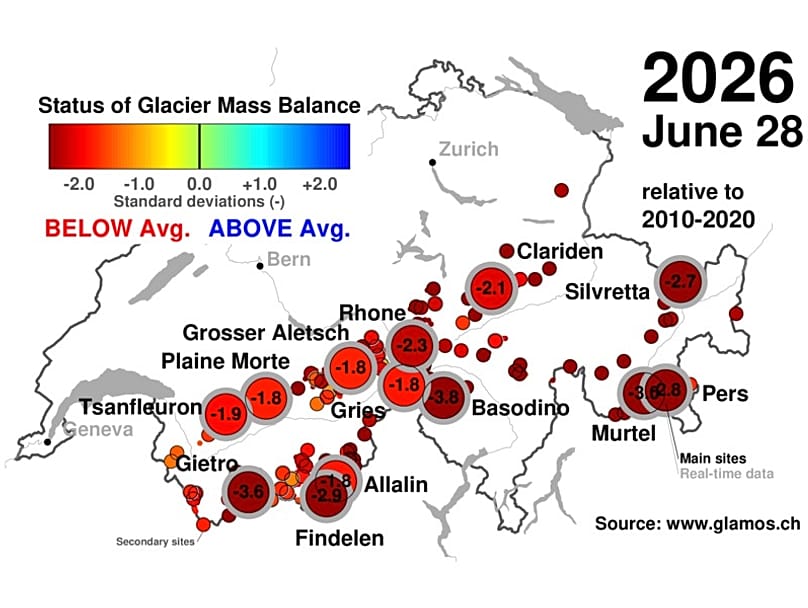
"We're just seeing enormous ablation, ice melt rates and snow melt rates all over the Alps," GLAMOS chief Matthias Huss said on Friday.
Huss warned the nation's glaciers are in a bad state and shrinking at a unprecedented rate, accelerated by he ongoing heatwave.
"We are three months too early compared to a healthy state," he said.
While glaciers in the Swiss Alps began retreating about 170 years ago, the melting has been relatively modest until recent decades.
The accelerated ice and snow loss is the result of the rising temperatures Europe has faced, as well as less snowfall in the winter.
Glacier melting accelerates amid scorching temperatures in Europe
This year, Swiss glaciers received around 25% less fresh snowfall than the average between 2010 and 2020, Huss said.
In addition, warmer-than-average temperatures in May and June, including an extraordinary heatwave, caused the snow to disappear earlier than usual, exposing the darker glacier ice beneath.
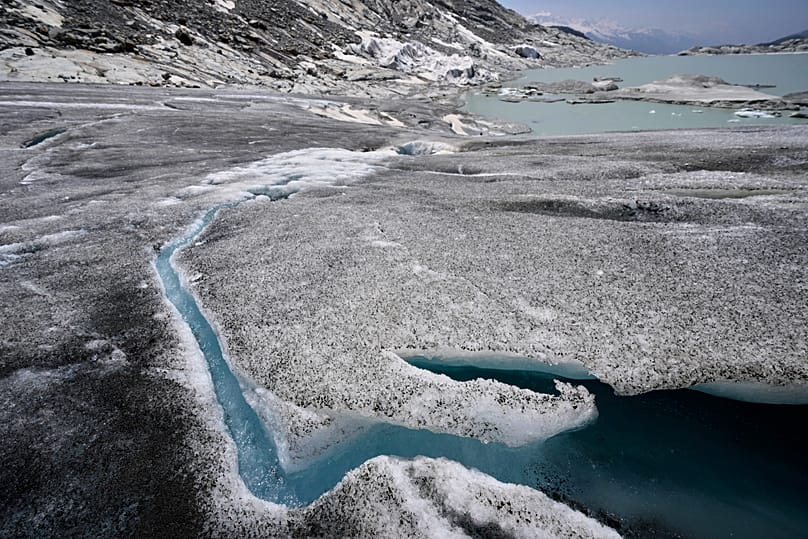
Once the reflective white snow coverage is gone from the surface of the glacier, the grey ice underneath is exposed. This ice absorbs solar radiation more quickly, further accelerating the melting process.
"If warming continues as it did over the last decades, by 2100 we will only be left with some little remnants of ice," Huss said.
Record-breaking temperatures have topped 40°C across parts of Europe this week, causing havoc across the continent, piling pressure on hospitals and first responders, and resulting in several deaths.
The extreme heat currently scorching Europe would have been almost impossible just a few decades ago – as scientists warn that climate change is “running rampant”.