




























Climate puzzle: a new study probes the only place on Earth that has cooled in recent years, linking the 'Cold Blob' mainly to the Atlantic Meridional Overturning Circulation, AMOC.
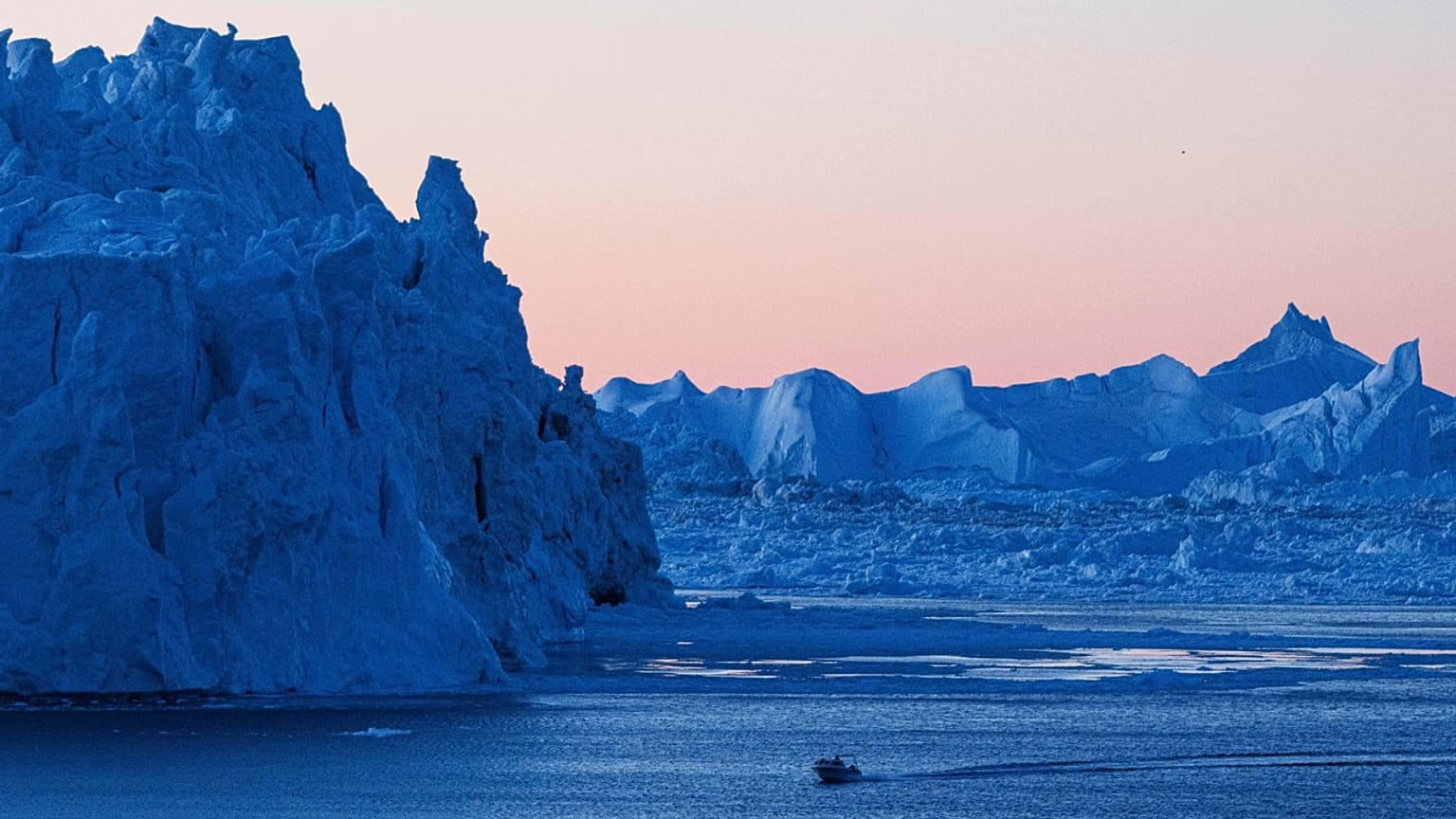
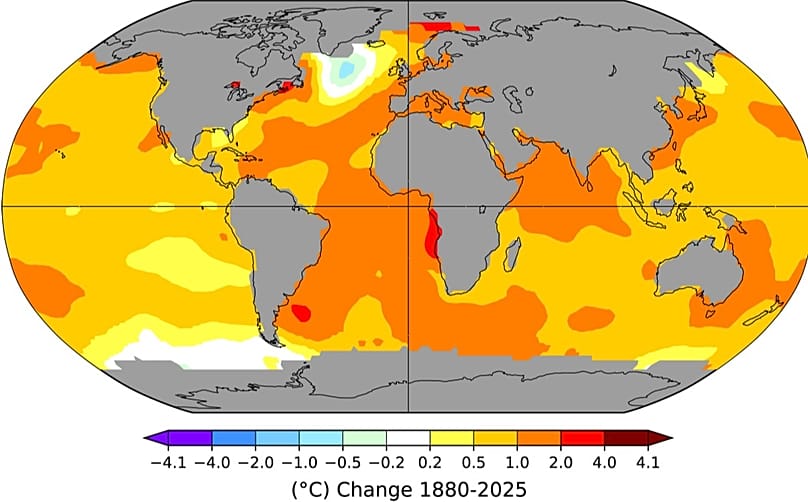
In the North Atlantic south of Greenland lies the so-called "Cold Blob", a mysterious cold patch that is regarded as the only place on Earth where it has actually been getting colder over recent decades.
 ADVERTISEMENT
ADVERTISEMENT
ADVERTISEMENT
A team led by Prof. Dr Stefan Rahmstorf from the Potsdam Institute for Climate Impact Research (PIK) has now published a new study on the "warming hole" in the Atlantic Ocean in the "Geophysical Research Letters (source in German)".
On the basis of an analysis of temperature data sets from measurements in the North Atlantic, the research team concludes that it is primarily changing heat transport in the ocean that is causing the "Cold Blob".
The scientists write: "This is cause for concern, since a further weakening of Atlantic heat transport in the context of future climate change could have severe impacts on the climate and weather conditions in Europe and other parts of the world."
Last February, the Nordic Council - which includes Denmark, Iceland, Norway, Sweden and Finland, with Åland, the Faroe Islands and Greenland as associate members - warned that winter temperatures in Iceland could fall to as low as minus 45 degrees Celsius. The island would then be completely locked in by ice - for the first time since the age of the Vikings.
Why AMOC is so important
For a long time, climate scientists have been worried about the weakening of the so-called AMOC. AMOC stands for "Atlantic Meridional Overturning Circulation" (atlantische meridionale Umwälzströmung), a vast system of ocean currents. It transports warm water northwards along the surface of the Atlantic and cold water southwards along the ocean floor. It is one of the most important heat-distribution systems on Earth.
The study from the Potsdam Institute for Climate Impact Research states: "Our analysis supports the interpretation of the observed 'Cold Blob' as a sign of a weakening AMOC, which makes a major contribution to lateral heat transport into this subpolar gyre region."
Previous studies of past episodes of dramatic cooling in Europe over the last 100,000 years suggest that melting ice sheets could weaken the AMOC because of changes in seawater salinity and temperature.
Freshwater reduces the salinity - and thus the density - of water at the ocean surface. That means less surface water sinks, which could slow the current.
Is the world approaching the tipping point?
For years, research teams have been trying to determine when the tipping point of the Atlantic Meridional Overturning Circulation (AMOC) might be reached - a point that, in the midst of global warming, could trigger dramatically cold winters in northern Europe.
If the AMOC were to collapse, sea levels on the US east coast would rise rapidly, since the current normally drives water away from the land. Storms in the Atlantic would increase in intensity. But for now, forecasts remain difficult.
Around 12,500 years ago - during the last cold period, known as the Dryas - it took about 100 years for the AMOC to become fully functional again. At that time, temperatures in Greenland needed around 40 years to recover from the extreme glacial conditions.
The authors of the latest study speak of "early warning signals" that ocean circulation is approaching a tipping point, as well as of "clear evidence of a weakening of the AMOC". And they write that "this risk requires urgent attention from policy-makers".