


















Iran warns of imminent retaliation after fresh Israeli strikes kill five in southern Lebanon, as Trump publicly slams Netanyahu over the timing.
Iran's Supreme National Security Council warned on Sunday that a response was "imminent" following Israeli strikes on Lebanon. "The response of the fighters of Islam is imminent," it said in a statement. "Lebanon is our life and violation of the red lines of the Islamic Republic will not be tolerated." Iran's state broadcaster subsequently reported that flights at airports in the west of the country had been cancelled until further notice.
 ADVERTISEMENT
ADVERTISEMENT
ADVERTISEMENT
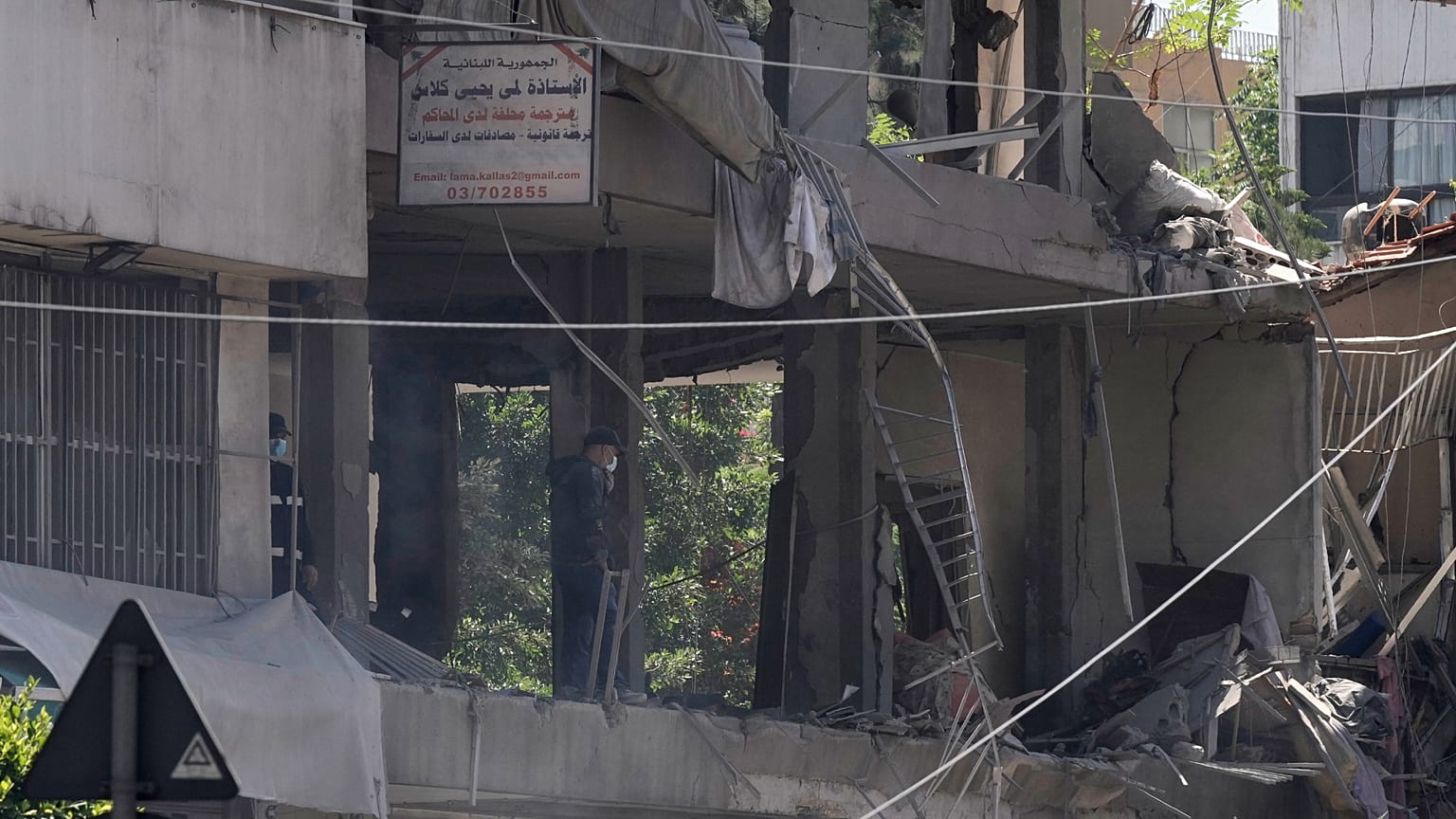
The Israeli military had carried out fresh strikes on Dahiyeh, a southern suburb of Beirut, hitting the Ghobeiry neighbourhood, Lebanon's official National News Agency (NNA) reported.
Plumes of smoke were seen rising over the Lebanese capital following the attacks. The Israel Defense Forces (IDF) described the strikes as "precise," saying they targeted a Hezbollah command centre used to coordinate what it called "terrorist attacks against Israeli civilians and IDF soldiers" operating in southern Lebanon.
"All targets belonged to the Hezbollah terrorist organisation, in response to Hezbollah's firing toward Israeli territory," the office of Israeli Prime Minister Benjamin Netanyahu said in a statement on Sunday. The IDF separately said in a social media post that steps had been taken prior to the strikes to "mitigate harm to civilians."
US President Donald Trump responded to the Beirut strikes on Sunday, expressing frustration at the timing. He acknowledged Israel's right to self-defence but argued the attack it was responding to was trivial and should not have taken place. Calling for all sides, including Hezbollah, to stand down, Trump said the strikes risk derailing a peace process he described as closer than ever to completion. "This could be the beginning of a long and beautiful peace — Let's not blow it!" he wrote on Truth Social.
A separate IDF post said Hezbollah projectiles had landed near the communities of Shomera and Shlomi, adding that two further projectiles had crossed into Israeli territory over the weekend as part of what it described as ongoing attempts to harm Israeli civilians.
Sunday's strikes marked the second wave of Israeli attacks this weekend. On Saturday, at least five people were killed across southern Lebanon: one in an air strike on the town of Maarakeh in the Tyre district; Ali Badie, the mayor of the Ar-Rihan municipality, in the Jezzine district; and three others in the towns of Deir al-Zahrani and Kafr Reman in the Nabatieh district.
Also on Saturday, the Israeli military had ordered residents of 24 Lebanese towns and villages to evacuate their homes immediately.
Lebanese president warns of existential choice
Lebanese President Joseph Aoun said on Saturday that the country stood at a "fateful juncture", facing a choice between becoming "a sovereign state that monopolises arms and upholds the rule of law" or remaining "hostage to the logic of militias and the culture of exclusion."
Speaking on the anniversary of the 1978 assassination of former minister Tony Suleiman Frangieh by armed factions, Aoun stressed that national unity was an "existential necessity." "We are at a moment that tolerates neither sectarian luxury nor regional tug-of-war," he said.
The continuing escalation between Israel and Hezbollah also threatens to derail a potential deal between Washington and Tehran. Iran — Hezbollah's principal backer — has insisted that any agreement with the United States must include a halt to Israeli strikes in Lebanon.
The stakes were underlined last week, when Iran launched retaliatory strikes on Israel following an Israeli attack on the Beirut suburbs.
Deal could ease regional tensions
Mediator Oman and US President Donald Trump have both said that Iran and the United States are closer to a deal than ever, with a signing potentially imminent.
While the agreement would not resolve the most contentious issues — such as Iran's nuclear programme or its frozen assets — it would establish a 60-day framework for technical discussions on those matters, which could lay the groundwork for de-escalation in Lebanon.