




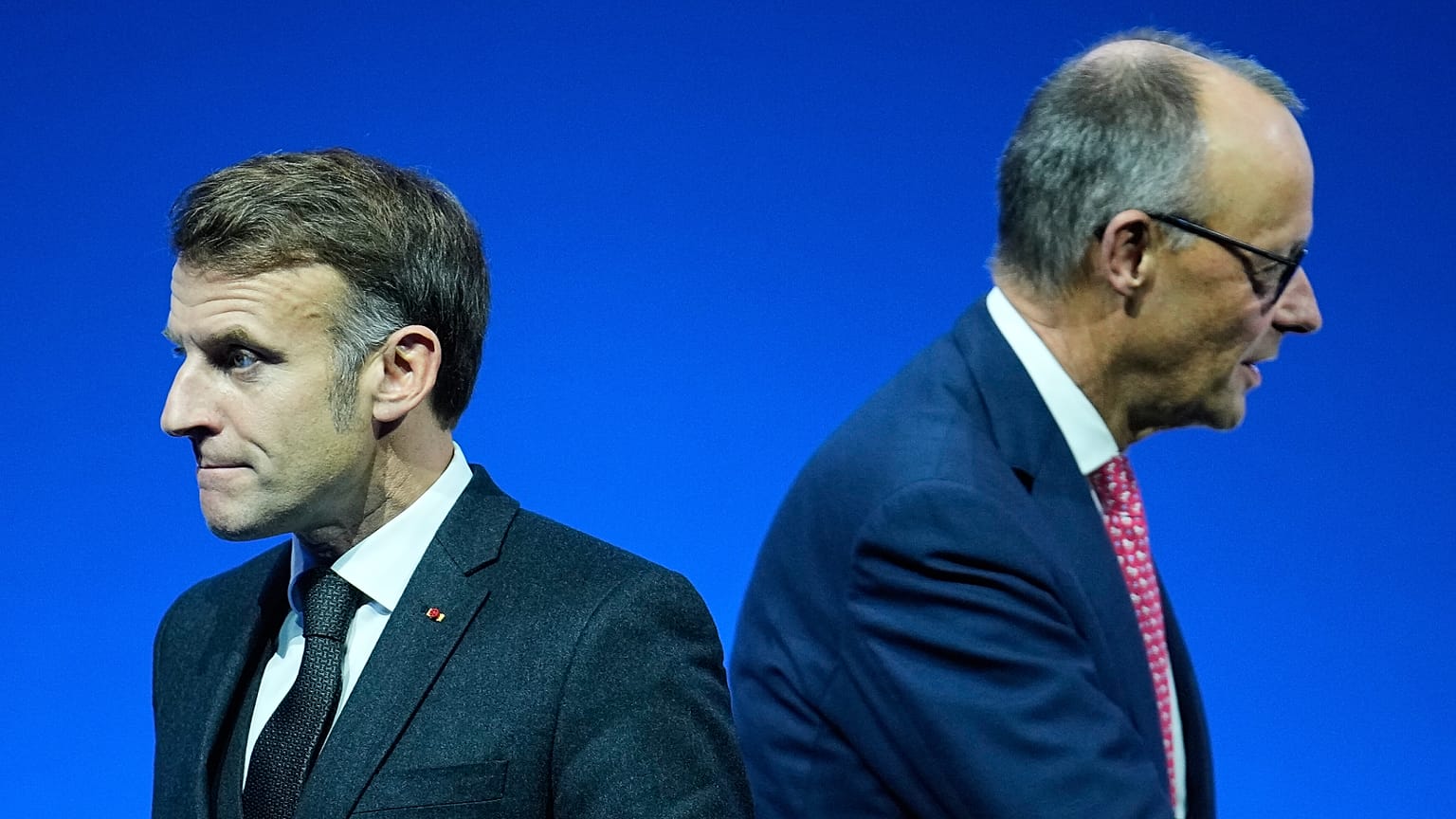













The project was seen as a key test of European efforts to work more closely on defence as they seek to present a united front in the face of a hostile Russia at a time of souring ties with the United States.
France and Germany said on Monday they had agreed to abandon a joint fighter jet programme due to disagreements between the companies involved, in a blow to European efforts to boost defence cooperation.
 ADVERTISEMENT
ADVERTISEMENT
ADVERTISEMENT
The Future Combat Air System (FCAS) programme was launched in 2017 to replace France's Rafale jets and the Eurofighter planes used by Germany and Spain.
It was to be complemented by drones, sensors and digital communications systems designed to operate together in a networked battlespace.
The project was seen as a key test of European efforts to work more closely on defence as they seek to present a united front in the face of a hostile Russia at a time of souring ties with the United States.
But the multi-billion-dollar programme was beset by disagreements between the firms involved: France's Dassault Aviation and Airbus, which represents Germany and Spain.
The project was long regarded as one of Europe’s most important industrial and security policy undertakings. But for years it was slowed by conflicts between the companies involved, and the dispute over leadership, workshare and intellectual property rights ultimately proved insoluble. While Dassault insisted on taking the lead on the fighter aircraft, Airbus refused to accept the role of junior partner.
Further complications arose from differing military requirements. France insisted on a carrier-capable, nuclear-armed aircraft for its armed forces, something Germany saw no need for. Proposals to develop two different aircraft variants within the programme failed to win joint approval.
The announcement comes despite calls for Europe to integrate its fragmented militaries more closely as geopolitical turmoil worsens.
Russia's war against Ukraine is in its fifth year, while European countries are increasingly worried about US security commitments to the continent under President Donald Trump.
Work on the Combat Cloud is set to continue
Although the joint jet has been scrapped, the FCAS project is not being wound up entirely. According to government sources, development of the so-called Combat Cloud is to go ahead.
This is a digital network intended to link aircraft, drones and other weapons systems.
The French and German defence ministries are set to draw up a plan for defence cooperation "focused on a few realistic and relevant projects" at a forthcoming meeting, the official added.
For Airbus, the decision opens the door to the search for new partners. Industry insiders cite, among others, Swedish defence group Saab and the British-Japanese-Italian fighter jet programme as potential cooperation options.
Dassault, for its part, is likely to continue developing the next generation of the Rafale on its own.
With the failure of the joint combat aircraft, one of the most ambitious European armaments ventures of recent years comes to an end.
At the same time, the decision marks a change of course: instead of a single shared aircraft, Berlin and Paris now appear set to pursue separate national designs under a common technological umbrella.
Merz had said earlier this year that he would "do everything in my power, and fight until the very last moment, to get joint European projects off the ground here, and above all German-French projects".
Speaking in April after talks with Merz, Macron had denied the project was dead.
"We are continuing to move forward. Europe has never needed unity, greater independence and greater sovereignty more than it does now," he said.