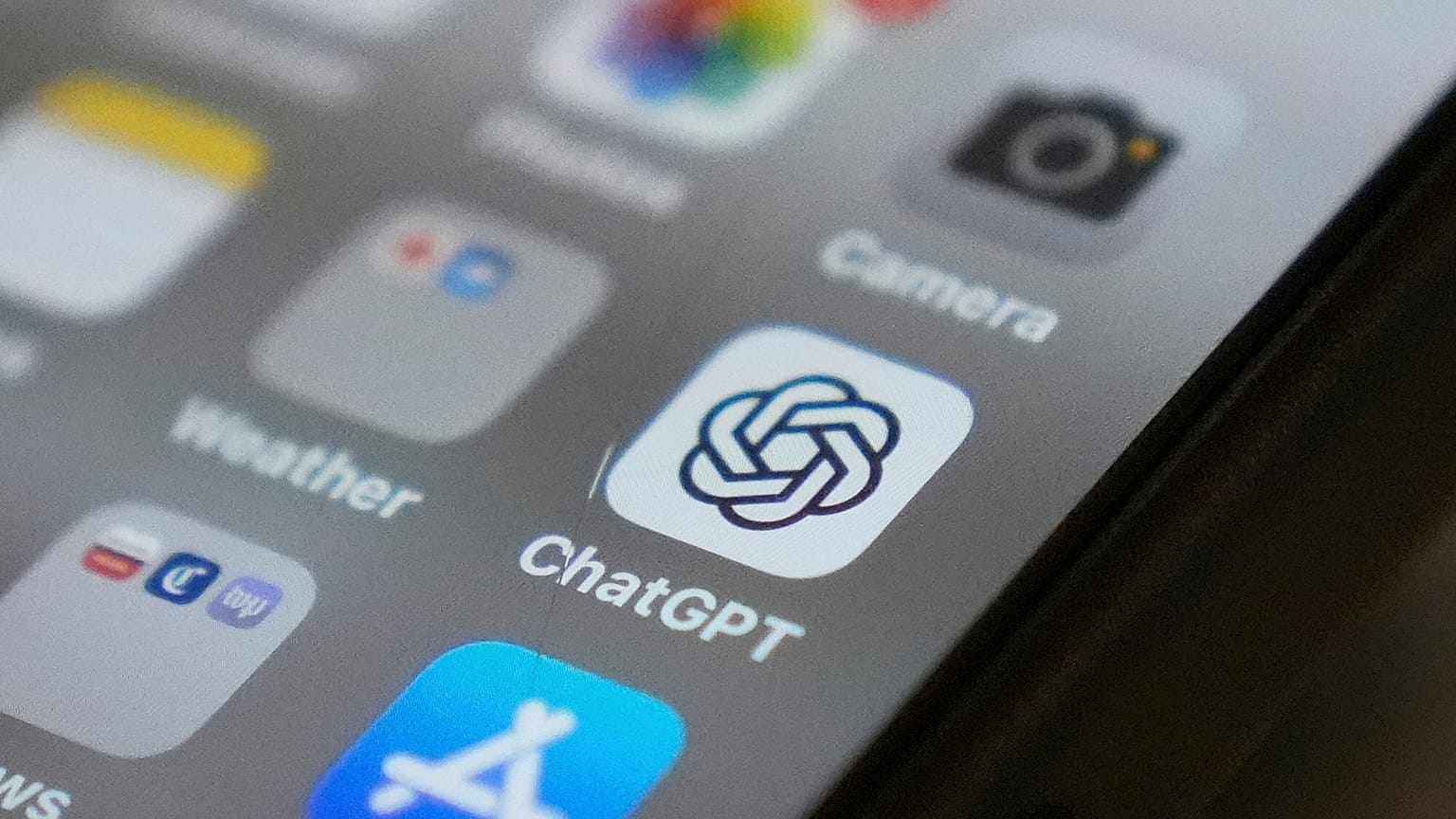













OpenAI filed preliminary paperwork that would open the door to it becoming a publicly traded company, the third in a powerhouse trio of artificial intelligence companies racing to Wall Street debuts.
OpenAI, the company behind ChatGPT, has filed confidential preliminary paperwork with the US Securities and Exchange Commission (SEC), taking a key step towards a potential stock market listing.
 ADVERTISEMENT
ADVERTISEMENT
ADVERTISEMENT
The San Francisco-based artificial intelligence company announced the filing on Monday, becoming the latest major AI firm to move closer to an initial public offering (IPO).
"We expect it to leak so we're just announcing it," OpenAI said in a statement. "We have not decided on timing yet; it may be a while because there are things we want to do that are likely easier as a private company. But it's a complicated set of tradeoffs, and this gives us the option to go public sooner if that ends up being best."
The move follows rival Anthropic's announcement on 1 June that it is also pursuing an IPO. Both companies join Elon Musk's SpaceX, which has begun an IPO roadshow while positioning itself as an AI-focused space company.
OpenAI chief executive Sam Altman first raised the prospect of an IPO last year, describing it as the company's "most likely path" given its scale and its need for significant capital to develop advanced AI systems.
Founded in 2015 as a non-profit organisation focused on developing AI for the public good, OpenAI has since evolved into a company valued at $852 billion (€730bn).
The filing comes at what eMarketer analyst Nate Elliott described as a "precarious moment" for the company, as OpenAI faces growing competition from Google and Anthropic.
"But OpenAI doesn't have a lot of other places to look for the enormous capital required to support its costs," Elliott said.
A major step towards a public listing came last year when OpenAI restructured its business and converted into a public benefit corporation while remaining under the control of its non-profit parent organisation.
The company also removed a significant legal hurdle last month after defeating Musk in a federal jury trial. Musk, a co-founder and early donor, had sought to remove Altman from leadership and reverse OpenAI's transition to a for-profit model. A judge dismissed the case after jurors found Musk had filed the lawsuit too late.
Why OpenAI needs fresh capital
OpenAI has not publicly disclosed its revenues or provided a timeline for profitability. Much like Anthropic and SpaceX, the company has been losing more money than it makes, as it continues to spend heavily on infrastructure and development while competing in an increasingly crowded AI market. Its main rivals include Anthropic's Claude chatbot and Google's Gemini assistant.
Speaking to The Associated Press in April, OpenAI chief financial officer Sarah Friar said the company was already operating with the discipline expected of a listed company, including measuring revenue according to standards required for SEC reporting.
"I want us to be ready," Friar said. "I think it's good to be able to tap the public markets. They're much bigger than the private markets."
She added that OpenAI's current valuation would place it among the 15 largest companies in the S&P 500 index.
"There is a credentialising moment of being a public company," Friar said. "At that point, people are checking your balance sheet, the SEC is governing you and so on."
In a separate statement released on Monday, Altman outlined OpenAI's long-term ambitions, including developing an automated AI researcher, accelerating economic growth and providing "everyone on Earth a personal AGI" — artificial general intelligence capable of outperforming humans across many tasks.
Altman said OpenAI had progressed from pure research to commercial products and was now entering a third phase focused on the broad distribution of AI-driven benefits.
"We're working to ensure the gains are widely shared," he said. "Everyone should have an opportunity for a meaningful share in the prosperity AI creates."
The comments came days after Altman met US Senator Bernie Sanders, who has proposed giving the public a 50% ownership stake in AI companies such as OpenAI. They also follow remarks by US President Donald Trump supporting the idea of giving the public a stake in the growth of the AI industry.