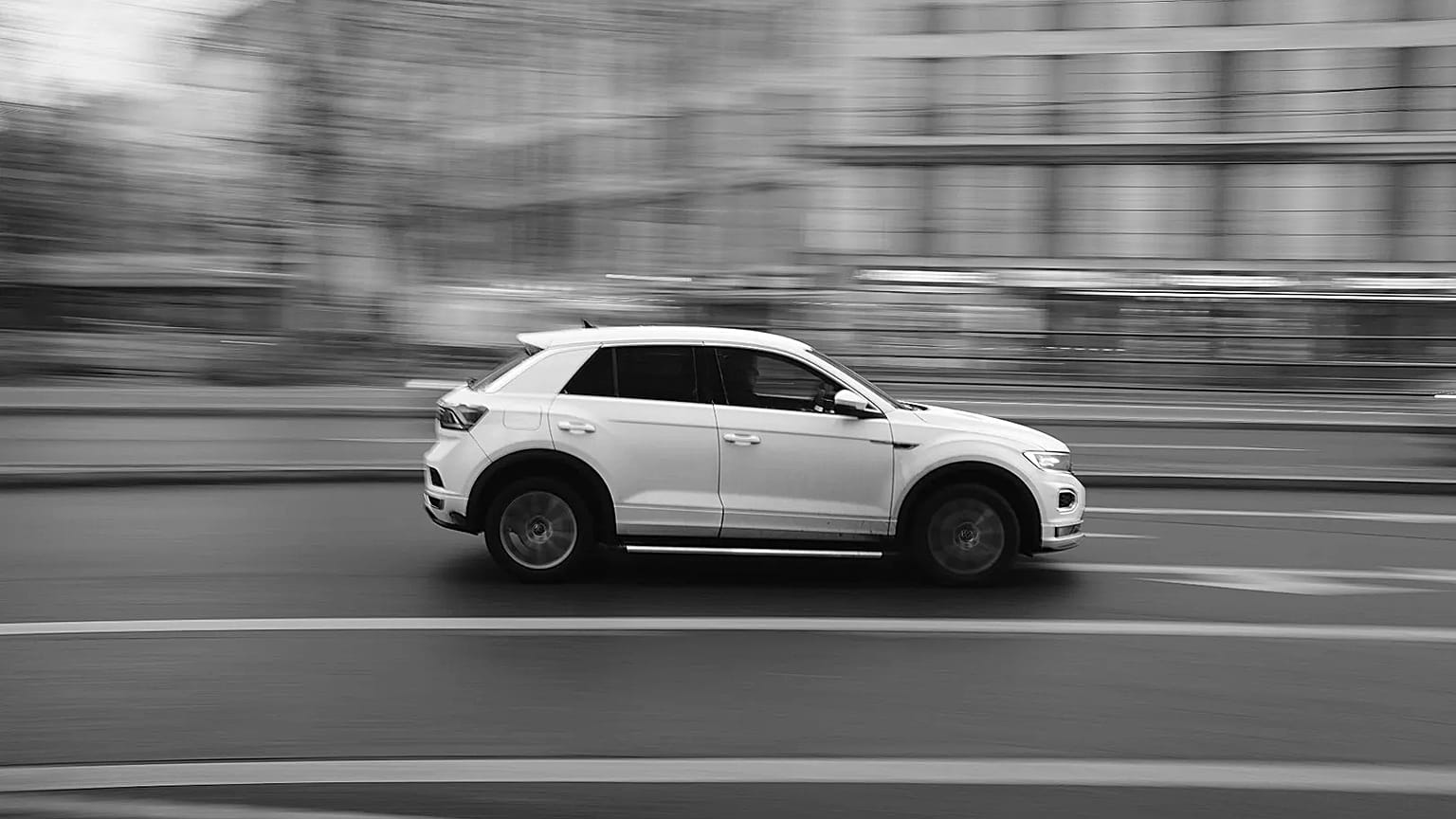













Already part of the cityscape, in San Francisco and Beijing, driverless taxis could soon be carrying passengers in Munich if regulators give their approval.
In a decision originally announced in Taipei, ridesharing giant Uber is planning to deploy autonomous robotaxis in Munich together with the AI company Autobrains.
 ADVERTISEMENT
ADVERTISEMENT
ADVERTISEMENT
"Subject to regulatory approval, Munich will serve as the first deployment city for the robotaxi programme," the company said in a statement.
This could make Munich the first German city where passengers can order autonomous robotaxis via the Uber app.
Uber justified its choice of Munich with reference to the city's role as a European automotive centre, its dense urban traffic and Germany's regulatory framework for autonomous driving. The aim is to develop a model that can later be used in other cities and on different vehicle platforms.
In contrast to many earlier robotaxi projects, the technology used in Uber's testing is not intended to be tailored to specially developed vehicles.

Instead, the partners are opting for a so-called open approach that is designed to be compatible with various carmakers. Industry observers see this as an attempt to reduce the high costs of autonomous fleets and, ideally, to scale up the technology more quickly and roll it out to other cities.
The companies have so far not disclosed which manufacturers are involved, how large the fleet will be, or when the first passengers could actually be carried.
What lies behind 'agentic AI'?
At the heart of the project is the driving software developed by the Israeli company Autobrains.
Unlike many of its competitors, Autobrains says it does not rely on a single large AI model that handles all driving tasks.
"Autonomous driving will not be scalable if you rely on a single model to solve every driving scenario," explained founder Igal Raichelgauz.
Instead, the driving task is divided among several specialised AI agents that assess different traffic situations and make decisions in real time. This is intended to make the system more robust when dealing with complex and unpredictable situations. The approach is known as agentic AI.
Autobrains, which has been working on solutions for driver-assistance systems since 2018, argues that multiple specialised systems can handle uncertainty better than a monolithic approach.
The vehicles are to run on Nvidia's DRIVE Hyperion platform, a computing and sensor architecture for Level 4 autonomous vehicles. This level of automation in principle allows driverless journeys within defined operating areas.
Uber's partnership strategy
For Uber, the Munich project is part of a broader strategy. The company now follows a platform model and no longer develops autonomous driving systems itself; instead, it works with a range of technology partners and integrates their vehicles into its existing ride-hailing network.
In recent months, Uber has already announced similar partnerships with other providers of autonomous driving technologies. Together with Nvidia, the company is planning in the long term to deploy autonomous fleets in several dozen cities worldwide.
Nvidia's vice-president for automotive, Ali Kani, told Euronews in January that partially autonomous driving would arrive as early as this year.
"We have to move as fast as regulation allows. And I believe it is opening up," Kani said.
Competition in this market is intensifying at the same time. In the US, Google's sister company Waymo already operates commercial robotaxi services in several major cities. Tesla, Mobileye and various Chinese providers are also working on autonomous fleet solutions. Tesla CEO Elon Musk has predicted that self-driving cars could dominate road traffic in as little as five years.
Europe's robotaxi market is only just getting started
A commercial robotaxi service would be a significant step for Germany.
While autonomous vehicles are already part of everyday life in cities such as San Francisco, Phoenix and Beijing, Europe is still at an early stage when it comes to large-scale deployment. Initially, the introduction of autonomous taxis in Madrid was planned from 2026.
The companies are therefore presenting Munich as a potential springboard for a broader European expansion. Whether this will actually lead to a regular robotaxi service will depend not only on the technology, but also on regulatory approval, safety certification and the economic viability of the model.