




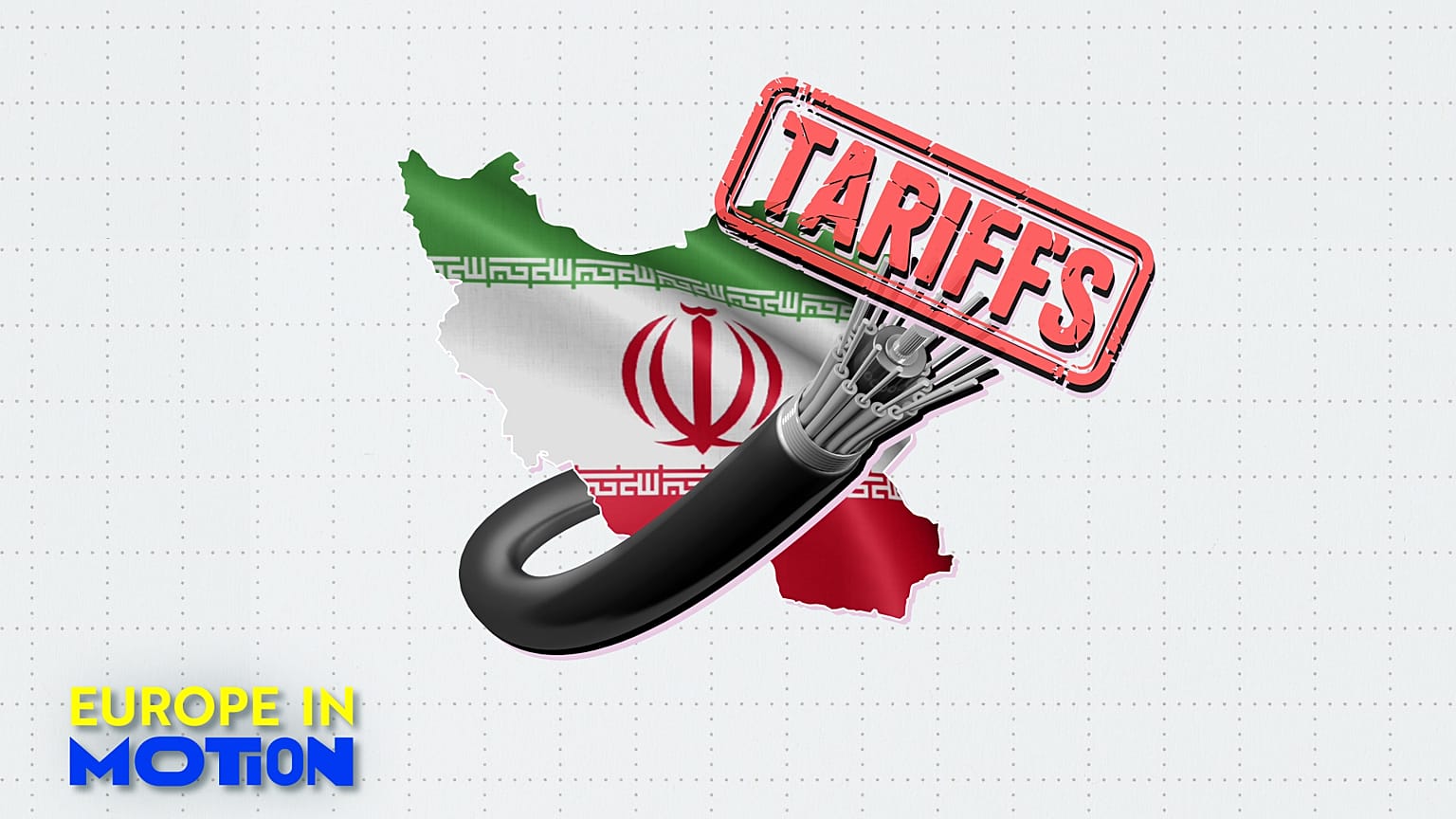














The move could raise connectivity costs and create greater digital vulnerability for Europe, but some experts argue that the continent has enough backup bandwidth to survive without access to the cables in the Strait of Hormuz.
In a new attempt to put the West under economic pressure, Iran is floating the idea of imposing "access fees" on undersea internet cables crossing the Strait of Hormuz, a move that could further strain global trade following the passage's blockage.
 ADVERTISEMENT
ADVERTISEMENT
ADVERTISEMENT
The plan was first laid out by Iran's news agency Tasnim, which is linked to Iran's Islamic Revolutionary Guard Corps (IRGC).
Questions have arisen over who exactly would have to pay such tariffs, and which kinds of services would be targeted.
From a logistical point of view, firms operating cables under the Strait would be forced to pay an "access fee" to Iran, while, from a regulatory perspective, it would require tech giants like Google, Meta, Microsoft and Amazon to comply with what were vaguely defined as "the laws of Iran".
Thirdly, the Islamic Republic could also take over cable maintenance in the Strait of Hormuz and charge more fees accordingly.
The moves could generate up to €13 billion in revenues for the country.
From the Aegean to Spain: How is Europe involved?
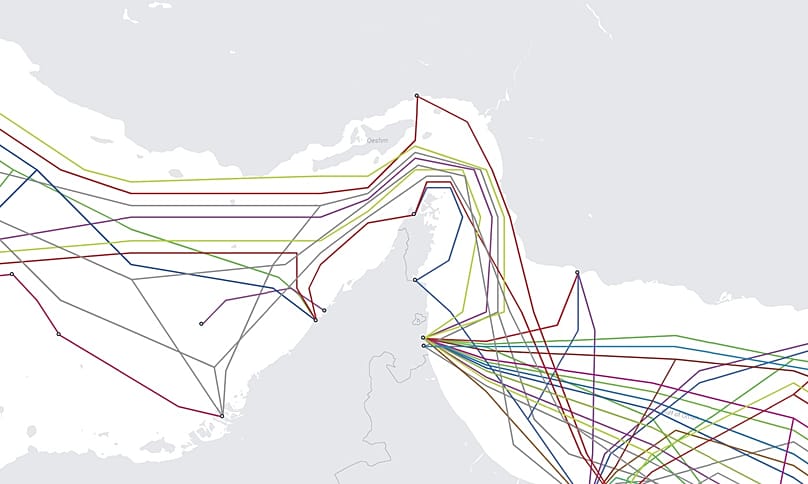
European firms from countries like Italy, Greece, and the UK are part of the managing consortium of at least four cables passing under Hormuz, according to the Submarine Telecoms Forum.
Two of these cables are particularly important, as they connect Asia to Europe.
The first one is the Asia Africa Europe-1 (AAE1), whose owners include Italy's Retelit and Greece's OTEGLOBE. It reaches landing points in Crete, Bari and Marseille.
The second, PEARLS/2Africa, part of the world's largest subsea cable system, passes beneath Sicily before ending up in Genoa, Marseille and Barcelona.
How much of a threat are the fees to Europe?
Currently, there is no consensus among experts surrounding the threats floated by Iran.
Some claim that if the country actually imposed fees, consequences would likely extend far beyond telecom infrastructure, affecting global trade, maritime law, military strategy, internet governance, and great-power politics.
"European financial institutions, cloud providers, telecommunications firms, and multinational corporations rely heavily on low-latency submarine cable networks for banking transactions, digital services, energy trading, and industrial operations," Meredith Primrose Jones, head of geopolitics and security for risk and compliance advisory firm Leidra, told Europe in Motion.
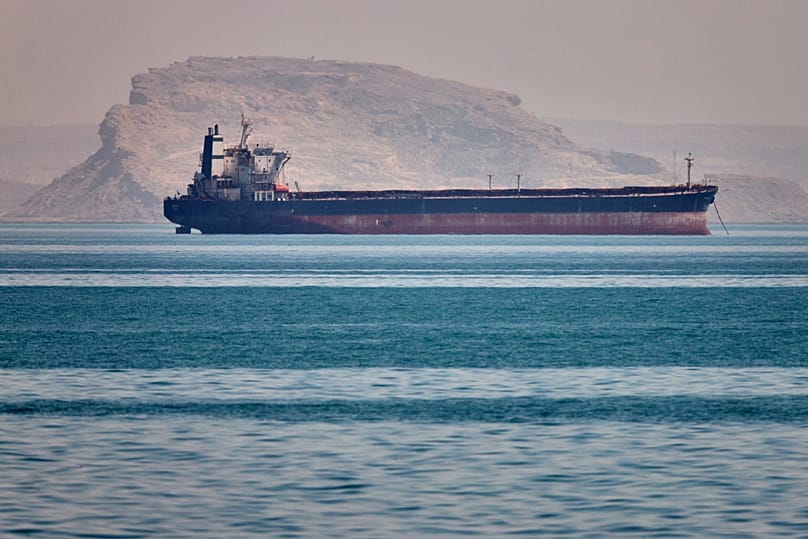
"Any increase in political risk around the Strait of Hormuz could raise connectivity costs, delay infrastructure projects, and create greater vulnerability for Europe's digital economy at a time when the region is already focused on strengthening technological resilience and strategic autonomy," she said.
On the other hand, threats of tariff disruption — or even physical sabotage to the cable — are largely being downplayed by other experts.
"Bandwidth traversing the Strait of Hormuz accounts for less than 1% of international bandwidth globally", the International Cable Protection Committee (ICPC) told Europe in Motion.
The IPCC says the impact would be minimal even in the case of cable failure, thanks to backup systems connected to the Gulf region.
"Many cable systems serving the Gulf region utilise branching architectures connected to larger international trunk systems," the committee said. "This network design provides additional operational flexibility and resilience and helps minimise the impact of individual cable faults."
It explained that submarine cable faults are not uncommon operational events.
"Approximately 150–200 submarine telecommunications cable faults occur globally each year, with around 70–80% caused by accidental human activity such as commercial fishing activity and ships’ anchors, rather than sabotage," the IPCC said.
Does anyone else charge for submarine cable access?
Iran's plan is not without precedent: Egypt already charges for underwater cable access, and it brings in significant revenue for the country's Telecom business model.
A study conducted by submarinenetworks.com over the 2000-2019 period estimated the cost for each underwater cable operator to be around €1.5 million for landing rights, maintenance, and operational support.
Egypt has been described as a global telecom chokepoint due to the huge amount of cables passing through it.
The key difference with Hormuz is that the cables crossing Egypt physically pass through its territory and rely on its terrestrial infrastructure.

In Hormuz, by contrast, most cables don't enter Iranian territory, meaning Tehran would have little legal basis for charging access.
The United Nations' Convention on the Law of the Sea (UNCLOS) protects maritime flows and international navigation in this sense.
Iran signed it in 1982, but then never ratified it.
"A unilateral fee system targeting global cable infrastructure would therefore be widely interpreted as an overreach of coastal state authority under UNCLOS principles," Jones noted.