The IMF is cutting its global growth forecast, preparing €42.9bn in emergency aid and warning that 45 million people face food insecurity.
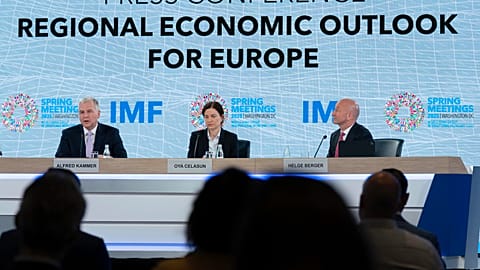
The International Monetary Fund will downgrade its global growth forecasts due to the Middle East war, managing director Kristalina Georgieva said Thursday, warning of lasting economic damage even in the most optimistic scenario.
 ADVERTISEMENT
ADVERTISEMENT
ADVERTISEMENT
"Even in a best case, there will be no neat and clean return to the status quo ante," Georgieva said, citing spiralling energy costs, infrastructure damage, supply disruptions and a collapse in market confidence as factors that would weigh on growth regardless of how the conflict unfolds.
The IMF also expects to deploy between $20bn (€17.2bn) and $50bn (€42.9bn) in emergency balance-of-payments support to war-affected countries — with the lower figure contingent on the ceasefire holding.
At least 45 million people face food insecurity as a result of the conflict.
Over €50 billion on the table
Speaking on Bloomberg TV on Thursday, World Bank President Ajay Banga said his institution could mobilise as much as $25bn (€21.4bn) "very quickly" for developing countries hit by the war, with up to $60bn (€50bn) available over the longer term.
The remarks came as the IMF and World Bank kicked off their annual Spring Meetings in Washington, gathering top economic policymakers from around the world.
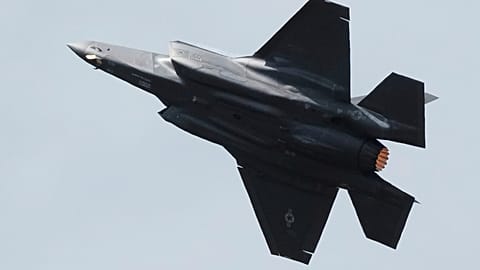
The US-Israel war on Iran, launched on 28 February, has engulfed the Middle East in violence, snarled supply chains and sent oil prices surging after Tehran virtually blocked the Strait of Hormuz.
Tehran and Washington have traded accusations of ceasefire violations, with talks aimed at a more durable peace slated for Saturday.
'Spare a thought for the Pacific Islands'
Georgieva highlighted the uneven toll of the crisis, warning that low-income energy importers were bearing the heaviest burden.
"Spare a thought for the Pacific Island nations at the end of a long supply chain, wondering if fuel still reaches them," she said.
The World Bank said Wednesday that the Middle East, excluding Iran, was now expected to grow just 1.8% in 2026 — a downgrade of 2.4 percentage points from pre-war projections.
Global headline inflation is also expected to be revised upward, driven by oil price shocks and supply chain disruptions.
A joint statement from the IMF, World Bank and World Food Programme warned that rising oil, gas and fertiliser prices, combined with transport bottlenecks, would "inevitably lead to rising food prices and food insecurity".
The fund's own research makes for grim reading.
Output in countries where fighting takes place drops by 3% at the outset "and continues falling for years," it found.
An earlier assessment of the Iran war was blunter still: "All roads lead to higher prices and slower growth."