






























Visitors to Rome's Colosseum now have a new chance to step back into history thanks to a renovation project that's unearthed several entrance columns that have been buried for hundreds of years.
Italy’s most iconic landmark has been given a remarkable new look.
 ADVERTISEMENT
ADVERTISEMENT
ADVERTISEMENT
The Colosseum in Rome has undergone a major restoration, revealing parts of its original structure that have been hidden for centuries.
New travertine marble blocks have been installed outside the arena, marking where grand entrance columns once stood.
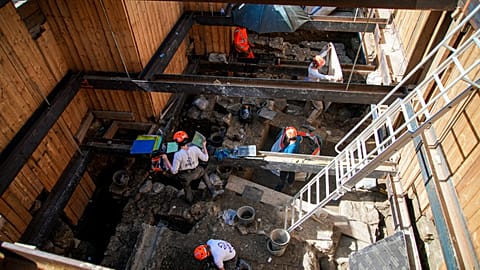
The project restores the monument’s perimeter and highlights details long buried underground, including original entrance numbers that guided spectators to their seats.

In ancient times, each arch, except those located along the major and minor axes, was marked with a number engraved on top of the arch, just below the first cornice of the façade, to facilitate identification of the entrances.
Stefano Boeri, the architect of the restoration project said the idea from the start was to give visitors a real sense of the monument's proportions: "We have rebuilt the real perimeter, the crepidine (pavement) of the Colosseum, and at the same time the dimension of all the parts of the fornici (arches), which were covered by ground. That had been covered for centuries.”
The work of controlling and restoring the monument’s original levels not only reinstated the legibility of the Flavian Amphitheatre’s footprint and its geometric base, but also offered the opportunity to reconsider the stormwater drainage system.
The result is a public space that is both hydraulically organised and more accessible for visitors with water management also an integral part of the paving design.

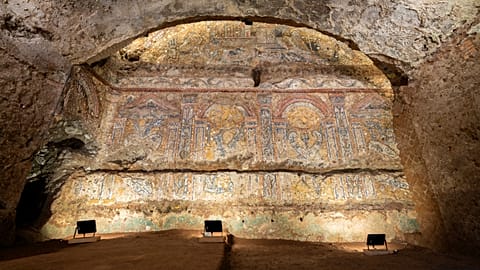
With its past more visible than ever, visitors can experience a clearer picture of life in ancient Rome.
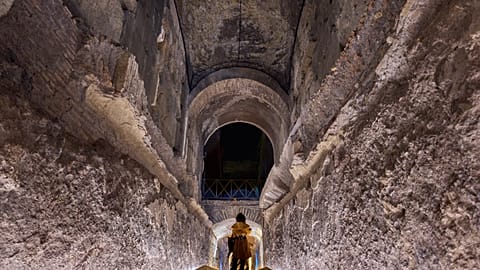
“We wanted to restore some of the missing sections of the entry corridors for the public. The two missing sections of the corridors of the Flavian Amphitheater, which collapsed starting in the 6th century AD for various reasons, the main one being that the ground in this area is the most unstable,” explained Alfonsina Russo, archaeologist and representative of the Italian ministry of cultural heritage.
The Colosseum remains Italy’s most popular tourist attraction, drawing millions of visitors every year.