





























Around sixty historic buildings in Belgium opened their doors to visitors throughout March as part of the Brussels Art Nouveau & Art Deco (BANAD) festival.
There's been something really special going on in the Belgian capital over the past month.
 ADVERTISEMENT
ADVERTISEMENT
ADVERTISEMENT
Many of the city's historic buildings have opened up to an eager and curious public who've never been able to see inside them before.
Fresh from having celebrated 2025 as the 'Year of Art Deco', this latest initiative, Brussels Art Nouveau and Art Deco featured up to 60 venues across the city. Among them were a dozen private homes, townhouses, institutional buildings and former industrial sites.
A series of guided tours, led by professional experts, allowed visitors to explore architectural details, restoration histories, and discover the original uses of each space, many so impeccably preserved as if frozen in decades past.
“We sold 19.426 tickets, almost 100% of our entire availability”, shared Amaury de Semt, Program & Communication Director of Explore.Brussels, the non-governmental body behind the event.

Beyond interior visits, the programme also included around 50 guided walking and cycling tours, conferences, exhibitions, concerts and inclusive activities tailored to different audiences.
First established in 2017 (building on earlier biennales dating back to 2001), BANAD is an annual festival dedicated to showcasing the best of Brussels’ architecture and moves to protect and preserve the city's cultural heritage sites.

Art Deco and Art Nouveau
Brussels is widely considered one of the birthplaces of Art Nouveau, largely due to the work of pioneering architect Victor Horta (1861 - 1947), whose innovative use of iron, glass and organic forms defined the movement. But the city also holds an exceptional concentration of Art Deco architecture (approximately 500 venues).
Many of these buildings remain remarkably well preserved, which makes Brussels a reference point for scholars, historians and architects: they can study the evolution of these movements through original structures that have largely retained their authenticity over time.
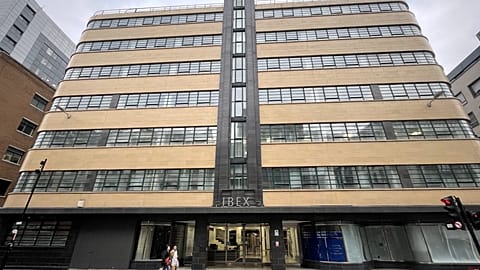
The transition from Art Nouveau to Art Deco can be traced tangibly across the city’s streets. Art Nouveau reached its peak around the turn of the century (1890s to 1910), then suffered a gradual “geometricization” into Art Deco. Architects slowly moved away from flowing lines, floral motifs and handcrafted detail toward symmetry, abstraction and industrial materials such as reinforced concrete. In many cases, hybrid buildings in Brussels combine elements of both styles.

Both the Brussels region and City of Brussels municipality dedicate large funding portions to architectural preservation. In 2026, regional heritage agency Urban.Brussels, which also participated in BANAD, announced a €56 million allocation to cover sustainable renovation and façade enhancement across the city.
In addition, the City of Brussels specifically allocated €5.6 million for town planning and heritage in its 2015 budget, which included grants for renovating façades in the pedestrian zone.

Introduction to Modernism
For BANAD, 2026 is also historic in that it marks the start of a new movement into the programme, Modernism.
“This anniversary year, marking the tenth edition of the BANAD Festival, saw the introduction of a third architectural movement: Art Nouveau, Art Deco and Modernism; a development that has been very well received by our visitors,” said de Smet.
Modernism emerged in the early 20th century, as a reaction against decorative styles. Characterised by functional design, clean lines and new construction techniques, it reflected the broader social and technological changes of the time.
In Brussels, modernist architecture often blended with Art Deco, creating hybrid forms: so minimalist exteriors contrast with richly decorated interiors. The movement also responded to urban expansion and housing needs, offering more standardized and efficient living spaces.
To create a more complete narrative of the city’s architectural history, BANAD showcased homes like Villa Berteaux and the Dotremont house, both designed by architect Louis-Herman De Koninck (1896-1984), who was known for his forward-thinking approach to domestic architecture and functional design principles.


As for Art Deco and Art Nouveau, visitors were able to see landmark properties such as Hôtel Solvay, Hôtel Tassel and Hôtel Max Hallet, all masterpieces by Victor.
Art Deco highlights included luxurious Villa Empain, and the Palais de la Folle Chanson, which reflects the stylistic transition of the interwar years.
They also visited, for the first time, newly opened sites such as the Van Keirsbilck house, Villa Berteaux, the Slagmolder house and the Fondation Universitaire.