



























Increased demand on flight routes that avoid Middle East and Gulf stopovers also means flyers are having to pay more.
Travellers are facing rising airfare costs and reductions in flight schedules as the conflict in the Middle East causes oil prices to soar.
 ADVERTISEMENT
ADVERTISEMENT
ADVERTISEMENT
Experts predict ticket prices could remain elevated for months even if the war de-escalates.
Increased demand on flight routes that avoid Middle East and Gulf stopovers also means flyers are having to pay more.
Rigas Doganis, who once headed Olympic Airways in Greece and now chairs London-based consultancy firm Airline Management Group, told Reuters that "airlines face an existential challenge".
He added: "They will need to cut fares to stimulate weakening demand while higher fuel costs will be pushing them to increase fares. A perfect storm."
Korean Air to enter 'emergency management mode'
A source told Reuters that South Korea's flag carrier Korean Air will enter “emergency management mode” from April as rising oil prices weigh on costs.
According to industry sources, and reported by Yonhap news agency, Korean Air Vice Chairman Woo Kee-hong posted an internal notice that it will implement an emergency management system starting on Wednesday 1 April.
"The measures are not a one-off cost-cutting effort but are part of broader structural efforts to strengthen the company's fundamentals," Woo said.
Which airlines are increasing fares?
The US-Israel and Iran war has seen oil prices rocket due to attacks on refineries in the region and the impossibility of transporting oil through the Strait of Hormuz, which in turn is spiking jet fuel costs.
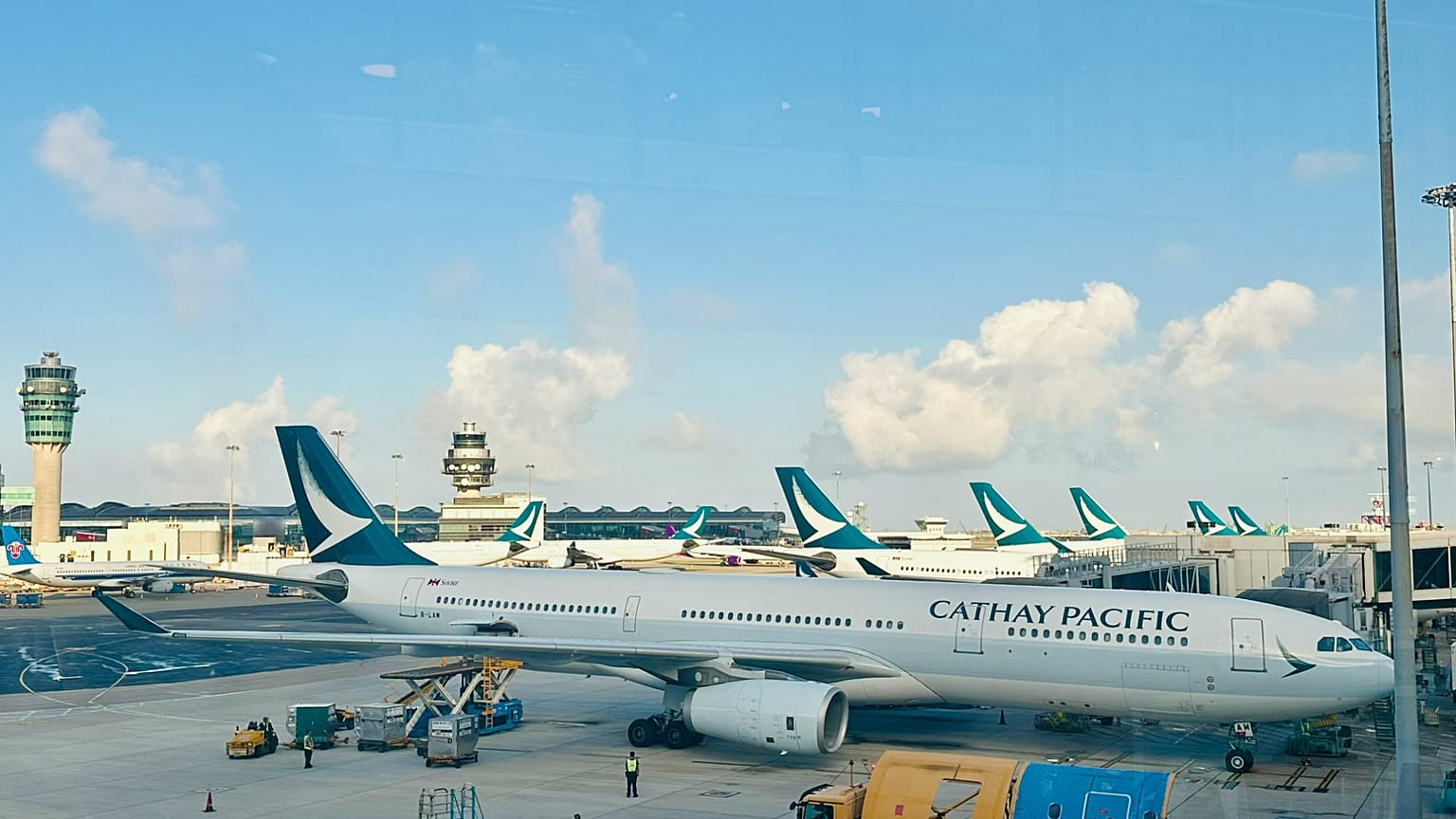
Cathay Pacific, AirAsia and Thai Airways are among a growing number of airlines increasing fares to offset the hikes.
During a media session, Ronald Lam, chief executive of Cathay Pacific, said the cost of fuel so far this month is double the average of the previous two months.
The carrier has updated fuel surcharges, which will affect all of its routes from 18 March.
AirAsia announced it would temporarily raise ticket prices and fuel surcharges, promising to revise fares as market conditions changed.
Thai Airways officials told press they expect airfares to increase by 10% to 15%, while Qantas said it had lifted prices by differing amounts depending on the route.
Scandinavia's SAS said it has introduced a "temporary price adjustment".
Air New Zealand has upped prices. In an emailed response to Reuters, the carrier said it has raised one-way economy fares by NZ$10 (€5.10) on domestic routes, NZ$20 (€10.20) on short-haul services and NZ$90 (€45.90) on long-haul flights.
Other airlines with fuel hedging (which locks in specific prices for future consumption) in place have been able to secure part of their supply at fixed prices, including Lufthansa and Ryanair, according to Reuters.
Thousands of flights scrapped
The Civil Aviation Authority of Vietnam said that the restriction in the supply of aviation fuel (Jet A-1), caused by the conflict in the Middle East, has put domestic airlines at risk of fuel shortages.
In response, Vietnam Airlines will temporarily suspend a number of services from 1 April, including routes from Hai Phong to Buon Ma Thuot, Cam Ranh, Phu Quoc and Can Tho, as well as connections from Ho Chi Minh City to Van Don, Rach Gia and Dien Bien. In total, 23 weekly flights will be cancelled across these routes as the airline adjusts capacity in response to fuel supply pressures.
In a message to employees posted on its website, United Airlines CEO Scott Kirby said that the carrier will cancel about 5% of this year's planned flights in the short term.
“The reality is, jet fuel prices have more than doubled in the last three weeks,” he wrote. “If prices stayed at this level, it would mean an extra $11 billion in annual expense just for jet fuel. For perspective, in United’s best year ever, we made less than $5 billion.
“That may sound scary, but the first piece of good news is that, for now at least, demand remains the strongest we've ever seen. The 10 biggest booked revenue weeks in our history have been the last 10 weeks. But it may be a challenge to continue passing through much of the increased fuel price if oil stays higher for longer.”
Meanwhile, Scandinavian carrier SAS has said that it will cancel at least a thousand flights in April due to surging fuel prices.
"We are cancelling a few hundred flights in March, but trying to protect our traffic as much as possible," CEO Anko van der Werff told Swedish business daily Dagens Industri, adding that more cancellations were expected after Easter, when traffic normally dips.
The measures will affect "at least a thousand" flights, though he stressed this remained limited in scale, given that SAS operates around 800 flights a day.
In response to the SAS update, rival carrier Norwegian is ramping up capacity across the region to absorb displaced passengers, adding 120 extra departures between 25 March and 12 April, NKR reports.
Air New Zealand has also said it is reducing its services by 5%. The airline has cancelled approximately 1,100 flights from 16 March to 3 May, which is likely to impact about 44,000 passengers.
Cruise line implements passenger surcharge
It’s not just the airlines that are facing higher oil and fuel costs due to the war in the Middle East - cruise lines are also affected.
StarDream Cruises issued a statement saying that passengers will have to pay a surcharge of $15 a person for each night for bookings made on or after 20 March, The Straits Times reported.
“Due to recent geopolitical developments in the Middle East, oil prices have increased significantly, leading to higher fuel and related expenses for Star Voyager,” the statement said.
“As a result, a fuel surcharge will be introduced for new bookings made on or after 20 March 2026. This surcharge is determined based on the operating requirements of each ship and itinerary; and may therefore vary across our fleet.
“This surcharge will be reviewed in line with fuel price movements and may be adjusted downward if prices ease or revised for new bookings should prices continue to rise."