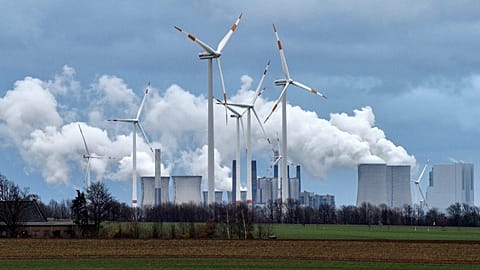
















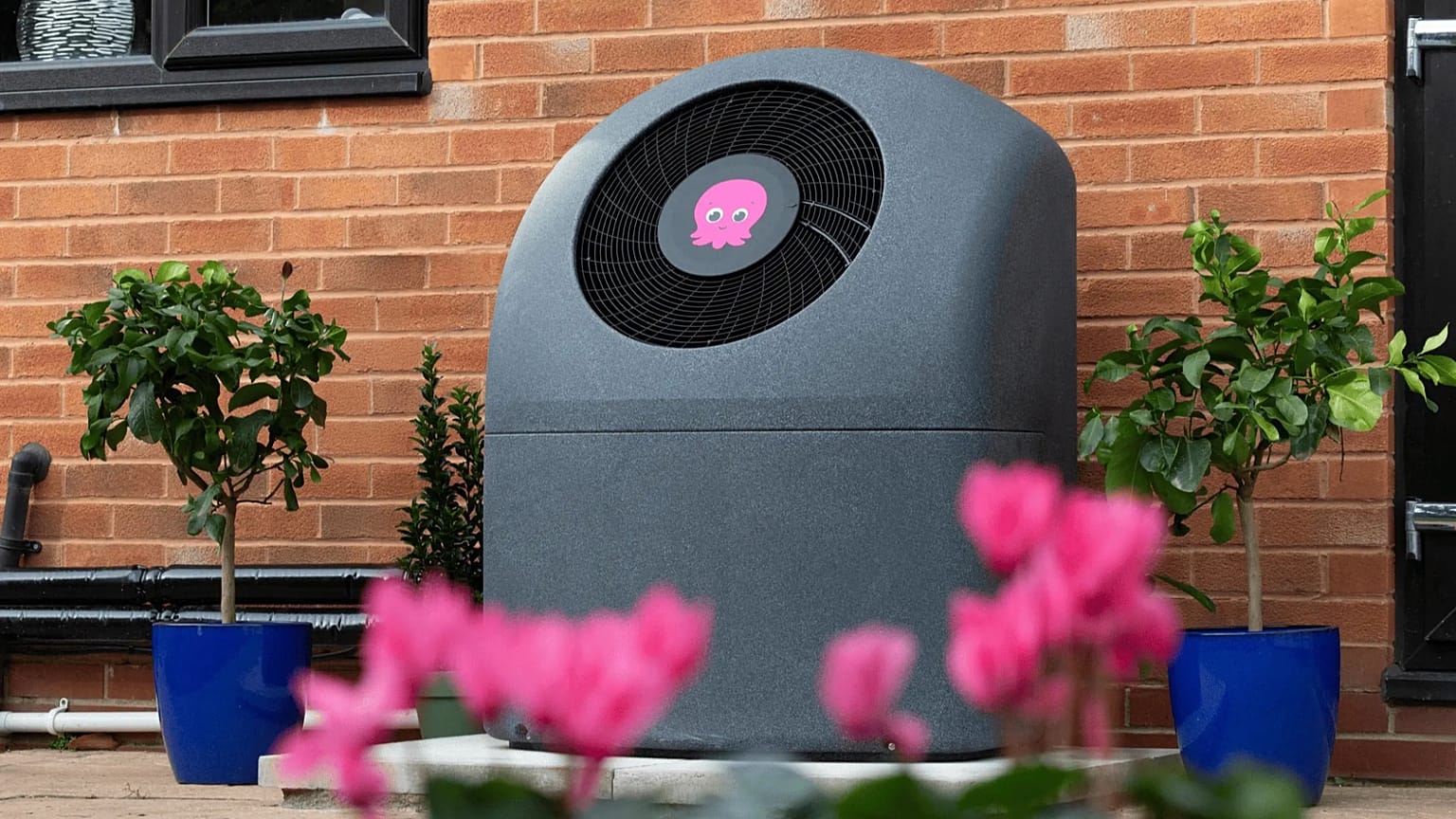













Gas companies may have breached competition law by ‘undermining’ the uptake of heat pumps, lawyers have warned.
Gas companies have been accused of “undermining” the uptake of heat pumps, despite the Iran war highlighting the volatility of fossil fuel reliance.
 ADVERTISEMENT
ADVERTISEMENT
ADVERTISEMENT
Lawyers from environmental charity ClientEarth have warned that 10 companies may have worked together to damage the development of the UK home heating market by “potentially misleading consumers” into thinking that heat pumps are not a viable option for them.
The organisation suspects that the gas giants have collectively spread misinformation about heat pumps, while simultaneously portraying hydrogen as the future of green heating.
In Poland, the Ministry of Climate and Environment also witnessed what it describes as a “wave of disinformation” around heat pump technology – which is hindering modernising the country’s heating system.
But it seems the public sees through this disinformation - sales of UK heat pumps rose more than 50 per cent in the first three weeks of March compared to the same period the month before – according to energy firm Octopus Energy.
‘Casting heat pumps in a negative light’
Catherine Derenne, a ClientEarth lawyer, hails heat pumps for their eco-credentials and ability to lower energy bills.
“Whether through misinformation, potentially misleading marketing practices or apparent price fixing, the gas industry seems willing to go to great lengths to paint a rosy picture of sticking with their gas products, while casting heat pumps in a negative light,” Derenne adds.
“It also leaves the UK lagging far behind other countries on heat pump uptake, and consumers are sadly paying the price.”
Jess Ralston of the Energy and Climate Intelligence Unit (ECIU) argues that the UK’s reliance on gas boilers has added to the nation being hit so hard by the last energy crisis, when Russia launched its full-scale invasion of Ukraine.
“Anyone that seeks to delay the move to heat pumps, which will increasingly run off British wind and solar, is arguing for people to remain vulnerable to gas price spikes on international markets out of our control,” she adds.
How do heat pumps work?
Depending on the type, heat pumps work by capturing energy from air, water or the ground and turning it into heat or cold air.
They work in a similar way to a refrigerator but in reverse, using a liquid chemical that turns into a hot gas through compression.
This hot gas releases its heat to your central heating, warming your home. The gas then cools down, turning back into liquid form, ready to start all over again.
Can heat pumps work in cold countries?
One of the main misconceptions of heat pumps is that they do not work in cold countries.
But some of Europe’s coldest countries have the largest uptake of heat pumps. According to the European Commission, Norway, Finland, Sweden and Estonia have the highest number of heat pumps per capita in Europe.
Heat pumps work perfectly in countries where winter temperatures rarely fall below -10C, which covers most of Europe. Even when temperatures plunge to -30C, heat pumps can still be more efficient than electric heating.
This is because, even in sub-zero conditions, outside air and water still contain useful amounts of energy.
Finland – known for its cold climate – is leading the race in Europe, with a staggering 524 heat pumps installed for every 1,000 households.
Do heat pumps work in old buildings?
The belief that heat pumps only work in new-build homes has become a main barrier to their uptake, particular in European countries like the UK.
Previous reports have warned that the technology would be impractical for more than half (54 per cent) of British households due to factors such as poor insulation and limited space.
However, The Fraunhofer Society, Europe’s largest application-oriented research organisation, states that heat pumps outperform gas boilers even in buildings more than 100 years old.
In a 2019 study, buildings between 15 and 150 years old that had been partially or fully refurbished with energy-saving measures, including a heat pump being installed, were analysed.
Researchers found that air-source heat pumps achieved an average seasonal performance rating of 3.1, meaning they’re more than three times more efficient than a gas boiler.
Are heat pumps noisy?
Sensationalised articles from tabloids will confidently claim that heat pumps produce too much noise, with their constant hum potentially causing issues between you and your neighbour.
However, the typical range of a heat pump when it is on is between 40 and 60 decibels. A group of acoustic experts investigated heat pump noise in 2023 and found them to be about as noisy as a refrigerator.
Heat pumps may make a bit more noise during cold snaps as they work harder amid cooler temperatures, but experts say you can still “have a normal conversation while standing right next to one”.
If your heat pump is making more noise than expected, it can often be a sign that it hasn’t been levelled correctly, or needs a service.
Will a heat pump cut your energy bills?
The main appeal of heat pumps is their ability to slash household energy bills - a claim that has come under much scrutiny.
The UK government states that heat pumps can save around £100 (around €115.20) per year for those with a smart tariff, by being three times more efficient than traditional boilers. As gas prices continue to soar, this saving will only increase.
Of course, this depends on the average temperatures at your location, the size of your radiators, and the type of heat pump that is installed.
The biggest barrier to heat pumps is their upfront costs, with the price of a heat pump in the EU averaging between €8,000 and €18,000 – with installation costs incurring an additional €3,000 to €20,000.
It means that homeowners may not see significant savings in the short-term, and has paved the way for governments to offer grants to cut down investment costs.
In England and Wales, the government is currently offering a £7,500 (around €8,638.76) grant to help cover the cost of installation. The Boiler Upgrade Scheme is available for those who own their property and requires a valid Energy Performance Certificate (EPC).