






























Former Commission President says "nothing prevents" EU member states from meeting without Hungary to discuss sensitive matters once trust is breached. Barroso argues political action is just as effective as legal tools if the 26 send a "message that they are sovereign too."
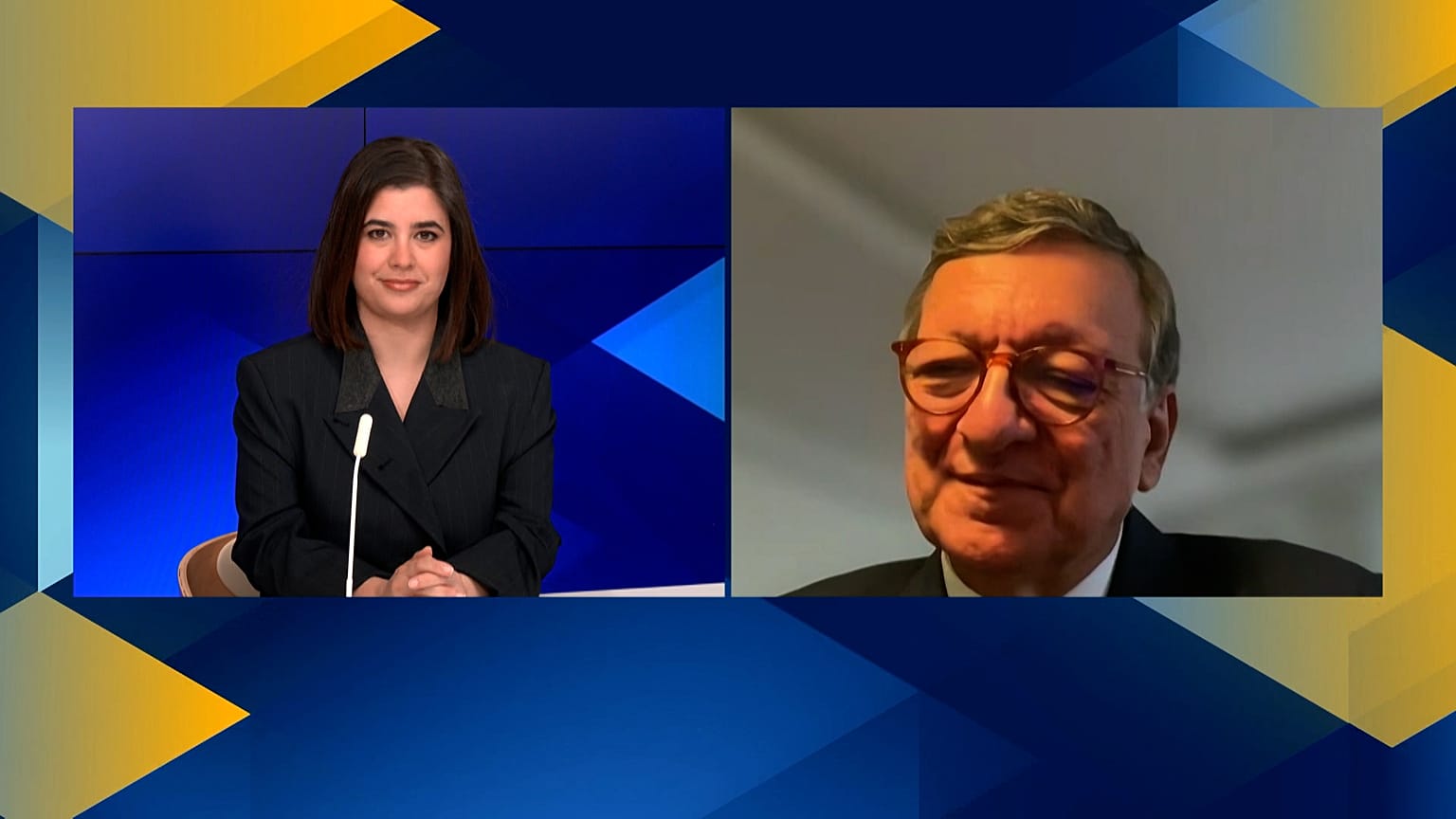
European Council President António Costa should exclude Hungary from sensitive discussions if Budapest fails to clarify alleged Russia leaks, former European Commission President José Manuel Barroso told Europe Today.
 ADVERTISEMENT
ADVERTISEMENT
ADVERTISEMENT



Hungary is sitting at the centre of explosive allegations suggesting foreign minister Péter Szijjártó debriefed Russia foreign minister Sergey Lavrov before and after private EU meetings. Budapest has sought to weather the storm, claiming it talks to "partner" countries about European issues affecting their bilateral relation and called it standard practice. The European Commission called the allegations "greatly concerning".
Russia is the most sanctioned country in the EU as a result of its invasion of Ukraine, it's seen as hostile actor for European security and the meetings are confidential.
Barroso called the allegations "disturbing" and said this is an urgent matter for the President of the Council to handle if Budapest fails to address the concerns.
“First of all, they (Hungary) should clarify. If the clarification is not sufficient, the President of the European Council can perfectly say: we are now going to meet without Hungary,” Barroso told Europe Today, adding that member states are bound by decency.
Barroso, who led the European Commission 2004 and 2014, said the treaties allow for infringement procedures for serious breaches of trust, pointing to the principle of sincere cooperation under Article 4 of the treaties which stipulates all member states must act in good faith and refrain from actions that could be detrimental to the general interest.
"From a legal point of view, the EU can launch an infringement (procedure) if there is a violation of Article 4 of the Lisbon Treaty," he said.
"But beyond the legal measures, it can be more effective politically to show to a country that behaves like that, not respecting the basic principles of decency, that the other countries can move on politically as well," Barroso added
The former Commission chief said the "clarifications so far provided by the Hungarian government are not really clarifications" and claiming that talking to other countries, like the United States as Szijjártó suggested, isn't good enough.
"The fact that he put Washington and Moscow at the same level, it's quite strange and raises very important matters of loyalty among member states," he said.
European diplomats consulted by Euronews in the aftermath of the scandal, which broke over the weekend after the Washington Post claimed Szijjártó maintained regular communication with Lavrov, at times even during EU meetings, said the allegations are shocking "but hardly surprising" given the political and business ties between the two.
The EU's foreign chief Kaja Kallas has demanded a full explanation, and the European Commission has called for a clarification. Poland's Prime Minister Donald Tusk called it a "disgrace". Budapest denies it held conversations during meetings with Russia.
Watch Europe Today from Monday to Friday from 8am CET on Euronews and all platforms
With assistance from Aida Sanchez