
















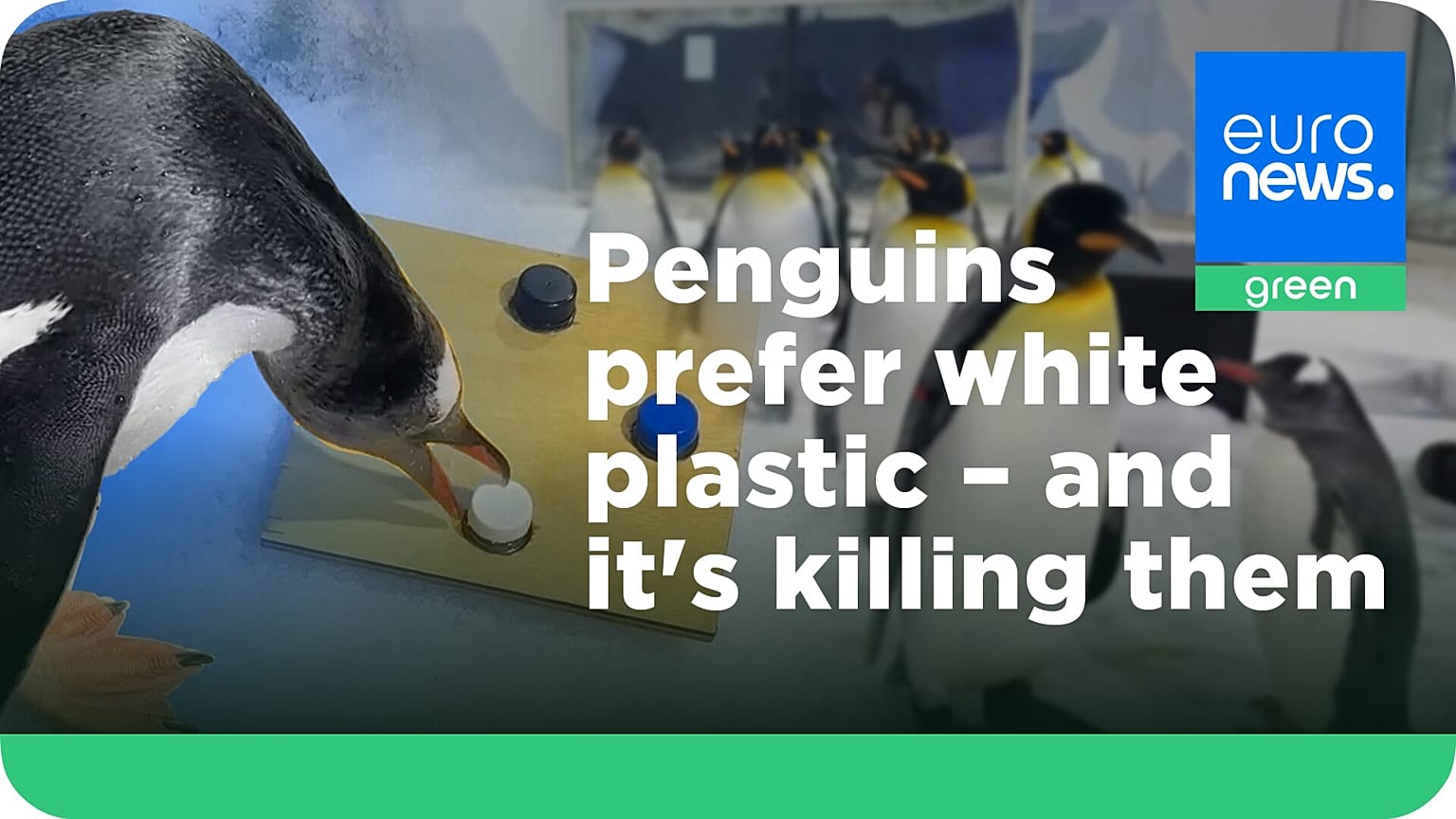














Researchers set out to discover why seabirds appear to be attracted to white plastic over other colours.
Research has shown the majority of plastic waste found ingested in the guts of seabirds is white rather than other colours.
 ADVERTISEMENT
ADVERTISEMENT
ADVERTISEMENT
The University of Auckland's Ariel-Micaiah Heswall set out to find out why this is. She led a follow up study on whether penguins were more attracted to this colour and therefore more likely to ingest harmful plastics or whether it could be attributed to a greater abundance of white plastic debris in the sea.
According to researchers, soft plastics such as balloons can obstruct the birds' guts, causing starvation, while sharp plastics can pierce the gut.
Microplastics consumed by seabirds also pose a serious risk to their survival, as they can leach into the bird's bloodstreams, changing their hormonal balance.
Sometimes plastics can irritate and damage the digestive system causing inflammation and scar tissue, a disease known as plasticosis.
Are penguins attracted to white plastics?
To ascertain whether the penguins were actively seeking out white plastic to consume the researchers conducted a study of 46 gentoo and 23 king penguins at Auckland's Kelly Tarlton Sealife Aquarium.
Penguins are known to eat plastic bottle caps, so red, blue, black and white caps were used in the experiment.
They were attached to a board and placed in the Sealife penguin enclosure.
According to the researchers the penguins chose white bottle caps almost twice as often as black, and about 45 per cent more often than red or blue.
“So we looked at plastic colour preferences with penguins, seeing what plastics they preferred to interact with and we found that the white plastic was more strongly preferred to be interacted with and chosen, so we recommend reducing plastics overall but also maybe reducing white classic colour usage,” says Heswall.
Why do penguins favour white plastics?
Heswall believes her new research shows penguins select white plastic over other colours, even when it’s not more plentiful although they don't yet know exactly why.
The researchers say most animals have pre-existing sensory biases whether it is visual, olfactory, auditory or anything else.
It means they're tuned to specific sensory signals they're receptive to for various reasons such as reproduction or foraging.
Two or three times, the penguins responded to the bottle caps with courting or reproductive behaviours.
“It could be because the white colour may resemble colours of prey like the squid or the fish but also it could resemble feather colouration so they may prefer to go to the white because it may look like feather colours,” she says.
Other seabirds ingest white plastic too
A study she published in June last year showed apart from penguins, 13 species of North Island New Zealand seabirds are ingesting predominantly white plastic.
“We found that when we looked at what colours plastic seabirds were ingesting, white plastics were also more commonly ingested; so not only is a white plastic a triple threat, it’s found more commonly in the ocean, it’s found more commonly in the guts, but now it’s also preferred by the penguins,” says Heswell.
Tens of thousands of New Zealanders and overseas tourists visit the Sealife aquarium each year, where the penguins chosen for the experiment are one of the star attractions.
According to Birdlife International one in three seabird species are threatened with extinction.