
















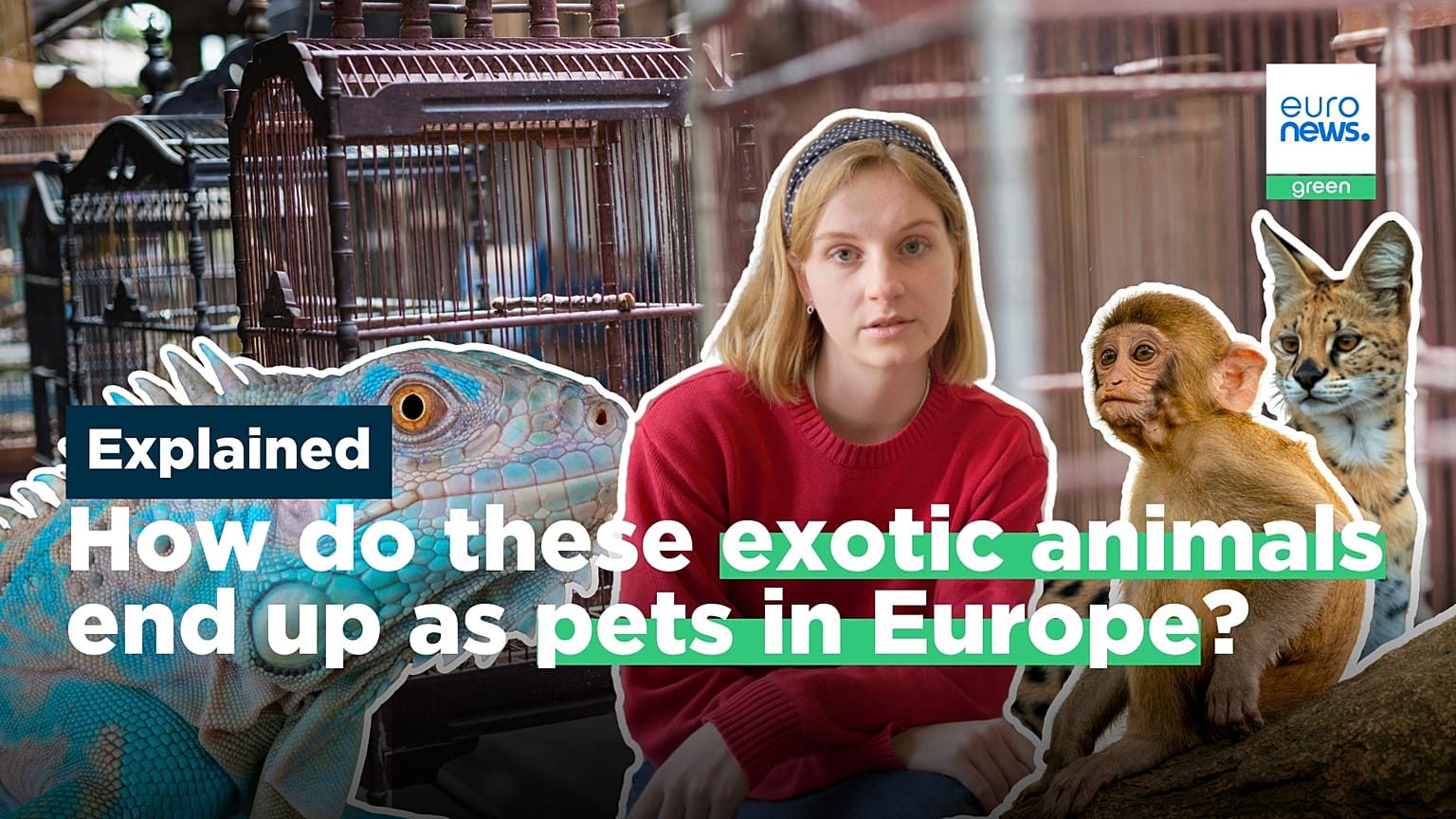














Every year, birds, reptiles and thousands more exotic animals are brought into the European Union. The vast majority of them end up with animal enthusiasts and collectors, who keep them as pets. But this trade comes with many problems. One major concern is wildlife trafficking of endangered species.
There is no doubt that Europeans love their animal companions, with around 90 million dogs and 108 million cats living in people’s homes, according to Worldostats’ 2025 figures.
 ADVERTISEMENT
ADVERTISEMENT
ADVERTISEMENT
But cats and dogs are not the only animals being kept as pets: numerous exotic species, such as servals from sub-Saharan Africa, snakes and tropical birds from Latin America also live in households across the EU.
However, organisations that advocate for animal welfare and rescue exotic animals, like the Netherlands-based Animal Advocacy and Protection (AAP), warn against keeping such exotic creatures at home.
“When we talk about exotic pets, usually we talk about animals that are wild by nature. So, whether they have been captured from the wild or bred in captivity, inherently they are wild. So, wild characteristics, often complex nutritional needs, complex social needs, adequate space. All these requirements mean that they are really unsuitable to be kept as pets,” explained Michèle Hamers, AAP’s EU Policy Officer.
And the problems related to exotic pets do not stop there. These animals are traded across the globe, but not all of this trade is legal.
Endangered species, like the red panda, the Barbary macaque or the Galápagos marine iguana are prohibited from being sold commercially under the international wildlife trade framework CITES. This international convention classifies animals according to three different categories, which accordingly limit trade in the respective species. But endangered species can fall victim to wildlife trafficking, as their rarity often increases their value in the eyes of exotic animal collectors.
The NGO TRAFFIC, which monitors wildlife trade around the world, estimated that in 2023, 28% of all wildlife seizures were destined for the exotic pet trade, making it one of the largest illegal wildlife trade sectors in the EU. Among the species seized, birds represented the biggest variety, with 196 different species taken in by law enforcement operations. The NGO’s 2024 report is set to be released in early summer.
Illegal wildlife trade also leads to the animals suffering if they are taken from their habitats and smuggled away. Often, they travel in crammed spaces such as containers or luggage, without adequate food and water. Trafficked tropical fish are frequently put into water-filled plastic bags that are hidden in luggage and smuggled by plane.
If they reach their destination alive, the animals can also suffer from inadequate care from their owners. The organisation AAP documented several cases of rescued servals and chimpanzees that had developed health problems due to improper nutrition and care. If handled in the wrong way, exotic animals can also pose a risk to their owners. In rare cases, bites and scratches can transmit zoonotic diseases.
But solutions exist. To find out what is being done in the EU and how exotic pets could be better protected from wildlife trafficking and animal cruelty, watch our explainer video.
Read more