

















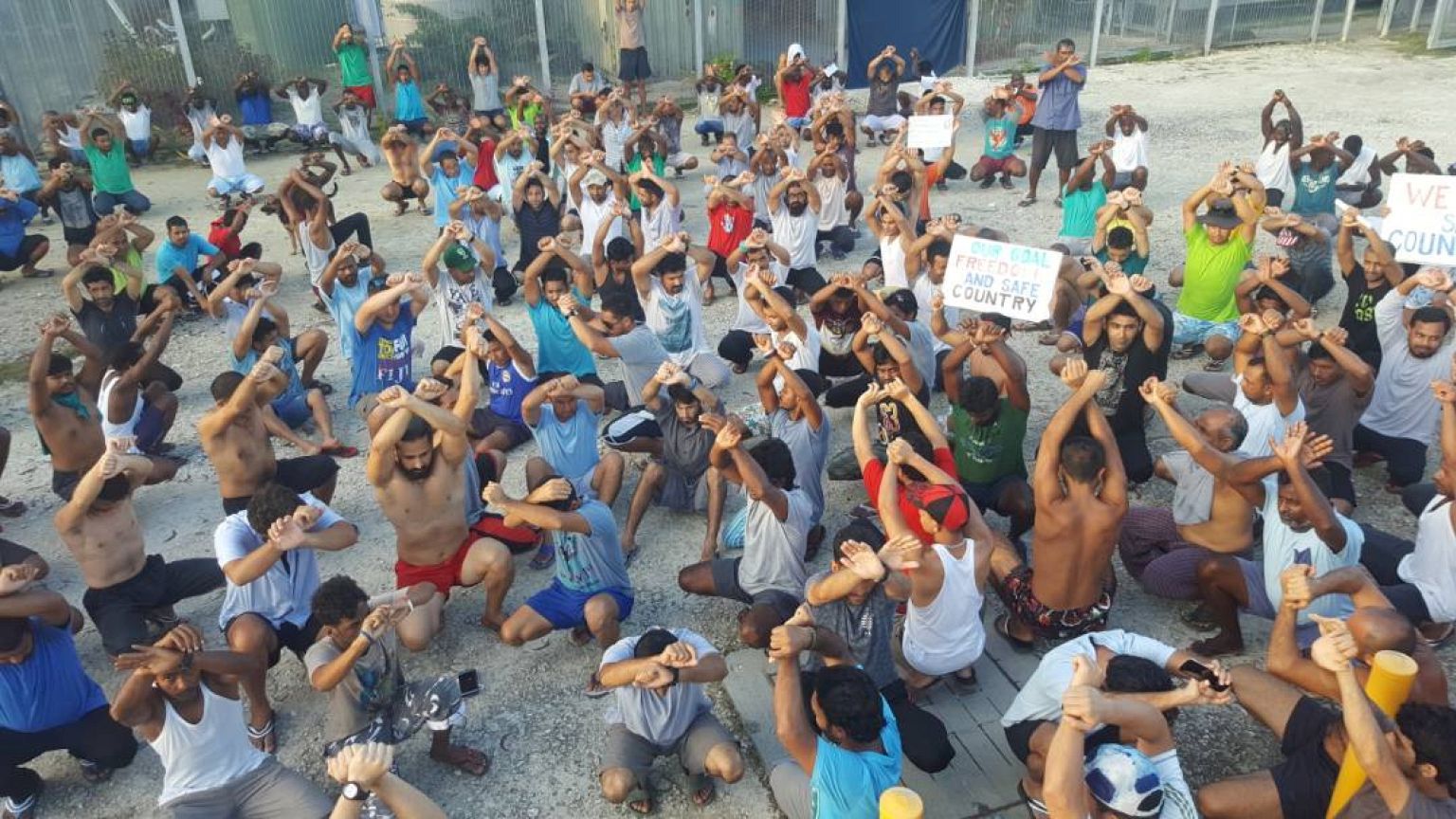














Manus Island asylum-seekers get a 24-hour reprieve from eviction from the Papua New Guinea camp
Papua New Guinea will delay by at least 24 hours a plan to forcibly evict hundreds of men from an abandoned Australian detention centre, three asylum seekers said on Saturday.
 ADVERTISEMENT
ADVERTISEMENT
ADVERTISEMENT
Nearly 600 men have barricaded themselves more for than 10 days since the closure of the centre on October 31, without regular food or water, defying closure bids by Australia and Papua New Guinea in what the United Nations calls a “looming humanitarian crisis”.
Pressure on the asylum seekers, drawn largely from Afghanistan, Iran, Myanmar, Pakistan, Sri Lanka, and Syria, has grown in recent days as Papua New Guinea tries to get them to move to three transit centres.
The men fear violent reprisals from the Manus island community if they move from the camp to transit centers, pending possible resettlement to the United States.
Asylum seekers in Manus Island detention centre were advised to move to an alternative location, said acting Acting Prime Minster for Australia, Julie Bishop on Saturday (November 11).
Speaking in Perth, Bishop assured essential services would be provided to refugees. She later added “Those who were found not to be refugees, who were not owed protection should go home.”
Meanwhiel, around 200 protesters angry over the Australian government’s treatment of the asylum seekers clashed with police in Sydney on Friday.
The rally took place outside a fundraiser for the Liberal Party.
The United States has agreed to resettle up to 1,250 refugees that Australia keeps on Papua New Guinea and the Pacific island nation of Nauru.
But so far only 54 have been accepted after a screening process that President Donald Trump describes as extreme vetting.