

















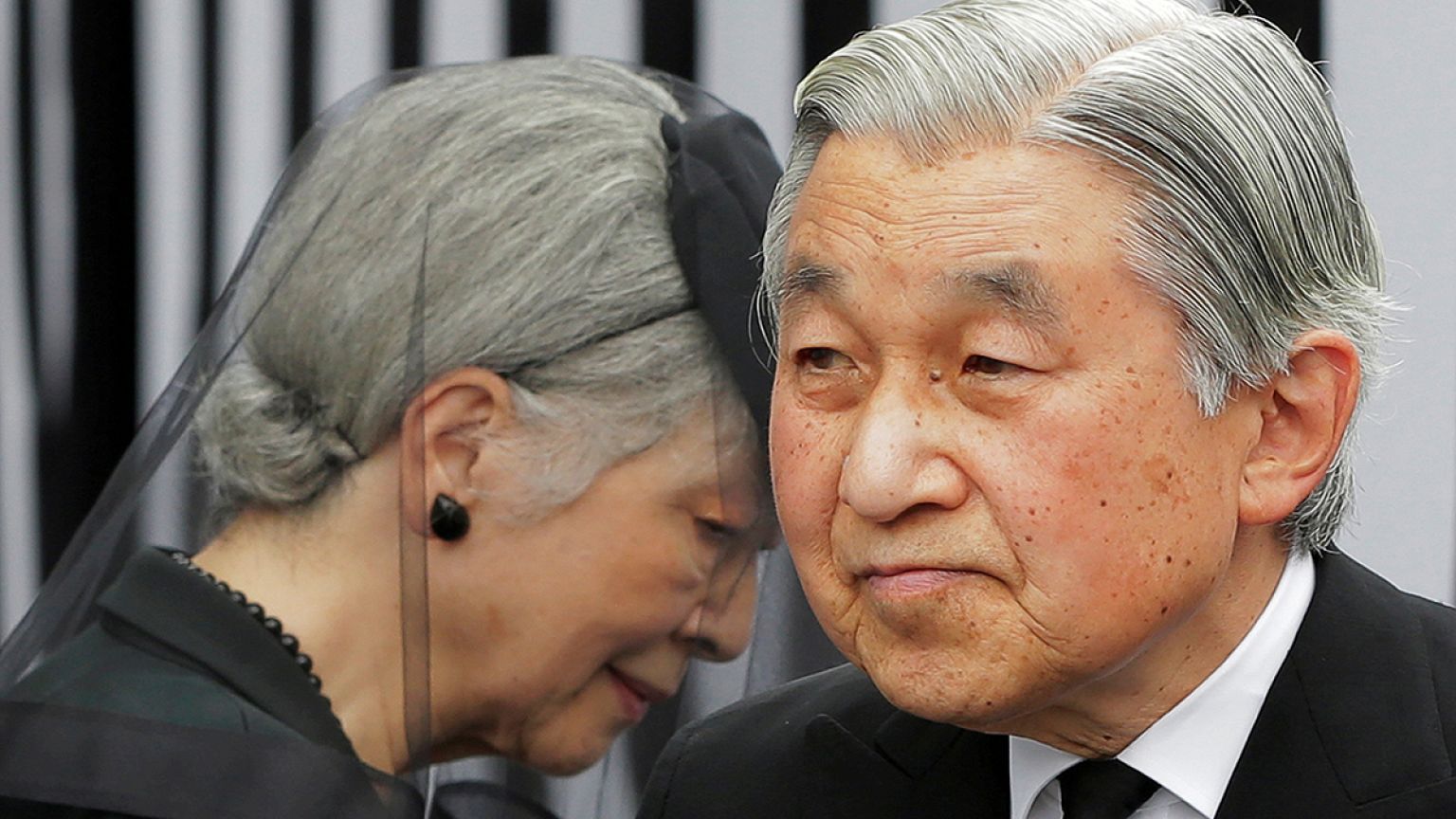














Emperor Akihito cannot step down under Japanese law but has expressed concern about his ability to carry out his duties fully - what happens now?
Among Japan’s people there is mostly sympathy for the plight of Emperor Akihito as he signalled his apparent wish to abdicate by expressing concern about his ability to carry out his duties fully.
 ADVERTISEMENT
ADVERTISEMENT
ADVERTISEMENT
In failing health he cannot step down as that is not allowed under Japanese law.
And the current system dictates the Emperor must scrupulously avoid any political role or statement, so he cannot even directly say he wants to abdicate.
The government will have to change the constitution, which was amended in 1947 – after the Second World War – to make the Emperor a symbolic monarch with no political power.
Professor Robert Campbell, an expert on Japanese culture at the University of Tokyo, said it is supposed to be a job for life: “Changing that will reflect the reality of Japanese society first of all – the way that almost all people here feel about working and life and career building and so forth, and will bring it closer to the reality of almost everyone working here. And most people here will support his decision because of how much work he has actually put in to his reign.”
Akihito, who took the throne in 1990 after the death of his father the wartime Emperor Hirohito, became the 125th emperor of his line, a line that extends back to the country’s founding 2,600 year ago.
As well as being head of state he is also the highest authority of the Shinto religion, but is not considered to be divine.
The life and reign of Japan's much-loved Emperor #Akihito in pictures.
Gallery: https://t.co/KNDI19lMkj pic.twitter.com/GYQhf4o6Yv— David Sim (@davidsim) August 8, 2016
Under the changed constitution he was also the first emperor permitted to marry a commoner, which he did in 1956 after meeting Michiko Shoda while playing tennis.
The emperor has made an effort to be less distant from the Japanese people than his predecessors – visiting survivors of disasters including comforting the victims of the earthquake and tsunami in Fukushima in 2011, which was also the occasion of his first-ever television address.
Akihito’s successor would his 56-year-old son Naruhito.
His taking the throne would reopen the debate over Japan’s male-only succession law as he and crown princess Masako have only one child, princess Aiko, who under Japan’s Imperial Household Law cannot ascend the throne.