






























Portugal’s lifeguards' federation warns of too few lifeguards patrolling beaches, blaming low pay, poor job security and lack of strategy.
Are Portuguese beaches and bathers safe?
 ADVERTISEMENT
ADVERTISEMENT
ADVERTISEMENT
“That is a question nobody will be able to answer,” Alexandre Tadeia, president of the Portuguese Lifeguards Federation (FEPONS), told Euronews.
The bathing season began at the start of the month in several municipalities, but there may not be enough lifeguards for all beaches across the country. The vast majority of working lifeguards are also young students, many of them working overtime.
“If every lifeguard in Portugal worked only 40 hours a week, we would need around 6,000 to 6,500 lifeguards. We have about 5,000, and of those five thousand, not all will work. I would say maybe two thirds will work,” Tadeia said. “We have only half the number of lifeguards working that we should have.”
Among the various problems plaguing the profession, Tadeia highlighted the difficulty in retaining staff. Figures from the National Maritime Authority, quoted by Jornal de Notícias, point to a reduction of 265 certified lifeguards in two years. For FEPONS, the problem is even bigger.
“Although more than 5,000 people have completed the course, we never know how many actually want to work as lifeguards. What we do know, from the study we published in 2020, is that every year 49% of lifeguards do not want to come back to work the following year. That means we lose roughly half,” Tadeia said.
The problem isn't training. According to Tadeia, despite the number of people finishing the course every year, many leave the profession by failing to renew their certification, which must be updated every three years.
“In a year we train around 1,500 lifeguards. But if we look at how many people renewed their certification this year, it is probably not even half,” he said. “We can safely say that, in very round figures, we lose at least a thousand lifeguards. Every year we train 1,500 and yet we are always stuck at the same overall numbers.”
Working conditions, low pay and contract clauses, on top of the seasonal nature of a job largely confined to the summer, all contribute to the difficulty in retaining staff – a “false truth”, in the view of the FEPONS president.
“In Portugal we have 700 public swimming pools, each of which needs at least two lifeguards,” he said. “We are talking about around 1,500 professionals who could have work all year round.”
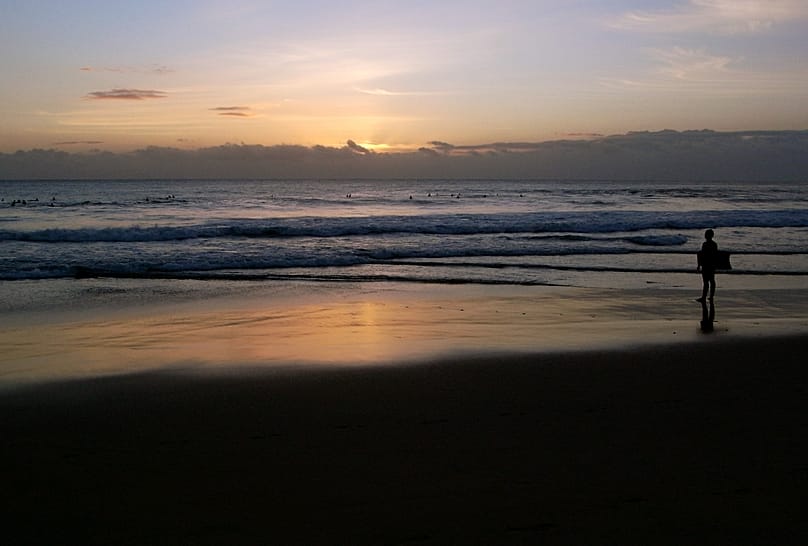
In a country touching the Atlantic, with a long coastline and a typically mild climate, many beaches are used virtually all year.
“There are many beaches in Portugal that are used throughout the year, and all the local authorities know that on this beach or that one there are surfers, fishermen, people doing sport, this and that, all year round,” Tadeia continued.
He believes the problem starts at the top: “We are not managing to convince Portuguese politicians to change things and create a national strategy for this profession”.
There is no strategy, pay is low, and there are no special access conditions for young people, the main driving force of the profession. “There is no specific form of hiring that does not affect these people’s study grants, allowances and social benefits. A formal work contract, with social security contributions, will make the student lose their bonus, their study grants and access to first-job support.”
According to FEPONS, in an area of humanitarian interest, private initiative and a commercial outlook currently prevail.
“In this field of assistance to bathers, there are still public tenders where the aim is to see who can offer to guard beaches for the lowest price. It is a commercial approach to a humanitarian area, which is completely surreal,” Tadeia said. “When we go to the beach, what we want is safety. We want to have people there who are well trained, well-coordinated, properly equipped, motivated, and who do not have to work excessive overtime.”
A national strategy
“Something that is extremely important still does not exist, namely a special career track in the civil service. This would be very important,” Tadeia told Euronews.
As FEPONS explains, there is no special lifeguard career in the civil service. Those working in this area are classified as operational assistants, the lowest category in the public administration, despite having specific and demanding training, making life-or-death decisions and being exposed to very tough physical and emotional conditions.
“Something special has to be created. Because the point is that this profession has a direct impact on people’s lives and deaths. So, either we treat it as such, or we carry on believing this is just a commercial activity, leaving it at the mercy of beach concessionaires and the demands of the private labour market," Tadeia said.
In Portugal, the bathing season officially runs from 15 April to 31 October, depending on the municipality. The high season starts on 1 June.
According to the Portuguese Environment Agency (APA), 671 bathing waters have been identified in Portugal: 523 on the mainland, 88 in the Autonomous Region of the Azores and 60 in the Autonomous Region of Madeira. An information panel is available where beach profiles and information on water quality can be consulted.
APA also notes that “safety depends first and foremost on each bather**”.** Beachgoers should “pay attention to the information and signage on beaches” and “always follow the instructions of lifeguards”.