


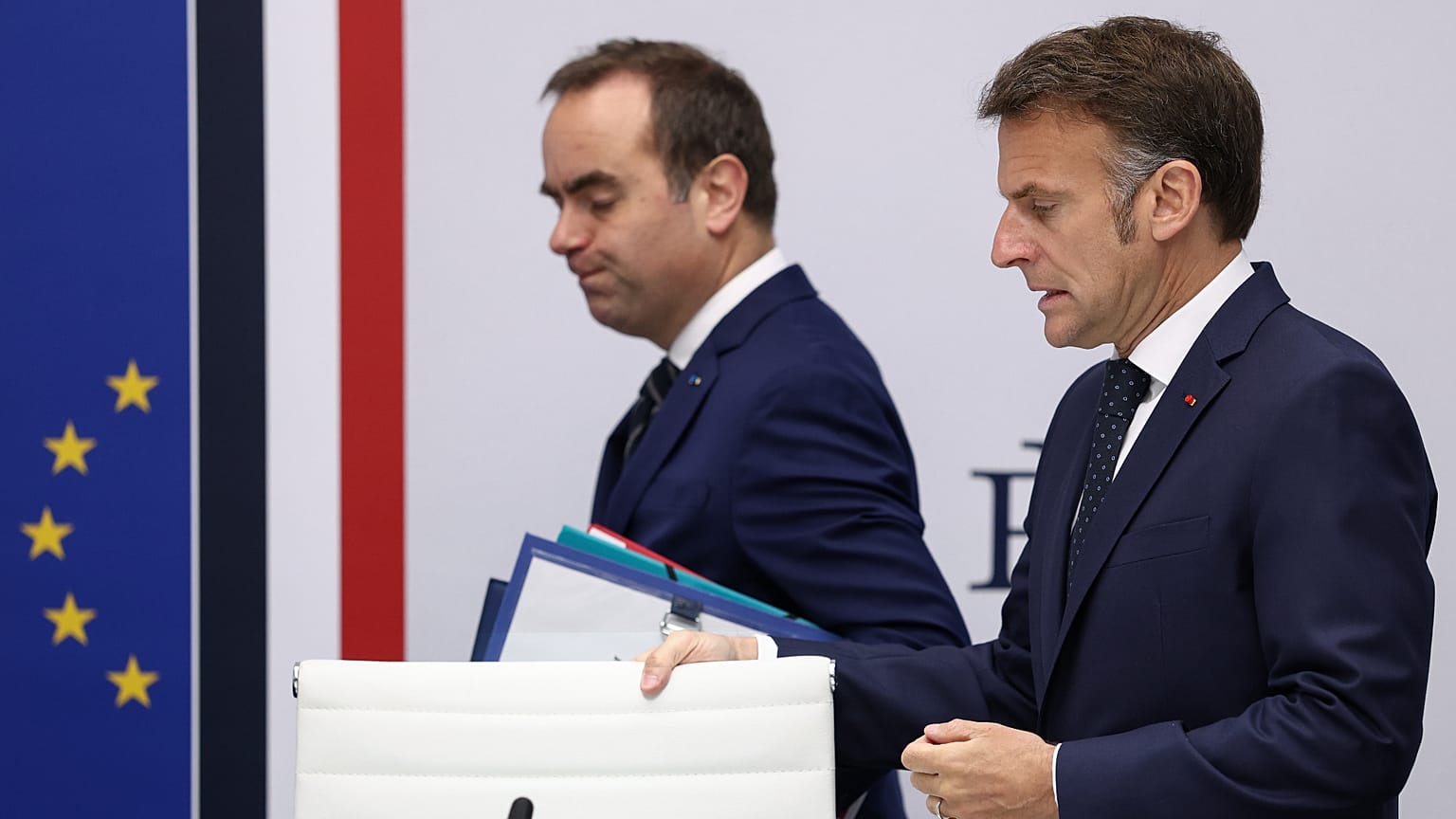


Macron met intelligence chiefs on Thursday morning ahead of renewed protests, while the Prime Minister is due to meet political parties and mayors in the afternoon. Protest bans and curfews remain in force.
French President Emmanuel Macron said he would convene a defence council meeting on Friday ahead of mass demonstrations planned for 24 October, following weekend protests that erupted into some of the country’s worst street violence in years.
 ADVERTISEMENT
"A defence council meeting will be convened tomorrow (Friday) under my chairmanship, and we will take further decisions," Macron said, speaking after crisis meetings on Thursday morning.
The French president said only demonstrations organised by trade unions would be authorised nationwide on Saturday. He added that prefects, the government’s regional representatives, could ban unauthorised gatherings, particularly those organised by groups lacking the “legitimacy” to do so.
Macron also condemned what he described as “sedition” by far-left groups, warning they posed a “grave danger” to the Republic. He denounced the “criminal acts” committed during the unrest and called for “extreme measures” in response.
Curfews and protests bans in France
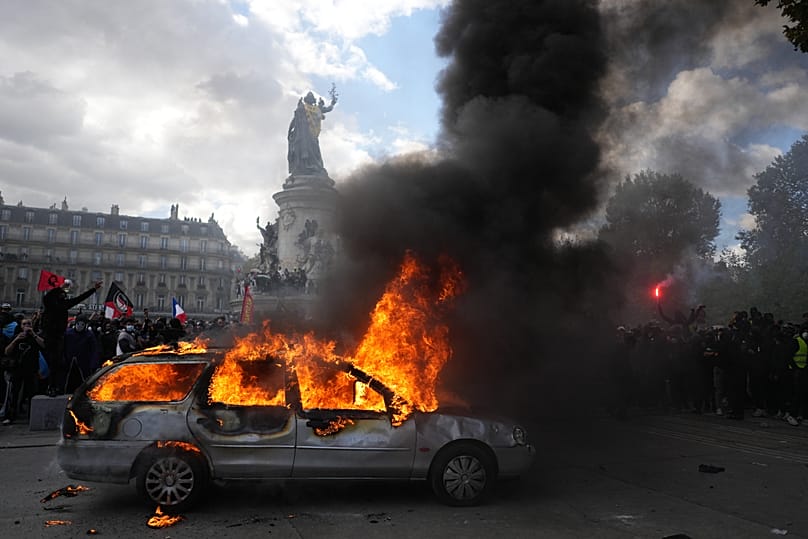
Last weekend, peaceful demonstrations organised by trade unions, Yellow Vest protesters and students were marred by widespread looting and clashes with police. Protesters voiced concerns over the cost-of-living crisis, the state of French schools and rising fuel prices.
Since Monday, several city centres across France have implemented curfews, while restrictions on gatherings have been implemented, including for a number set to take place on Thursday.
The French authorities have acknowledged that intelligence services failed in their duties and largely underestimated the scale of the protests which took place on 17 October.
Interior Minister Laurent Nuñez had expected to see around 200,000 people in the streets, compared with 550,000 to 800,000 participants counted.
Nearly 60,000 members of the security forces were deployed across the country on Saturday, but did not prevent the mass acts of vandalism committed on the fringes of the marches — which captured audiences around the world.
France's security apparatus for protests planned for Saturday 24 October is set to be bolstered with the deployment of soldiers from the Sentinelle military force and elite units of the police and gendarmerie.
Junior interior minister Jean-Didier Berger announced on BFMTV a "20%" increase in law enforcement numbers compared with 17 October.
Prime Minister to chair talks with political leaders, while heavyweights turn down invite
Consultations are set to continue at the Prime Minister’s office Thursday afternoon. Prime Minister Sébastien Lecornu will receive representatives across the political spectrum, notably to discuss a possible "change" in the doctrine of public-order policing.
"Together with the interior minister, I want to talk to them about the police. We are told that the police kill or the police injure. And for the past two days we have been hearing: 'What are the police doing?' It is a very French kind of politico-media schizophrenia", he wrote in a letter sent to political parties and cited by several media outlets.
Security at presidential campaign rallies is also expected to be on the agenda for this meeting.
In a sign of mistrust towards the executive, several candidates in the 2027 presidential election will give the meeting a miss: Marine Le Pen and Jordan Bardella of the National Rally, as well as former prime minister Édouard Philippe, will be absent.
By contrast, Green party leader Marine Tondelier, Socialist primary winner Raphaël Glucksmann and the Republicans' president, Bruno Retailleau, have confirmed they will attend.
LFI vows to "wreck" the meeting
La France insoumise and the government have been trading barbs since the violence on 17 October, passing blame for the weekend violence.
The government accuses the radical left movement of "fanning the flames" of the anger expressed in the streets, while LFI denounces the authorities' strategy of _"_letting things rot", accusing them of failing to respond politically to demands it considers legitimate, particularly those of secondary school students.
Jean-Luc Mélenchon will be represented at Matignon by LFI coordinator Manuel Bompard. But on Tuesday, speaking to supporters in response to the prime minister's letter, the movement's leader set the tone: _"_We're going to go, we're going to wreck your meeting!"
The LFI founder was responding in particular to the passage in which Sébastien Lecornu states that "no disagreement, no anger, no political ambition can justify resorting to violence".
"Are you going to make us sign a certificate? Is that what you want? Do you really think we are going to do that? Of course not!" retorted Jean-Luc Mélenchon.
A few hours before the meeting, Manuel Bompard wrote that he would attend the meeting to ask for "apologies", "explanations" and "political answers to the mobilisation of the French people".
Mayors of Paris, Lyon and Marseille demand answers from the state
The consultations will not be limited to the parties. The mayors of Paris, Lyon and Marseille, three major cities particularly affected by last weekend's violence, will also be received.
The Green mayor of Lyon, Grégory Doucet, is going there "with the aim of obtaining explanations about the chain of events that led the state to fail to anticipate Saturday's events properly", his team told Euronews.
At the start of the week, the three mayors, Grégory Doucet, Emmanuel Grégoire and Benoît Payan, had already complained, in a joint op-ed published in Libération, of the "feeling that whole swathes" of their cities, although "used" to popular expression, had been "left without protection".
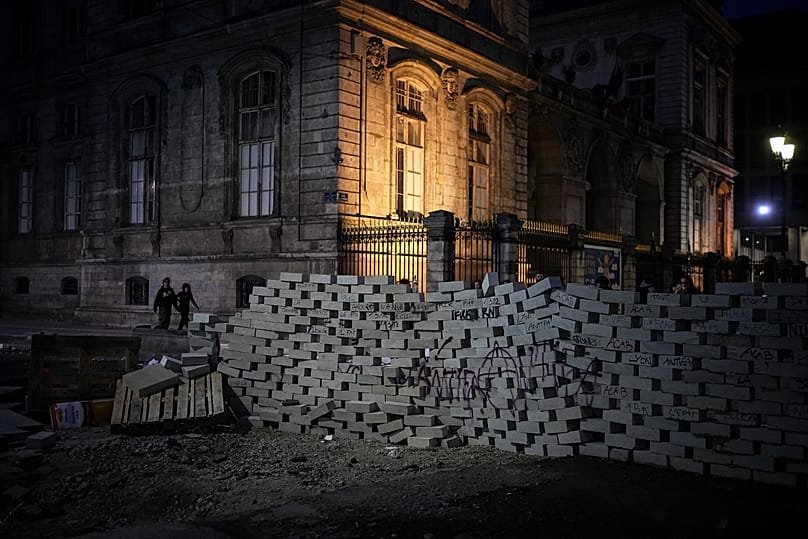
The three left-wing mayors called for the creation of an "independent commission on the public-order strategy deployed that day", as well as the establishment of an "exceptional national solidarity fund" to finance repairs to the damage.