

















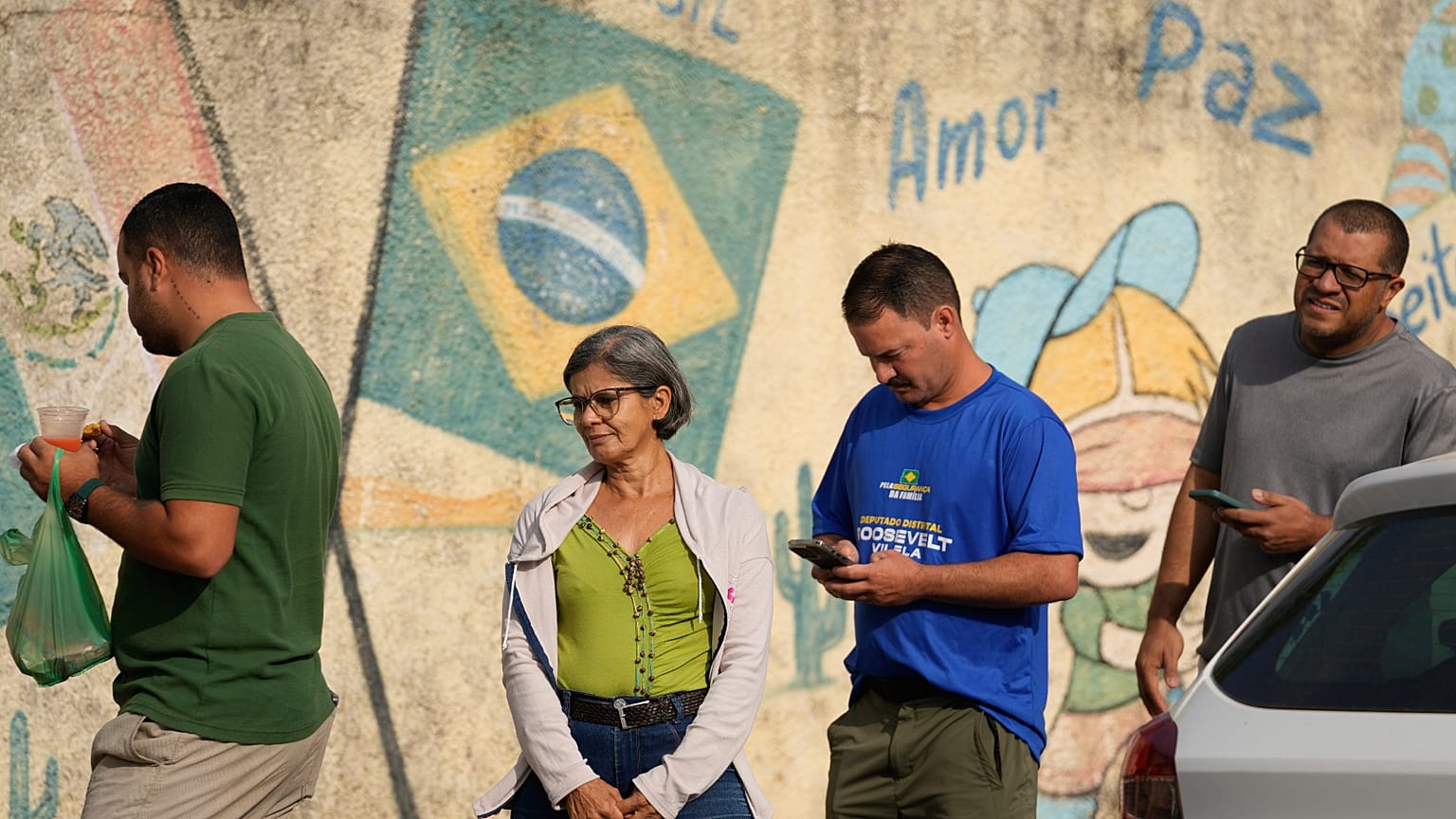













Nearly 160 million Brazilians were eligible to vote in Sunday's presidential election. Polls close at 17:00 Brasília time. With voting conducted digitally, the first results are expected about three hours later, overnight in Europe
Brazilians headed to the polls on Sunday in the first round of the presidential election, in which President Luiz Inácio Lula da Silva of the Workers' Party (PT) is seeking re-election against Senator Flávio Bolsonaro of the Liberal Party and son of Jair Bolsonaro.
 ADVERTISEMENT
ADVERTISEMENT
ADVERTISEMENT
The election is attracting international attention, as it will determine whether this Latin American economic powerhouse remains under left-wing rule or joins the rightward shift sweeping South America, championed by US President Donald Trump.
Soon to turn 81, veteran leftist Lula da Silva is running for a fourth and final term, warning voters that Brazil's sovereignty is at risk because of pressure exerted by Trump. Senator Flávio Bolsonaro, 45, is making his debut in the presidential race, in which he aims to follow in his father's footsteps, Jair Bolsonaro who is currently serving a 27-year prison sentence, who governed the country between 2019 and 2022 and pursued policies of close alignment with the United States.
According to opinion polls, which put the two leading candidates in a statistical tie, Lula da Silva (45% of voting intentions) faces a tough battle against the right-wing senator Flávio Bolsonaro (43%), aged 45, who has been emphasising his proximity to the White House and insisting that Brazil needs to strike better deals with the Trump administration, particularly when it comes to the economy of rare minerals.
Polls also suggest that neither candidate will cross the 50% threshold needed for an outright victory this Sunday. A second round of voting is therefore expected on 25 October.
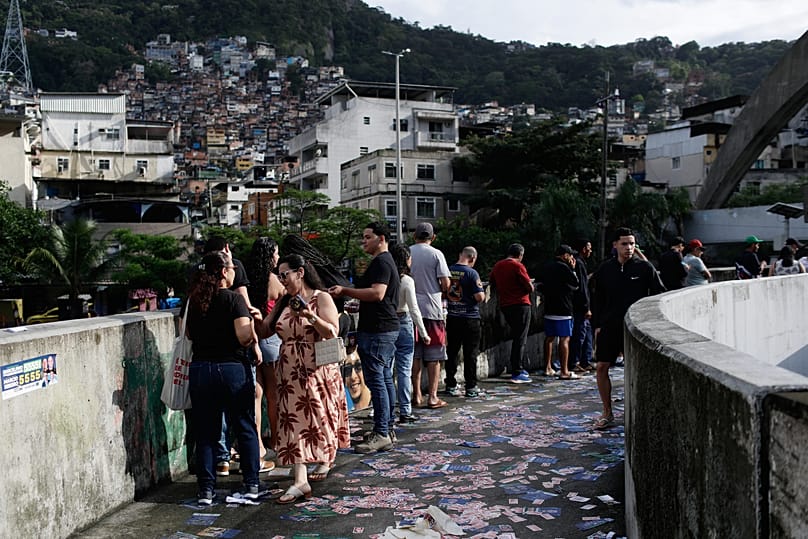
Almost 160 million citizens are eligible to vote in these elections. According to the Superior Electoral Court (TSE), 158 745 463 voters are expected to cast their ballots this Sunday. Voting is compulsory and those who do not vote must provide a justification.
Brazilians will also elect 27 state governors, state deputies, all 513 federal deputies in the Chamber of Deputies and 54 of the country's 81 senators in Sunday's vote.
Overseas, voting is only for the President and Vice-President, and around 918 000 registered voters scattered around the world are expected to take part.
In some places, voting has been under way for several hours, as is the case in Portugal, home to the second-largest Brazilian electoral constituency abroad, while in others polls have already closed.
According to provisional results published so far, Lula da Silva is ahead in Malaysia, Singapore, China, South Korea, Australia and New Zealand. Flávio Bolsonaro is winning in the Philippines and Japan.
The final results will be released by the TSE from 17:00 in Brasília (22:00 CET).
*Story being updated