
















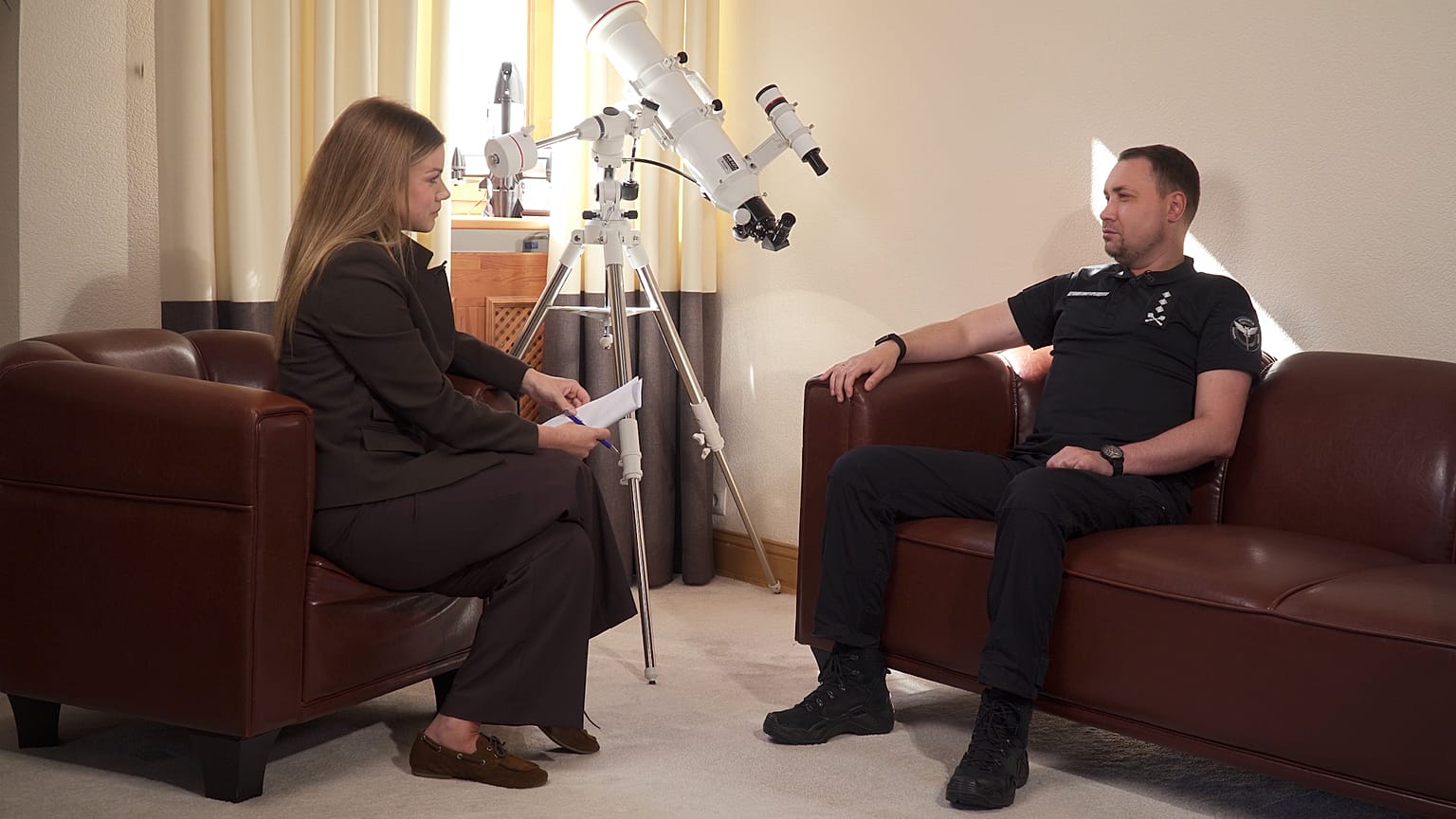













Countries with existing drone cooperation agreements with Kyiv could negotiate access to Ukraine’s latest technology for countering Russia’s new jet-powered drones, Kyrylo Budanov told Euronews.
Ukraine is already using its new interceptor technology in combat and is now racing to scale up production before the hardest part of the winter, according to Kyrylo Budanov, head of the Office of the President of Ukraine.
 ADVERTISEMENT
ADVERTISEMENT
ADVERTISEMENT
Budanov told Euronews in an exclusive interview that the technology is intercepting Russian jet-powered drones in most cases, but that producing it on a large enough scale remains the main challenge.
The technology could also become available to countries that have already established drone partnerships with Ukraine under agreements known as “Drone Deals.”
Ukraine has signed such agreements with a growing number of partners, including EU countries Lithuania, Latvia, Estonia, the Netherlands and Denmark. The deals provide a framework for cooperation including joint production, technology transfer and the exchange of military expertise.
The agreements were developed as Ukraine rapidly expanded its own drone industry and its use of relatively inexpensive interceptor drones against Russia’s conventional Shahed-type attack drones.
But Russia has also been adapting.
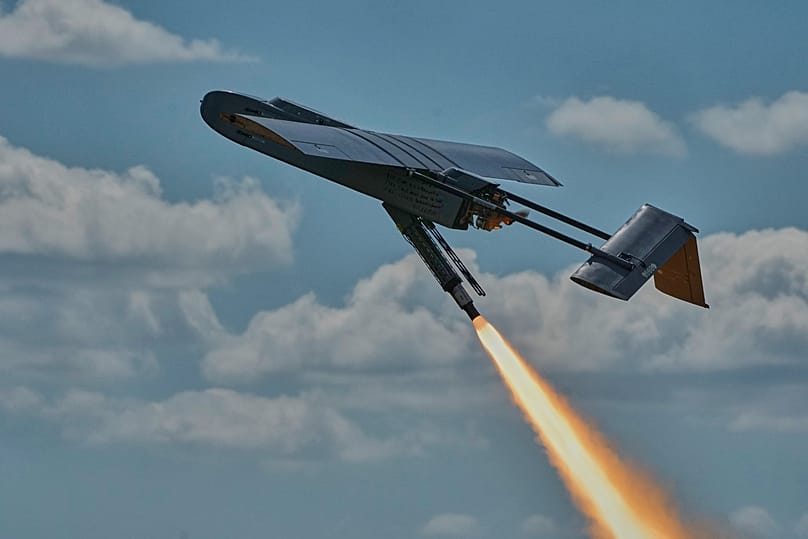
Moscow has increasingly deployed jet-powered attack drones capable of reaching speeds of up to 500 km/h, significantly faster than the previous generation of Ukrainian interceptor drones, which could reach around 300 km/h.
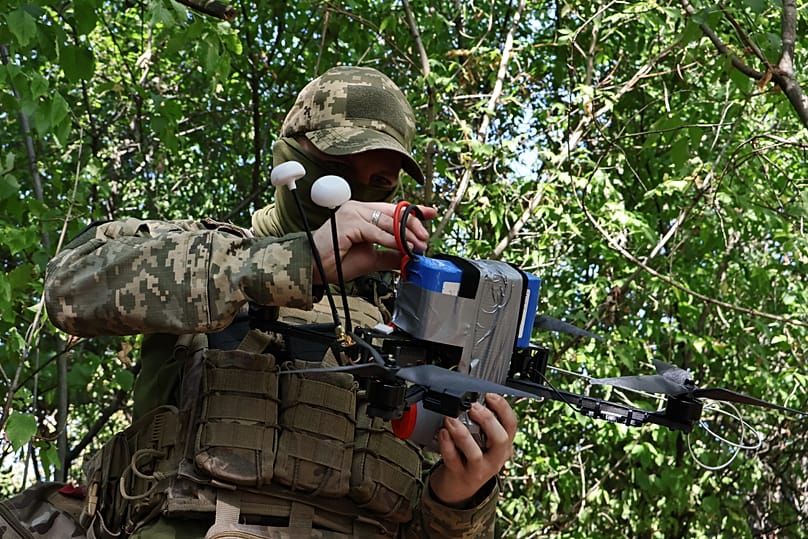
The speed advantage meant those interceptors could no longer reliably reach the new Russian drones, forcing Ukrainian forces in some cases to use more expensive and scarce air-defence missiles against them.
Ukraine has since accelerated the development of faster interceptors specifically designed to counter the new threat.
President Volodymyr Zelenskyy said Ukraine has become highly effective at intercepting conventional Shahed-type drones, with rates of around 90% or higher during some attacks.
The newer jet-powered variants remain considerably more difficult: Zelenskyy has put their interception rate at 57% earlier this week.
It is this newer generation of Ukrainian interceptor technology that could now potentially become part of the country’s existing partnerships.
“This isn’t about any specific product. It’s in principle about cooperation between countries on similar products,” Budanov told Euronews.
Asked specifically whether Ukraine’s latest technologies, including interceptors for jet-powered drones, could become part of its agreements with European countries, Budanov said:
“Anyone who has made such agreements with us has the right, so to speak, to continue negotiations on specific products.”
Budanov said he believes Ukraine can reach the necessary level of production before the hardest part of the coming winter.
The urgency of that race is already clear on the ground.
Euronews gained exclusive access to an air-defence positions protecting the Kyiv region, where soldiers described how Russia’s faster drones are sharply reducing the time available to detect and engage incoming threats.
When a jet-powered drone is heading towards Kyiv, they said, crews can sometimes have just 10-15 seconds to react.
The relentless pace of the attacks is also taking its toll. Some soldiers told Euronews they had been sleeping for as little as an hour and a half per day in recent days as repeated waves of Russian drones kept air-defence units on alert.
Pavlo Tsugunov, an anti-aircraft battery commander, said the speed and altitude of the latest Russian drones had made them significantly harder for existing systems to engage.
“They are flying higher and faster,” Tsugunov told Euronews. “And for the most part, the systems we have cannot engage these targets.”
The jet-powered drones are adding another layer of pressure to Ukraine’s already stretched air defences, which are simultaneously facing shortages of interceptors capable of stopping Russian ballistic missiles.