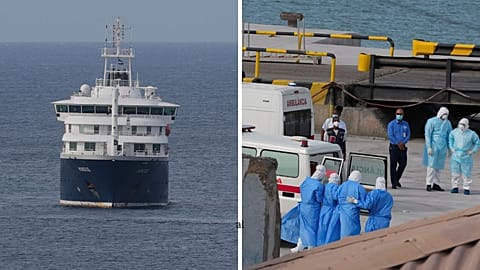





























The Canary Islands reject the Spanish government's decision to transfer a cruise ship with a hantavirus outbreak to their territory, as health authorities coordinate a medical evacuation from Cabo Verde. South African authorities have detected the Andean variant, which is contagious between humans.
The president of the Canary Islands, Fernando Clavijo, rejected on Wednesday the Spanish government's decision to bring the cruise ship MV Hondius to the archipelago.
 ADVERTISEMENT
ADVERTISEMENT
ADVERTISEMENT
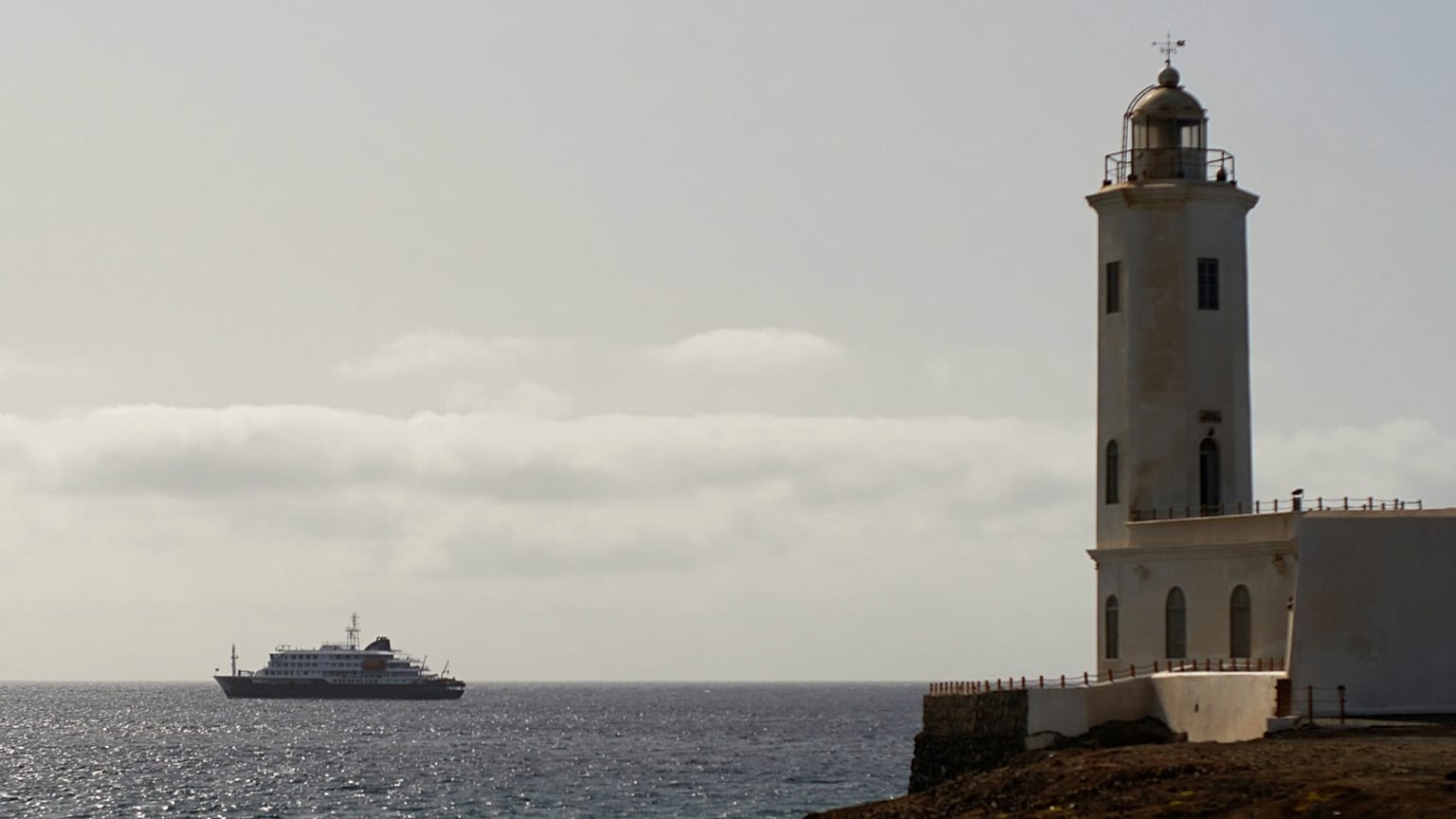
The vessel, affected by a hantavirus outbreak on board, is currently anchored off Praia, the capital of Cabo Verde. The ship is expected to dock in Tenerife in three days.
"It is an improvisation by the Spanish government," Clavijo said in an interview on Spanish radio, in which he assured that there is insufficient information on the extent of the outbreak. "We have no medical report on how many patients are infected," he said.
The Canarian president has asked for an urgent meeting with the Spanish President Pedro Sánchez to ask him to reconsider the decision to bring the ship to the islands.
Sánchez has convened a meeting on the hantavirus crisis, which will be attended by the Minister of Interior, Fernando Grande-Marlaska, the Minister of Health, Mónica García, the Minister of Transport, Óscar Puente, and the Minister of Territorial Policy, Ángel Víctor Torres.
The World Health Organisation (WHO) has reported that 147 passengers and crew are on board the ship and that, for the moment, seven cases linked to the outbreak have been identified: two laboratory-confirmed and five suspected cases.
The toll includes three deaths, one patient in critical condition, and three people with mild symptoms. South African authorities have detected the Andean variant in several of those infected, a variant that is transmitted between humans.
The secretary general of the WHO, Tedros Adhanom Ghebreyesus, has stated that based on current information, the international organisation "assesses the risk to the general population is low".
Clavijo also questioned the Spanish government's decision, taken in coordination with the WHO and the European Union, to bring the ship to the Canary Islands.
"It is the Spanish government that decides to take it to the Canary Islands (...) Why can't they be treated in Praia?" said the regional president.
The WHO appealed to compliance with international law and the "humanitarian spirit" in asking Spain to take in the ship, and stressed that Cabo Verde does not have the necessary capacity to manage an operation of this magnitude. According to Pedro Sánchez's government, the transfer responds to humanitarian criteria.
The Ministry of Health has confirmed that Spain has also agreed to the urgent transfer of the ship's doctor, who is in a serious condition, on a medicalised plane to the Canary Islands.
The operation is part of the arrangements coordinated with the WHO and the European Centre for Disease Prevention and Control, which is assessing the epidemiological situation on the ship.
Clavijo has warned that the decision "does not convey peace of mind" to the Canary Islands population.
He also insisted that "the position of the Government of the Canary Islands" is to reject the operation as it has been proposed, considering that the necessary data to guarantee the health safety of the archipelago has not been provided.
The first hospitalised plane arrives in Cabo Verde
Cabo Verde has confirmed the arrival in the country of one of the two ambulance planes planned to evacuate three people affected by the outbreak detected on the cruise.
According to the country's Ministry of Health, "the sanitary evacuation of the three patients will be carried out in the next few hours, using two ambulance planes, in coordination with the competent national and international authorities".
The department specified that one of the aircraft is already in the country and that a second plane is expected to arrive, as well as a specialist doctor to assist the occupants of the ship.
The health authorities stressed that once the evacuation process is completed, the ship should resume its journey. The Ministry assured that the operation is being prepared "with maximum security and inter-institutional coordination", with the participation of all the entities involved, in order to guarantee its execution as soon as the necessary conditions are met.
What is the hantavirus?
Hantavirus refers to a group of viruses carried by rodents, primarily transmitted to humans through the inhalation of airborne particles from dried rodent droppings.
Contact with infected rodents or their urine, saliva, or droppings — especially when these materials are disturbed and become airborne — is the primary way it spreads.
The infection can lead to hantavirus pulmonary syndrome (HPS), characterised by headaches, dizziness, chills, fever, muscle pain and gastrointestinal problems, followed by the onset of respiratory distress and hypotension.
According to the WHO, symptoms of HPS typically appear two to four weeks after initial exposure to the virus.
However, symptoms may appear as early as one week and as late as eight weeks following exposure.