





























With all of its cultural richness, layered history and varied topography, Türkiye is a true Tardis of experiences. Somewhere between the bustling cities and quaint fishing villages, intrepid travellers can uncover a treasure trove of wonders.
It might have some of the best beaches in the Mediterranean, luxury resorts you’ll never want to leave and a spa scene seductive enough to disrupt all your holiday plans, but Türkiye also sports less obvious treasures dotted around its considerable landmass.
 ADVERTISEMENT
ADVERTISEMENT
ADVERTISEMENT
Buried beneath the earth, perched on mountaintops and nestled between towering slabs of rock hide historical ruins, magical natural phenomena and jaw-dropping vistas lie waiting. It’s all about knowing where to look.
We reveal five of the country’s most surprising destinations guaranteed to thrill the curious traveller.
The underground city of Kaymaklı in Cappadocia
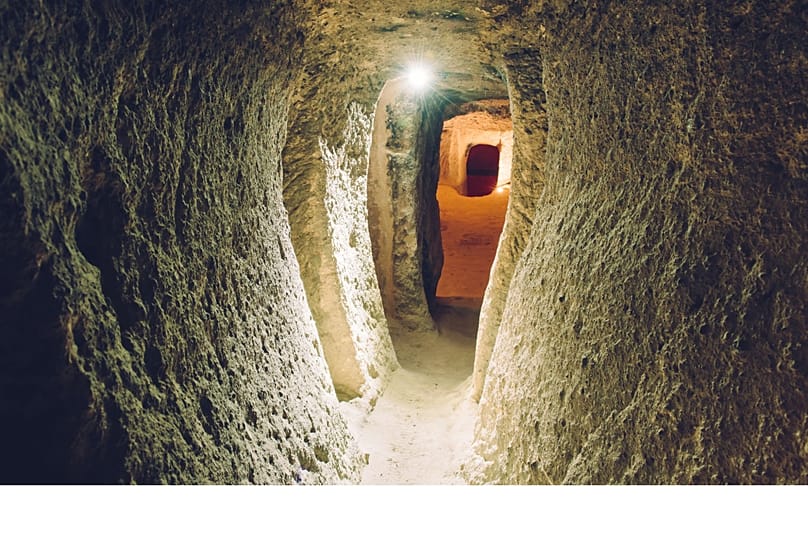
Stop looking up, start looking down. Beneath the soft volcanic rock of Cappadocia’s pock-marked landscape is one of Türkiye’s most enchanting spaces. Over 100 tunnels burrow 40-metres into the ground to make up the ancient city of Kaymakli, once a sheltering place for Christians during the Arab-Byzantine wars, and today still used as a storage space by locals.
Developed from caves thought to have been carved out by the Phrygians in 7th century BCE, this city (credited as being the ‘widest’ underground city in existence) soon expanded to feature stables, a church, living spaces, kitchens and even a metallurgy workshop. Visitors can tour sections of four of the city’s eight floors, which in total is thought to be capable of housing up to 20,000 people.
Ancient Hittite rock sanctuary of Yazılıkaya
Türkiye boasts thousands of ancient rock sanctuaries, but Yazılıkaya is the largest, open-air Hittite religious site in the country.
Established in the 13th century BCE, this comprehensive geological marvel was once surrounded by temples and walls, though today only the foundations of these structures survive. Inside however, there’s still a maze of towering rocks on which the portraits of 83 gods are etched, as well as the striking visages of various demons and kings who were important figures at the time.
Visitors are best served visiting around noon when the reliefs are most visible thanks to the elevation of the sun. They should also consider pairing it with a visit to the nearby historic Hittite capital, Hattusa, which, along with Yazılıkaya, is a UNESCO World Heritage Site.
The impeccable white shores of Lake Salda
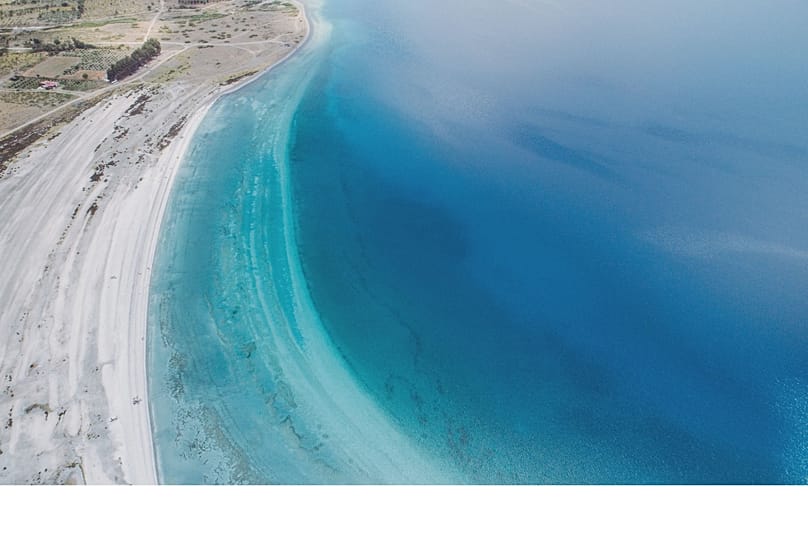
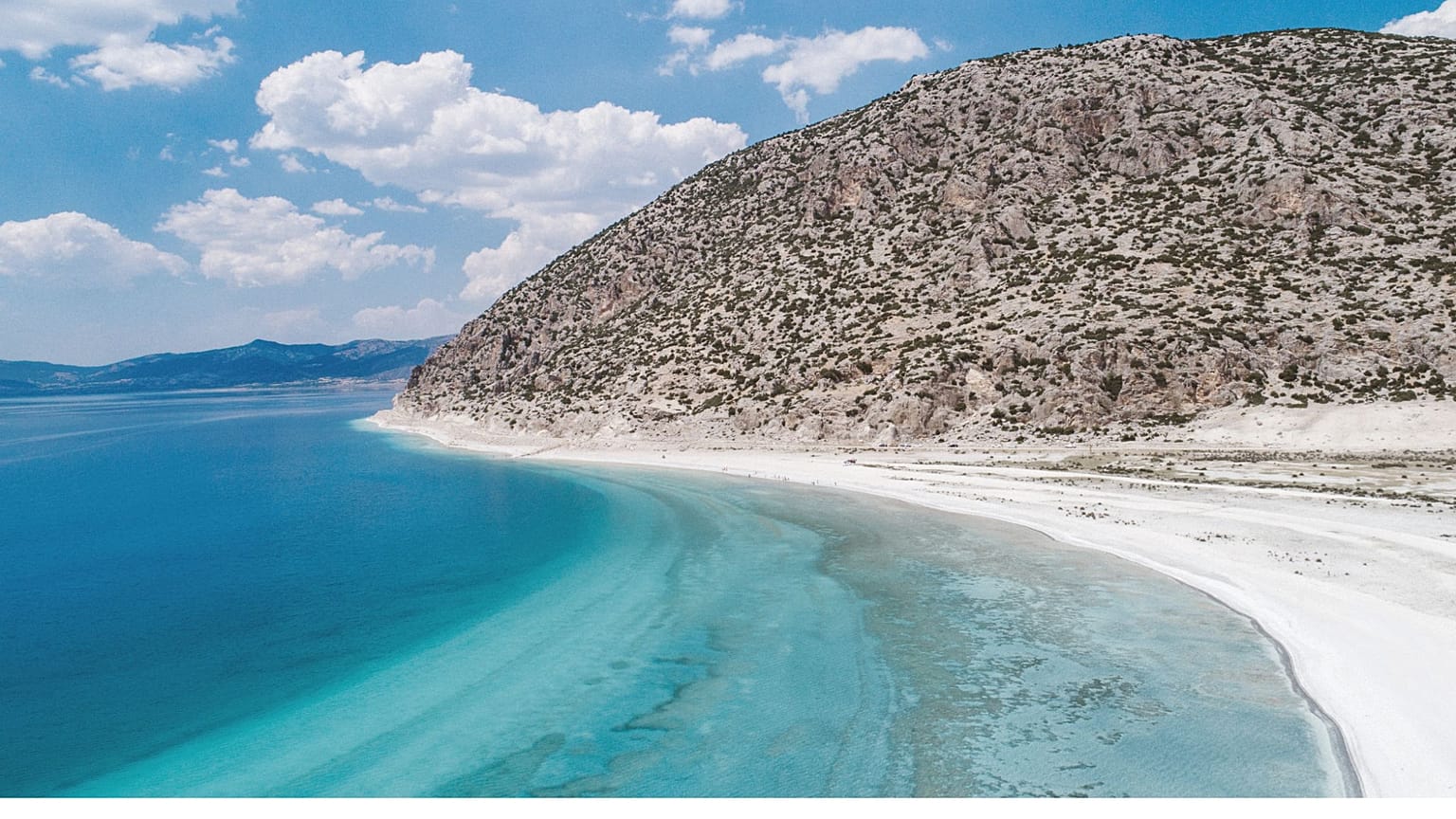
On arrival at Lake Salda, you’d be forgiven for thinking you’d taken a wrong turn. Located in the
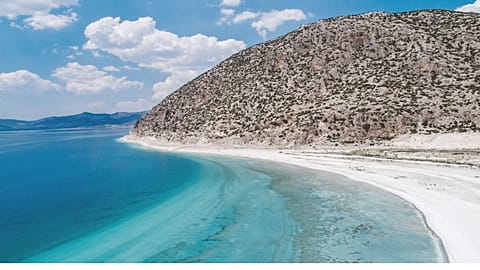
Burdur Province just northwest of Antalya, this striking tectonic formation sports dazzling white shores and cerulean water, a combination more akin to the Maldives than Türkiye. This beautiful vista is created by rich deposits of hydromagnesite which set off the various shades of the lake’s deep water – it reaches to almost 200 metres in places, making it one of the deepest lakes in the country.
The shores are not only a fantastic spot for a picnic, some sunbathing or enjoying a refreshing dip, but its black pine-forested slopes offer glorious hiking trails too. Perhaps its most surprising attribute though, is that hidden beneath the water’s surface is evidence of some of the oldest life on the planet. Ancient fossils found here directly helped NASA scientists prepare for their Mars 2020 mission.
The ancient statues of Mount Nemrut
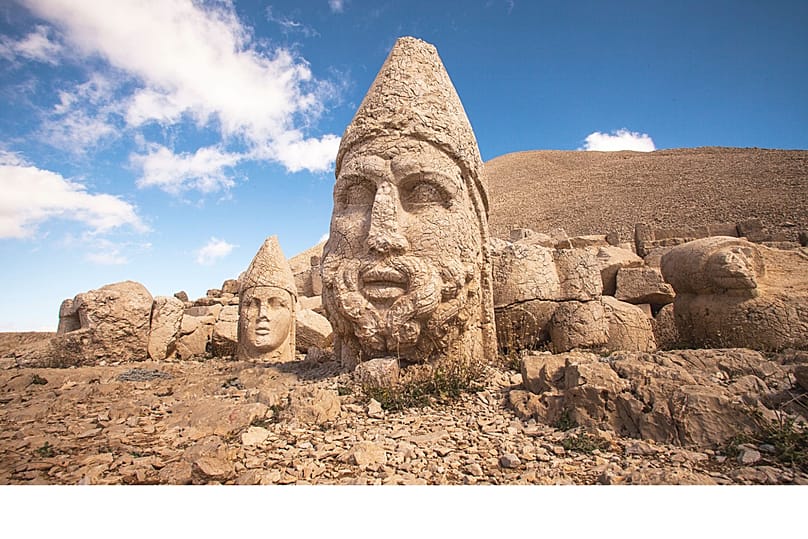
We’re all familiar with the pyramids of Egypt and Mexico, but it turns out Türkiye has a man-made mountain of its own. The peak of Mount Nemrut in Anatolia’s Eastern region was built in the 1st century BCE as a tomb for King Antiochus I Theos of Commagene, the ruler of the Kingdom of Commagene, a Greco-Persian dominion that eventually fell to the Romans.
Unlike the pyramids or Chichén Itzá though, Mount Nemrut’s top is covered with statues, columns and monuments dedicated to the fallen king. There are three main terraces, of which the eastern is the most well-preserved. Enormous, a near-nine-metre-tall statues of revered gods and kings – their heads arranged on the ground in front of them – line the terrace in an impressive display of historic masonry.
The flaming rocks of Yanartaş
Near the Olympos, around 80km southwest of Antalya, some 5,000m2 of rocky terrain is brought to life by dozens of small fires which flicker in and out of crevices.
This captivating natural phenomenon is caused by a mixture of abiotic methane expulsions and a rare transition metal called ruthenium, which resides in the rocks beneath the flames.
The two react, resulting in heated outbursts which change strength and location depending on the season. These fires – which look especially ethereal at nighttime – have been burning constantly for the better part of 2,500 years. Certainly not something you see every day.