












Water is not just a resource in Japan’s Hokuriku-Shinetsu region; it is the very foundation of the land, its culture and the enduring resilience of its people.
 ADVERTISEMENT
ADVERTISEMENT
ADVERTISEMENT
From the deep snowmelt that nourishes the valleys to the clear springs sustaining historic communities, a journey through this area provides a rare opportunity to connect with a way of life profoundly shaped by this essential element.
Visiting Hokuriku-Shinetsu is an experience that is both refreshing and grounding, inviting travellers to explore how water has supported traditions and hospitality in the region for generations.
Seeking the rich waters of the Snow Country Trail
A central and enriching experience in Hokuriku-Shinetsu is exploring a section of the region known as the Snow Country Trail.
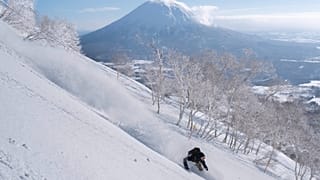
This route stretches approximately 307 km across mountains and valleys, making the area one of the world's snowiest inhabited regions. There, one can find communities that have adapted ingeniously to life lived under heavy snowfall.
The Snow Country Trail offers a blend of physical activity and cultural immersion, made accessible even for beginners through guided eco-tours.
This adventure often begins in Minakami Town in Gunma Prefecture, an area designated as a UNESCO Biosphere Reserve, before crossing into Niigata Prefecture’s renowned Uonuma region.
The guided journey utilises e-bikes and local train services, allowing travellers to cover an extensive area while taking in the majestic landscapes.
When visiting Hokuriku-Shinetsu, a recommended three-day itinerary into Snow Country highlights the unique relationship with water and snow that has become a defining feature of the region.
How to get there
Tokyo → Minakami Town (Jomo-Kogen Station) (approx. 1 hour by Shinkansen bullet train)
Click here for more information.
Minakami and the Tone River
Your journey may start in Minakami, where the Tone River flows from Mt. Ominakami-yama. The river is significant, as it supplies water to millions in Tokyo. Travellers can cycle alongside its currents, exploring the surrounding valleys.
The day often concludes with a relaxing soak at Tanigawa Onsen, followed by an overnight stay at Ryokan Tanigawa, an eco-friendly lodge committed to environmentally conscious practices.
Ryokan Tanigawa lodge, with views of Mt. Tanigawa, features a traditional open hearth in the lobby and serves local dishes, embodying local hospitality.
Literary landscapes and historic crossings
Day two may involve crossing the Joetsu border, retracing routes once described in literature, such as in KAWABATA Yasunari ’s famous novel, Snow Country.
Modern travel along the JR Joetsu Line train service now offers scenic, smooth travel compared to the former, more challenging route over the Shimizu Pass.
The route passes temples and shrines before arriving in Muikamachi, a town in the Minamiuonuma City of Niigata Prefecture.
The evening, meanwhile, provides a chance to stay at Ryugon in Minamiuonuma City, a lodge that seamlessly blends traditional architecture with eco-friendly design and regional hospitality.
The wisdom of Uonuma
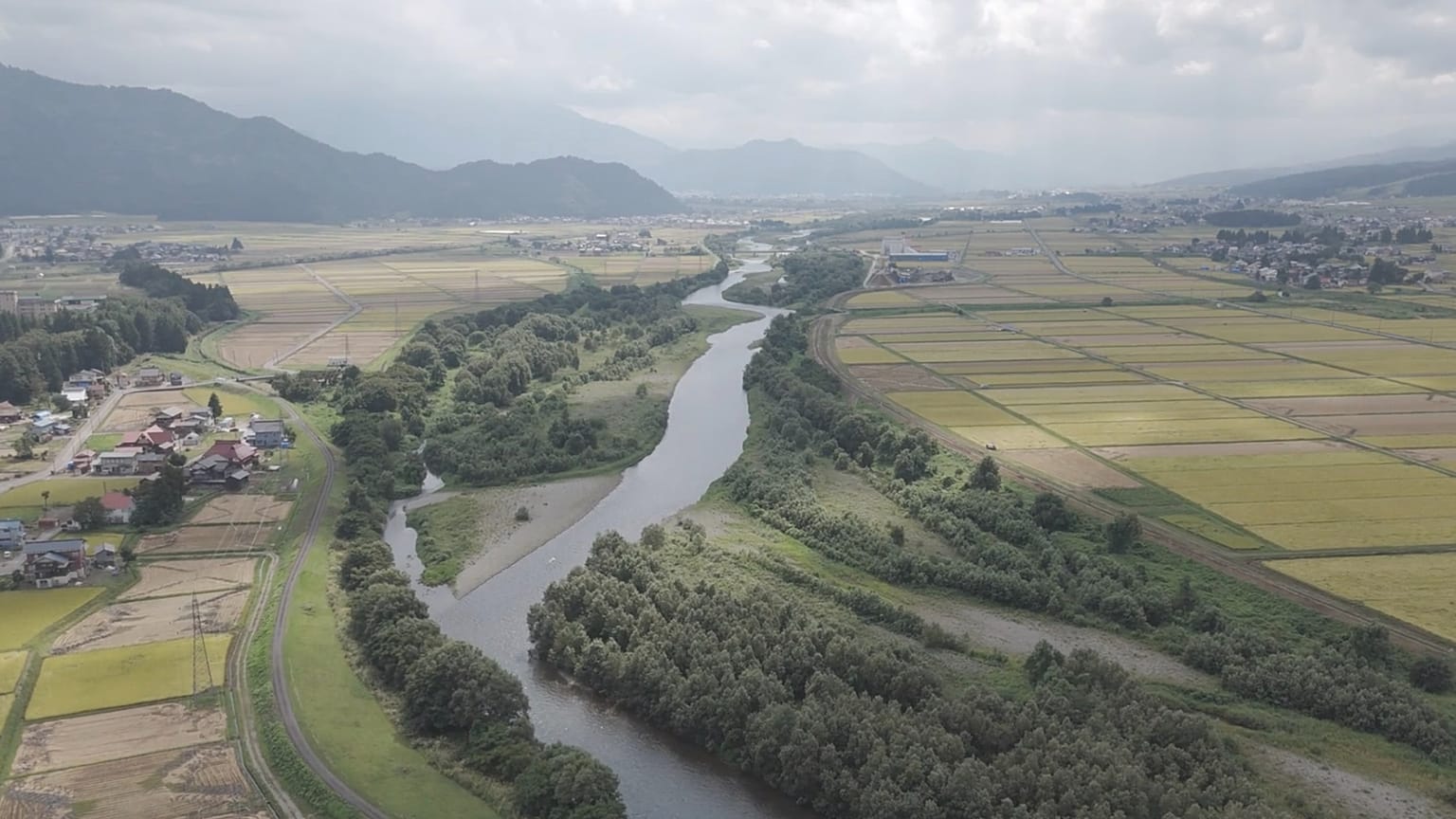
The final day may focus on the Uonuma area, one of Japan’s leading rice-producing regions. The area is renowned for its flavourful rice, cultivated thanks to the abundant snowmelt and clear mountain springs.
An optional dawn climb up Mt. Sakado offers breathtaking views of the unkai (sea of clouds), a natural phenomenon caused by the area’s moisture-rich air.
Later visits to local temples, such as Saifukuji Temple, may reveal magnificent carvings by ISHIKAWA Uncho (1814-1883), a master artist often called the “Michelangelo of Japan.”
Experienced guides accompanying the tour share the history and cultural practices that have evolved from life in this snowy region; indeed, this deep-seated wisdom and resilience of the people are evident everywhere.
HOSOYA Tomoko, Secretary General of the Snow Country Tourism Zone, noted the continuous, millennia-long habitation of this heavy snowfall area.
“Even among heavy snowfall areas,” HOSOYA says, “Hokuriku-Shinetsu is said to be rare, a region where people have lived continuously for 8,000 years.”
The ancient wisdom that the inhabitants have amassed manifests in practices like storing vegetables in “snow rooms,” which act as natural refrigerators, using humidity to keep them fresh while promoting aging.
Furthermore, the long winters of the Hokuriku-Shinetsu region has supported the development of exquisite weaving traditions, as the steady, moderate humidity prevents delicate threads from breaking.
Founded in 1933 in Shiozawa, Niigata, Sakai Orimono is a weaver preserving authentic Shiozawa Kasuri. Even today, the company weaves most of its fabrics in-house, by hand, maintaining the craftsmanship of its textiles.
The region’s renowned sake culture owes much to its water, exemplified by Hakkaisan Brewery, founded in 1922 and sourcing soft spring water directly from Mt. Hakkai’s sacred Raiden spring.
At Hakkaisan, this pristine mountain water is mixed with carefully selected rice to create the brewery’s clear, balanced sake.
Thus, joining single- or multi-day guided tours of the Hokuriku-Shinetsu region not only helps preserve the snow environment but also supports the sustainability of local communities.
Springs and wells of Matsumoto
Beyond the snowy mountains of Uonuma, the historic castle town of Matsumoto offers another perspective on water’s role in Japanese life.
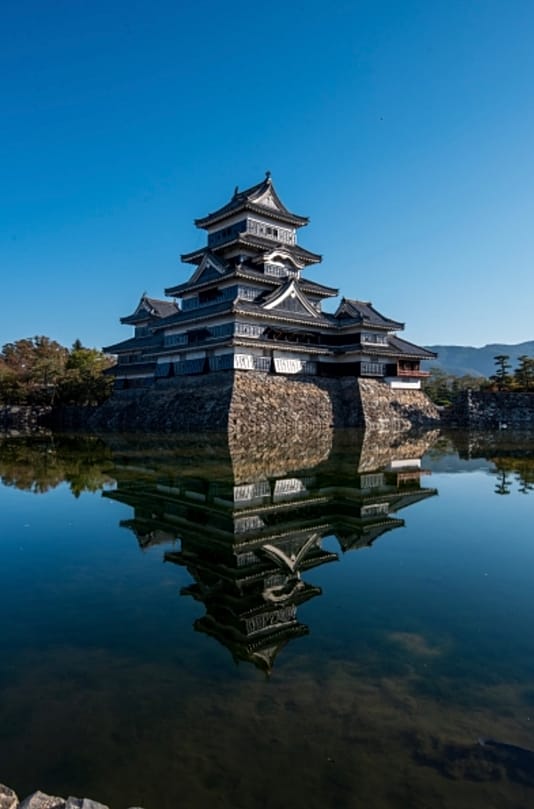
In Matsumoto, springs fed by the snowmelt of the Japan Alps supply numerous wells throughout the city, many of which are still used daily by residents.
These abundant sources of water are collectively known as the “Matsumoto Castle Town Springs.” The purity of the water has become an integral part of daily life and local industries.
Residents use the water for brewing coffee and cooking rice, and it is a vital resource for preparing local cuisine, including tofu and sweets like mizu-yokan (sweet red bean jelly), as well sake and the renowned dyeing craft industry.
Exploring the town allows visitors to trace these water routes and encounter historical sites. The Genchi Well, for instance, has bubbled with fresh water for nearly two centuries, and records indicate that as early as 1843, its clear water was already in use.
Another significant spring is the Iori Reisui Well, which is linked to the memory of SUZUKI Iori, a samurai who devoted himself to supporting local farmers who had suffered under heavy taxes in the Edo period (1603-1867).
Even the moat of Matsumoto Castle is sustained by these springs, underscoring how deeply the town’s identity is tied to its water resources.
By travelling through the castle town, visitors can appreciate the enduring blessings of water that enrich people’s lives.
The flow of Azumino’s rich water resources
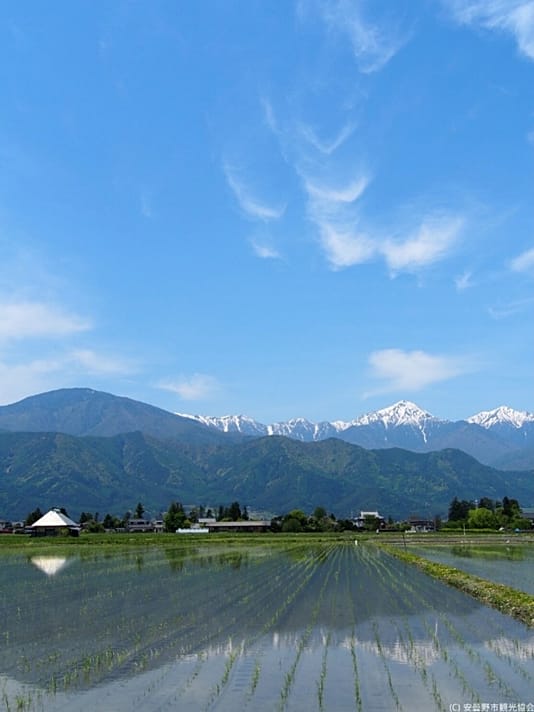
The theme of water continues in Azumino, an area near Matsumoto, where the sheer abundance of water defines the local way of life.
Azumino’s spring resources are recognised nationally, designated as one of the Ministry of the Environment’s “100 Famous Waters” and the Ministry of Land, Infrastructure, Transport and Tourism’s “Best 100 Water Villages.”
In Azumino, the meltwater from the Northern Alps emerges from underground, feeding into the Azumino Wasabi field springs, which produce a bountiful daily spring yield.
This crystal-clear water is a lifeblood for the region’s inhabitants, sustaining both expansive wasabi farms and fertile rice paddies. The region also boasts one of the highest production volumes in Japan for rainbow trout farming, another industry that relies heavily on pure water.
The history of water management in Azumino is marked by collective effort. The Jikkasegi irrigation channels, for example, were constructed in the early 19th century (starting in 1816) through the combined labour of thousands of farmers, and are still the backbone of local agriculture.
A reverence for water
In Hokuriku-Shinetsu today, water is not only viewed as a natural treasure but also a foundation upon which the region’s food and drink culture as well as community ties have been built.
Travellers to the region can experience this legacy by visiting its springs and fields, tasting its locally sourced dishes, or simply walking its carefully managed, centuries-old, trails.
Alcohol can damage your health, please drink responsibly.