

















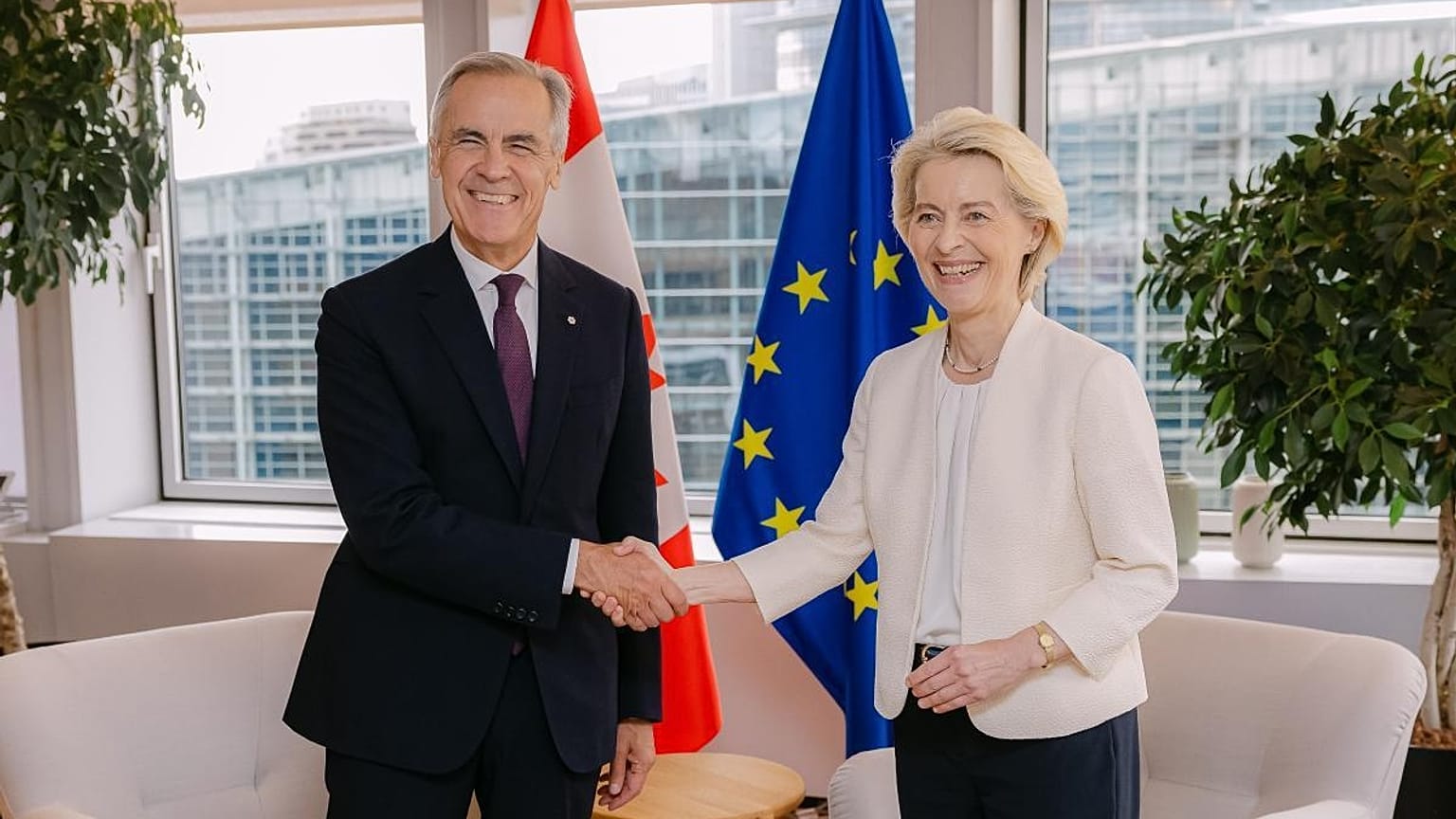













Canada is in early talks to join Erasmus+ and possibly Horizon Europe, as Ottawa and Brussels weigh an unprecedented "associate membership" of the EU short of full accession.
Ottawa and Brussels are in talks for Canada to join the Erasmus+ exchange programme, which would let students from both sides study at each other's universities.
 ADVERTISEMENT
ADVERTISEMENT
ADVERTISEMENT
EU-Canada relations have rarely been closer, as Prime Minister Mark Carney has sought to build a tighter relationship with the European bloc following the aggressive trade agenda and erratic foreign policy of the second Trump administration.
On Wednesday, European Commission President Ursula von der Leyen invited Canada to become the first "associate member" of the EU, an unprecedented arrangement short of full membership, which remains off the table for Canada since it is not a European country.
While the details of that new status remain unclear, talks are already under way for Canada to join several existing EU programmes, including the flagship Erasmus+ exchange scheme, long hailed as one of the most tangible benefits of European integration.
Canada would be the first non-European country to join the exchange programme, which funds people and organisations to study and train abroad.
"Canadians want to participate in Erasmus+. It will be expensive for them, but they are ready to do that," MEP Javier Moreno Sánchez (Spain/S&D), chair of the European Parliament's delegation to Canada, told reporters at a briefing on Tuesday.
Negotiations are still at an early stage, but there is momentum on both sides of the Atlantic to bring Canada into one of Europe's most successful projects, Euronews understands.
Canada is currently a recognised Erasmus+ partner country, but not an associated one. That means Canadian universities and other entities may join certain Erasmus+ actions, subject to specific eligibility criteria and conditions.
Besides EU member states, six non-EU countries currently take part: North Macedonia, Serbia, Iceland, Liechtenstein, Norway and Türkiye. Canada is expected to follow a similar arrangement if an agreement is found.
Moreno hailed the move as a way of strengthening the relationship with tangible benefits for ordinary people. He also said the convention that mutually recognises architects' professional qualifications should be extended to doctors, engineers and professors.
Canada might also join another flagship EU programme, Horizon Europe, which funds research projects. Cooperation there is currently limited to the strands dedicated to global challenges and industrial competitiveness.
"Canadians are the most European people outside of Europe," Moreno said. "If we don't strengthen our relationship with Canada, then with which other country should we do it?"