

















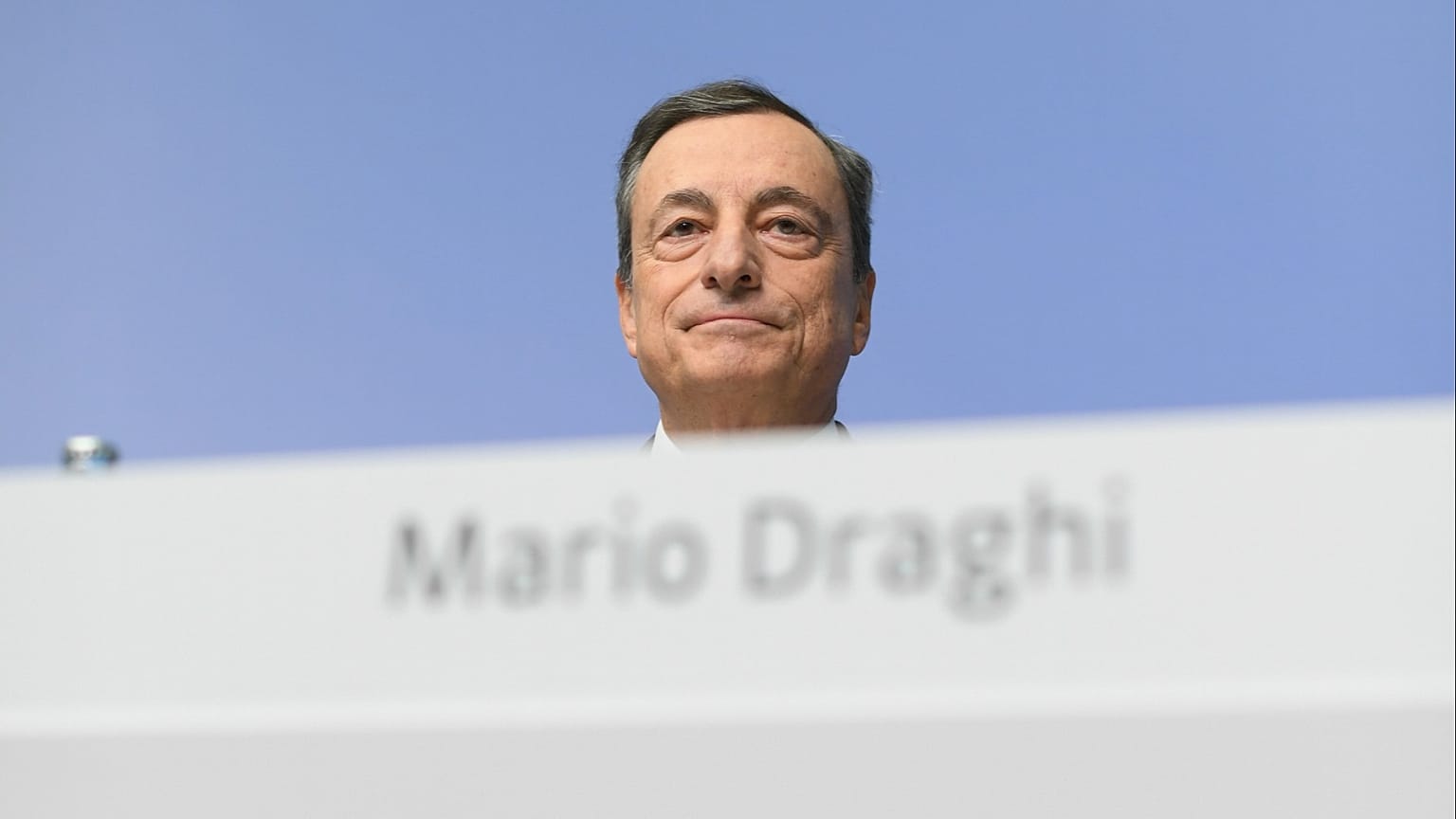













The European Union is implementing the recommendations of former Italian Prime Minister Mario Draghi, but at a pace that is failing to keep up with the rest of the world.
The European Union has implemented 26 per cent of the recommendations outlined by Mario Draghi two years ago, according to a report published on Wednesday by the Joint European Disruptive Initiative (JEDI Draghi Tracker).
 ADVERTISEMENT
ADVERTISEMENT
ADVERTISEMENT
"Progress is real, but it is not in sync with the pace of the world," the authors wrote in a press statement, criticising the bloc for moving too slow on legislation.
In September 2024, Draghi presented in Brussels a long-awaited report which included recommendations on how to make Europe more competitive and strategically independent from big global powers, such as the US and China.
Draghi listed a number of significant reforms including boosting investments in strategic sectors, such as AI and defence.
The report was welcomed by the European Commission and the member states which said that making Europe more competitive is the priority of this mandate.
Despite this prioritisation, legislative processes remain slow, with some reforms taking longer than expected to advance.
"Zero of the thirty key policies has been fully executed. And only 30% of recommendations are seriously making progress," the report said, specifying that the tracker does not score intentions or announcements but only execution.
"Two years after publication of this existential report, not a single Draghi key recommendation is fully executed, while a third of the agenda would cost nothing but political courage," JEDI Scientific Director André Loesekrug-Pietri said in a press statement.
The report identified a trend suggesting that the bloc tends to move faster when it feels threatened. "Energy and raw materials 35%, finance and investment 25%, defence, space and AI 25%, research and skills 21%," the report stated.
Health and life sciences scored only at 13%, despite the global COVID-19 pandemic that hit Europe in 2020.
According to a reform guideline approved by heads of states in March 2026, key reforms must be approved by the end of the year.
Dubbed the “One Europe, One Market Roadmap,” it includes a range of legislative measures, including the reform of capital markets, simplification packages, the EU Inc. initiative (also known as the “28th Regime”), and the Industrial Accelerator Act.