




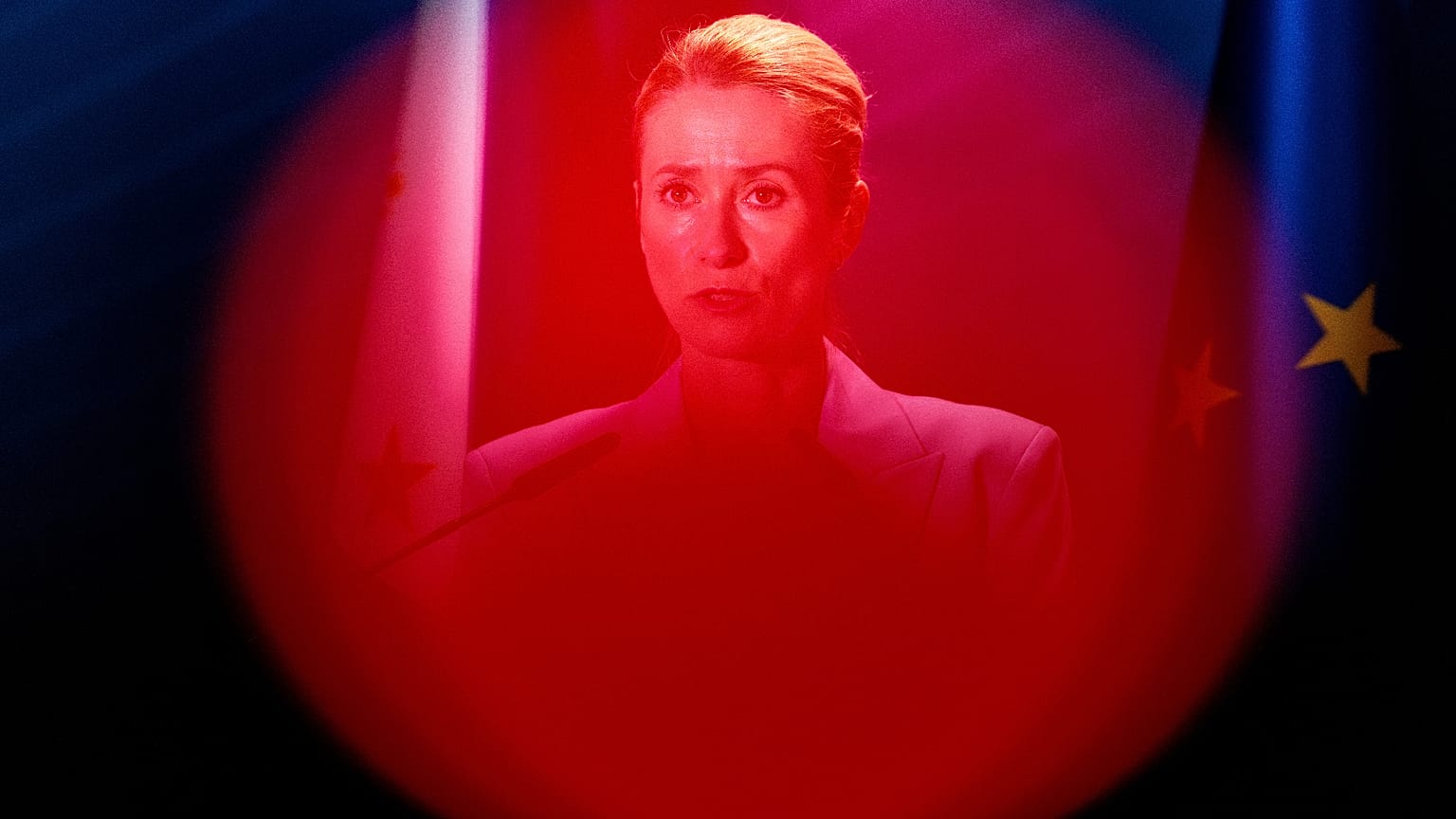














EU foreign policy chief Kaja Kallas has scrapped a new defence advisory group days after unveiling it, following pushback from member states.
EU foreign policy chief Kaja Kallas announced the new group just last week to advise on Europe's defence needs, but the initiative was scrapped following strong opposition from member states.
 ADVERTISEMENT
ADVERTISEMENT
ADVERTISEMENT
At an informal meeting of defence ministers in Ireland last week, EU High Representative for Foreign Affairs and Security Policy Kaja Kallas announced a new advisory body bringing together political and military leaders to help design a new approach to European defence.
"The aim is to have some of the brightest minds on security and defence come together and really provide out-of-the-box solutions on how we can be faster in fulfilling these gaps and how we can be more effective," Kallas said during the press conference.
Only days later, the initiative was quietly shelved. Invitees to the launch event, a fireside chat with Kallas, due to take place on Monday in a cosy venue in Brussels, received word of the cancellation on Sunday afternoon.
The abrupt decision came after several member states opposed the move, viewing it as the wrong path to pursue, despite the group having been intended solely as an advisory body rather than one empowered to make decisions on behalf of member states.
"The diagnosis has not changed that Europe needs to deliver faster on defence. Europe still needs to confront the question the group was designed to address, how to strengthen European defence faster," an EU official told Euronews, asking not to be named.
The European External Action Service (EEAS) is already under pressure, as Commission President Ursula von der Leyen has steadily sought more say over the bloc's foreign policy, clashing with Kallas over major issues such as relations with Israel.
The latest Franco-German proposal would place the EEAS under the direct supervision of the President of the European Commission, though it would also give the High Representative a much broader portfolio.
The pressure to scrap the initiative before it was even launched — before the names of its participants had even been announced — is a significant political defeat for Kallas, who had only recently put in place a new EEAS leadership to shore up her position.