




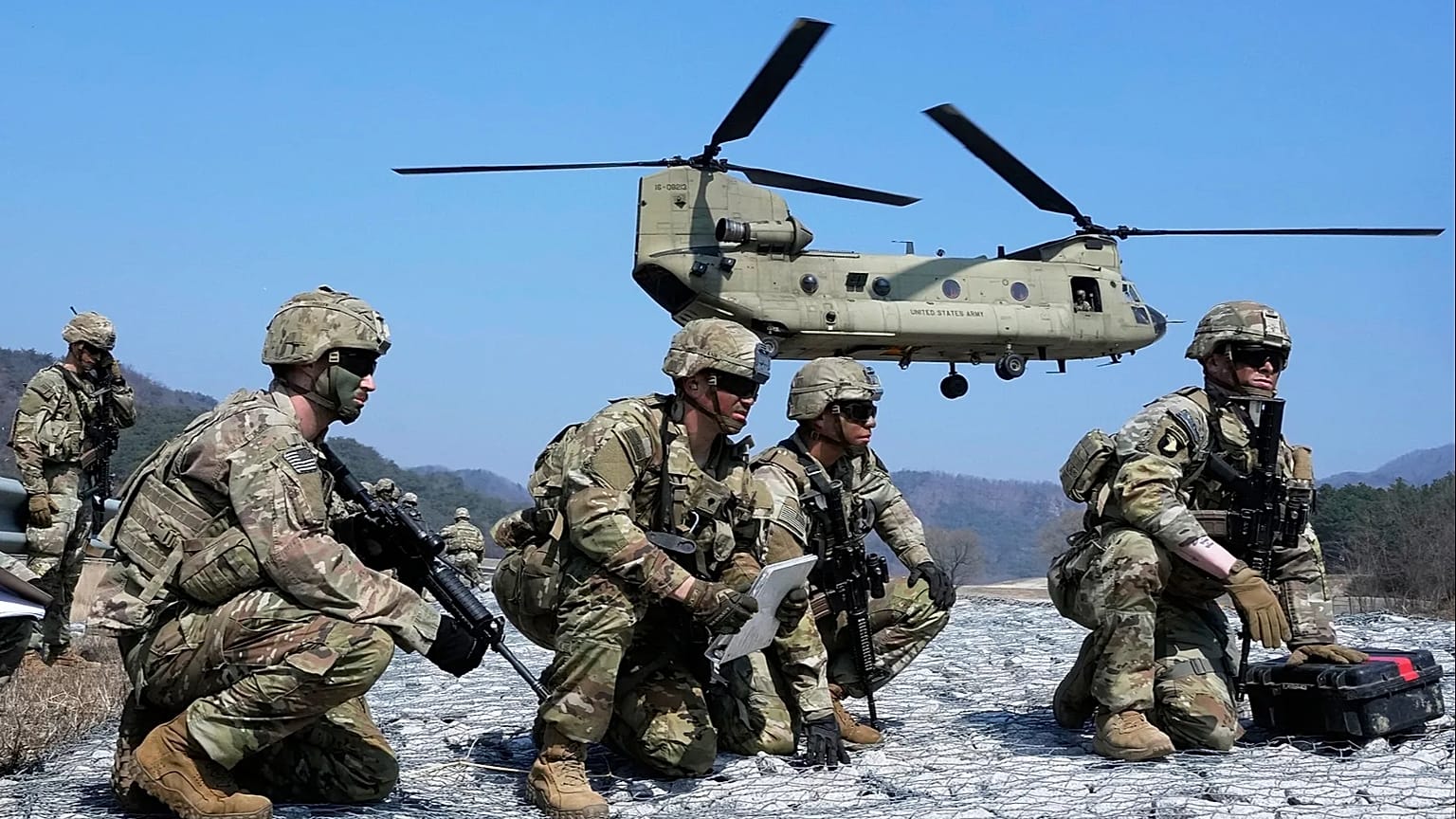














The decision to do so comes a month after US Defence Secretary Pete Hegseth said Washington would do so. The Trump administration has repeatedly criticised its European allies for their response to the war in Iran.
The United States has launched a review of its military presence in Europe on Monday, after US President Donald Trump has repeatedly lashed out against European allies in the alliance.
 ADVERTISEMENT
ADVERTISEMENT
ADVERTISEMENT
The decision is "designed to ensure that NATO is moving fast and irreversibly toward Europe taking primary responsibility for its conventional defence," US Under Secretary of Defence Elbridge Colby wrote on X.
"The outcome of this review will be an acceleration of NATO's transition to a stronger, more equitable, and sustainable alliance," Colby added.
The move comes a month after US Defence Secretary Pete Hegseth told NATO allies that Washington planned to do so.
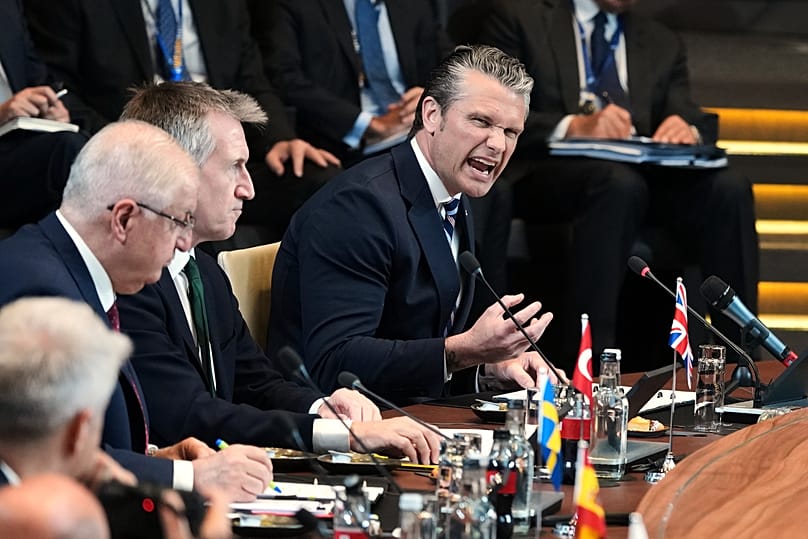
“This will be a real review. It will be designed to ensure that NATO is moving fast and irreversibly toward Europe leading, stepping up to take primary responsibility for the defence of Europe,” Hegseth told his NATO counterparts as they met in Brussels in June.
“It’s a review that some countries will fail and others will pass with flying colours,” he added.
During his speech at NATO headquarters in Brussels, Hegseth echoed Trump's repeatedly criticism and slammed European allies for its response, or lack thereof, to the joint US-Israeli war in Iran, including the refusal to allow US forces access to bases in Europe to launch attacks.
Hegseth also threatened to reduce Washington's NATO financial contribution unless allies reached defence spending targets.
The move comes as a blow—albeit not an unexpected one— to European allies, as they learn to deal with an increasingly unpredictable ally.
Last month, German Chancellor Friedrich Merz said the allies had been aware of Washington's plans to pull troops from Europe at some point, and emphasised the need that the bloc must be able to take care of its own security.
“We know that we must do more and we are doing it,” Merz said.
In recent months, European allies and Canada have responded to growing uncertainty over Washington's security commitments by accelerating efforts to strengthen its own defence capabilities.
Speaking ahead of the annual NATO summit in Ankara earlier this month, European Commission chief Ursula von der Leyen and NATO Secretary General Mark Rutte said NATO must become more European to reduce its long-standing reliance on the US security umbrella.
"We cannot continue, as we did, being over-reliant on the United States. We need a much stronger Europe within a stronger NATO," Rutte said, hailing an "unparalleled" transformation driven by closer EU-NATO cooperation.