




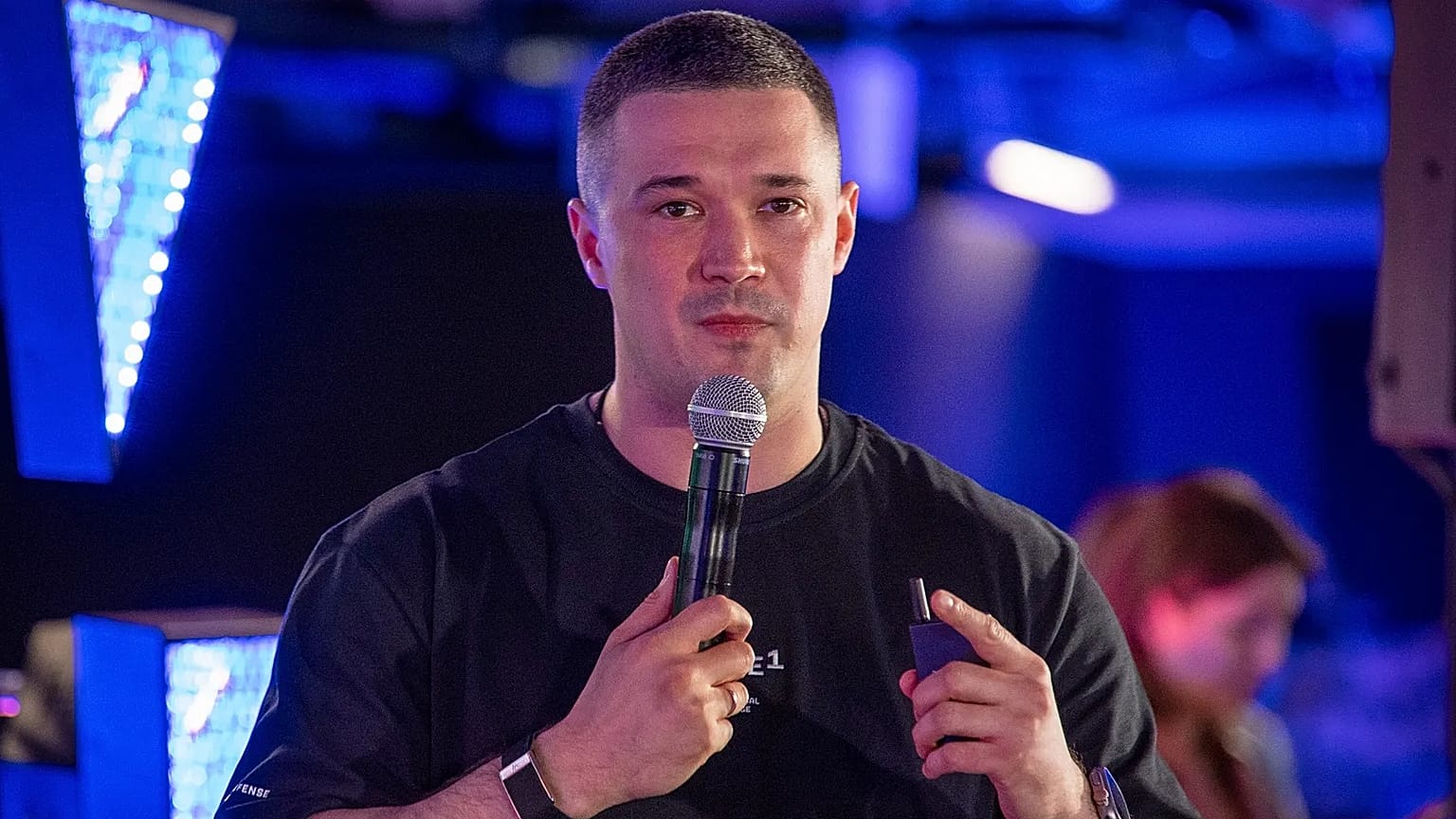














Ukraine's dismissed Defence Minister Mykhailo Fedorov accused Commander-in-Chief Oleksandr Syrskyi of obstructing military reform and "splitting the country", telling reporters in a bombshell press conference that President Zelenskyy had chosen to keep Syrskyi in the post over him.
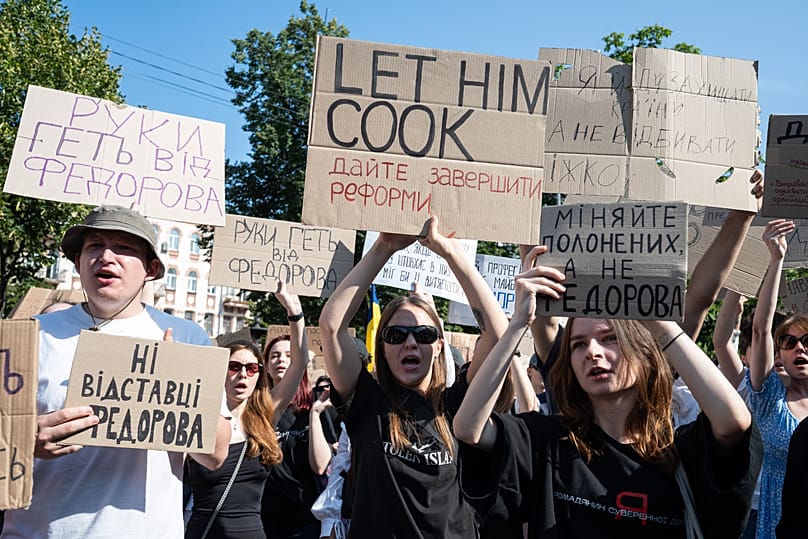
As thousands of Ukrainians took to the streets on Thursday to protest against President Volodymyr Zelenskyy's dismissal of Defence Minister Mykhailo Fedorov, the former minister publicly acknowledged that his conflict with Ukraine's commander-in-chief had contributed to his removal.
 ADVERTISEMENT
ADVERTISEMENT
ADVERTISEMENT
Speaking at a tense media briefing, Fedorov revealed that Zelenskyy had been forced to choose between him and Commander-in-Chief Oleksandr Syrskyi. However, he insisted that he had never presented the president with an ultimatum of "either me or Syrskyi".
"I said then we will win with this commander-in-chief."
According to Fedorov, he accepted the president's decision despite their differences.
"When the president said he did not plan to dismiss Syrskyi, I said that I agreed. It is his decision as supreme commander-in-chief and I would learn to work with him, because ultimately our client is the Ukrainian people, not anyone else," he said.
However, Fedorov alleged that his reform agenda quickly encountered resistance from the military's top command.
"We ran into a complete blocking of all our initiatives," he said.
"Syrskyi is not ready to speak openly, face to face, about the problems."
"He is ready to go to meetings, weave intrigues, think that someone is organising media campaigns against him. And he issued an ultimatum."
"Instead of thinking about how to defeat Russia asymmetrically, he figured out how to split the country," Fedorov added, in some of his strongest public criticism of the commander-in-chief to date.
Despite his criticism, Fedorov acknowledged Syrskyi's role during the early stages of Russia's full-scale invasion.
"In reality, Syrskyi saved our country in 2022, carried out several successful operations and we cannot underestimate him. But the war has changed," he said, portraying his calls for changes in the military leadership as a response to an evolving strategic environment rather than a personal vendetta.
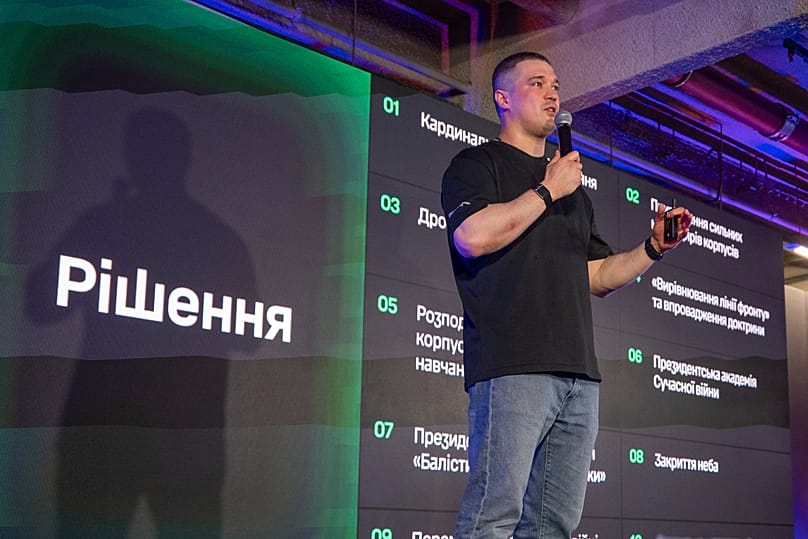
Zelenskyy, who has presented the reshuffle as an effort to refresh his team and strengthen Ukraine's wartime governance, offered Fedorov an advisory role after removing him as defence minister.
Fedorov said he had declined the offer, describing his departure as the result of entrenched institutional resistance to his efforts to modernise the military through greater technological innovation and a more decentralised approach.
The dismissal sparked protests in Kyiv and other cities, with demonstrators criticising Zelenskyy for removing Fedorov despite his strong record in office and broad popularity among the military, civil society and across the political spectrum.
Tech-savvy reformer vs old-school general
The dispute between the defence minister and the commander-in-chief had long been an open secret in Ukraine, often described as a generational clash between a young, tech-driven reformer with a startup background and a more conventional military commander.
The tech-savvy 35-year-old was the last remaining minister to have served in every Zelenskyy government, having been one of the president's closest allies since his election in 2019.
Fedorov served as Ukraine's deputy prime minister and minister of digital transformation from 2019 until his appointment as defence minister earlier this year.
He won widespread praise for spearheading Ukraine's vision of a "state in a smartphone", aimed at cutting bureaucracy and digitising public services.
Since the launch of the Diia app in 2020, Ukrainians have been able to access a growing range of government services from their smartphones.
Following Russia's full-scale invasion in 2022, his ministry also took on a leading role in expanding Ukraine's drone capabilities, supporting defence technology and driving digital education initiatives.
During his six months as defence minister, Fedorov was widely credited with accelerating military innovation and helping shift battlefield momentum in Ukraine's favour.
In February, he worked with Starlink to curb Russia's unauthorised use of the satellite internet service, drawing on a personal relationship with SpaceX owner Elon Musk that had developed during the war.
Fedorov also played a central role in strengthening cooperation between the Ministry of Digital Transformation and the Ministry of Defence to accelerate the development and deployment of new military technologies.
More recently, he oversaw the launch of the campaign to "turn Crimea into an island" — an operation targeting Russian logistics routes and military infrastructure in Moscow-annexed Crimea and other Russian-occupied areas of southern Ukraine.