

















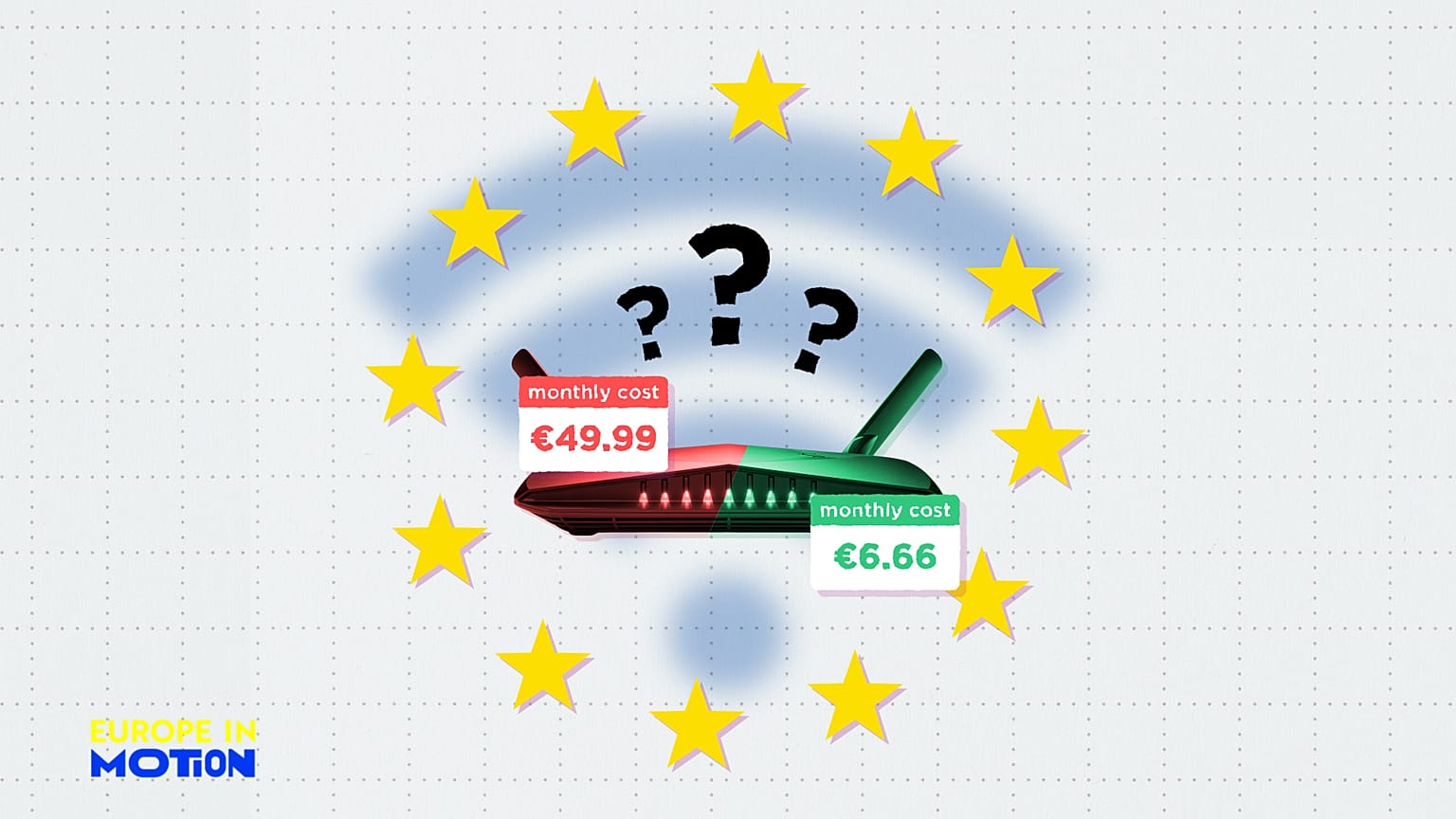














Europeans are more connected than ever, yet the cost of getting online varies dramatically. So which country gets the best price-connectivity deal?
In an increasingly connected world, internet access has become an essential facility in homes across Europe.
 ADVERTISEMENT
ADVERTISEMENT
ADVERTISEMENT
In 2025, 94% of individuals living in the EU used the internet in the last three months, while only 4% went the whole year without using it, according to the latest Eurostat figures.
Furthermore, mobile devices were used to connect to the internet by almost nine out of 10 individuals in the EU last year.
However, the cost of this access varies dramatically across the globe.
Luxembourg is the country that has the most expensive internet service in the EU, with an average monthly cost of €49.99, according to research by the broadband comparison site Broadband Genie. The study analysed 2,631 broadband tariffs across 214 countries and territories worldwide.
The Netherlands and Finland follow closely, with average monthly broadband prices of €48.73 and €48, respectively.
Despite their higher costs, the Netherlands and Luxembourg still reported the highest levels of internet usage in the EU in 2025, according to Eurostat.
On the other hand, Romania offers the cheapest broadband in the bloc, averaging around €6.66, which ranks as the seventh-lowest rate globally.
Lithuania follows with an average price of €14.90, and Bulgaria comes in at €15.
Between 2015 and 2025, both Bulgaria and Romania saw increases in household connectivity of 34% and 28%, respectively.
Internet access goes beyond prices
Europe's internet access and broadband prices appear to fluctuate based on geography.
Eastern Europe has the lowest internet prices worldwide on a subregional level due to the widespread use of fibre, which is widely recognised as the fastest and most stable connection available, easily supporting up to 10 GB per second. It's so prevalent in the region partly due to the fact that it modernised its infrastructure later, bypassing outdated telecommunications systems.
Southern Europe, meanwhile, ranks fourth in terms of affordability among the 22 sub-regions analysed.
On the other hand, Northern Europe and Western Europe have the most expensive internet prices on the continent.
The broadband cost follows the higher overall cost of living, according to the Broadband Genie study.
Yet, it is not only prices that change across Europe: internet access varies among individuals depending on whether they live in cities or rural areas.
In Ireland, Denmark, the Netherlands, Luxembourg and Finland, internet connectivity rates in cities exceeded 99%.
Rural areas in Ireland, the Netherlands, and Denmark, meanwhile, reported the highest internet connectivity rates in 2025, each also more than 99%.
On the other hand, Greece, Bulgaria, Croatia, and Portugal registered the lowest internet connectivity rates in rural areas.