

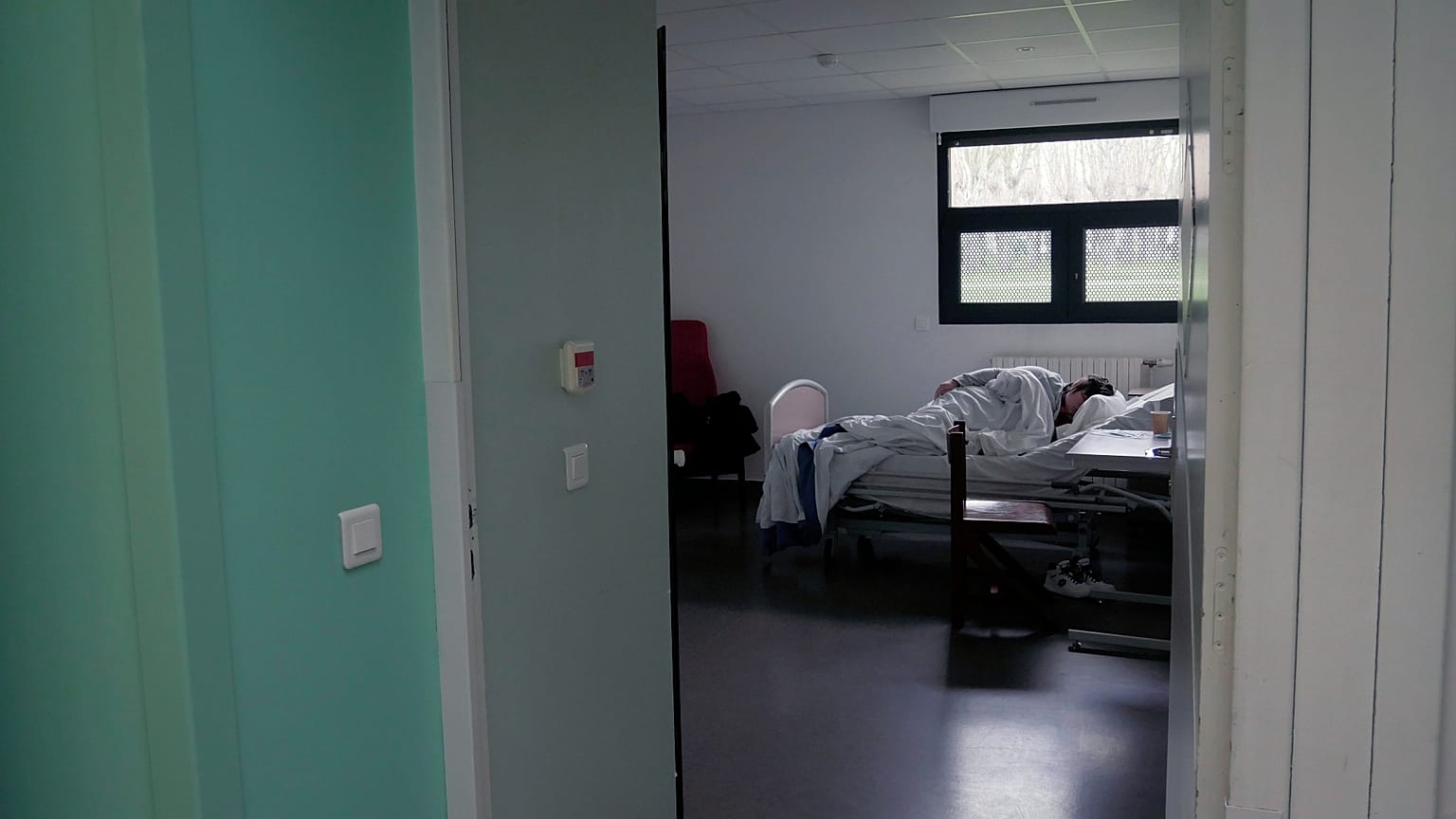













A report by France's prisons watchdog condemns care conditions that fail to ensure patients' "dignity" or "privacy", amid staff and bed shortages in psychiatry.
Patients forced to lie directly on the floor, others stuck for several days on trolleys, or even detained arbitrarily, in conditions that safeguard neither their "dignity" nor their "privacy". In a report published on Thursday, the office of the General Inspector of Places of Deprivation of Liberty (CGLPL), the institution headed by Dominique Simonnot, denounces "serious failings" in the handling of psychiatric emergencies at several hospitals in the Île-de-France region.
 ADVERTISEMENT
ADVERTISEMENT
ADVERTISEMENT
Her teams visited several facilities in the Paris region in early July, including Cochin, Robert-Debré, Necker and La Pitié-Salpêtrière hospitals, as well as Sainte-Anne in Paris, Delafontaine in Saint-Denis and Henri-Mondor in Créteil.
They describe conditions of care that are incompatible with respect for patients’ "fundamental rights" in departments facing shortages of staff, resources and psychiatric beds.
Several days of waiting
In the first half of 2026, 3,957 patients requiring psychiatric care experienced prolonged waits in emergency departments in Île-de-France, an increase of 31.8% compared with 2025.
The average waiting time exceeded 39 hours in the second quarter, compared with 29 hours at the start of 2025. In some facilities, patients can remain in emergency departments for up to ten days while waiting for a bed.
At Sainte-Anne, 60% of patients seen in psychiatric emergency services wait "more than 13 hours" and "20% more than 48 hours".
The report warns of the consequences of these delays, which can lead to patients "forgoing treatment" and to "breakdowns in continuity of care", and calls for the introduction "very quickly" of "organisational, infrastructure, capacity and human-resources solutions".
Practices outside the legal framework
Another worrying finding is that some patients who are supposed to be admitted without their consent are being held "arbitrarily", and that measures of seclusion or restraint are also being used "without any legal basis".
The report calls for the introduction of "a facility-wide policy on alternatives" to these practices and for better staff training.
The CGLPL is also concerned about the situation of children and adolescents. In the absence of enough child psychiatrists and sufficient capacity, many minors are admitted to units that also care for adults.
The body is calling for a specific "legal status" for these young patients, as well as a "rehabilitation plan for child and adolescent psychiatry".