




























Driven by the rare Bundibugyo strain of the virus, for which there are no vaccines or treatments, the outbreak is the biggest in the DRC's history.
The Red Cross voiced alarm on Monday after six workers taking part in a desperate bid to contain a deadly Ebola outbreak were injured in attacks last week in the Democratic Republic of the Congo (DRC).
 ADVERTISEMENT
ADVERTISEMENT
ADVERTISEMENT
"Attacks against volunteers and humanitarian personnel are unacceptable," the International Red Cross and Red Crescent Movement said in a statement, along with the Red Cross societies of the DR Congo and Uganda.
The statement said that on 17 August, a Ugandan Red Cross convoy helping the Ebola response was attacked in Ituri province, the outbreak's epicentre, with one person seriously injured and two ambulances pelted with stones and vandalised.
The following day, two volunteers were injured while attempting to conduct a burial in Haut-Uele province. They were evacuated for medical care, during which two vehicles were damaged.
Then on Wednesday, in Beni in North Kivu province, three volunteers were "attacked and injured" with equipment used in the Ebola response destroyed.
The statement said the attacks were an alarming reminder of the risks faced by humanitarians when tackling epidemics and emergencies.
"Respect for humanitarian personnel and humanitarian activities is essential to ensuring that communities affected by epidemics and other crises continue to receive the assistance and services they urgently need," it said.
"Every personnel injured and every ambulance, vehicle, or piece of equipment damaged reduces the capacity to provide emergency health and humanitarian services, putting more lives at risk and making the epidemic harder to contain."
Workers attacked, equipment destroyed
In total, 12 volunteers have been injured, ambulances have been damaged and emergency response equipment has been destroyed in 11 violent incidents since the Ebola outbreak was declared on 15 May.
"We call on communities, local leaders, and all relevant stakeholders to support, respect, and protect humanitarian action," the Red Cross said.
"Volunteers, health workers, and humanitarian staff must be able to carry out their work in complete safety, without fear of violence, intimidation or threats."
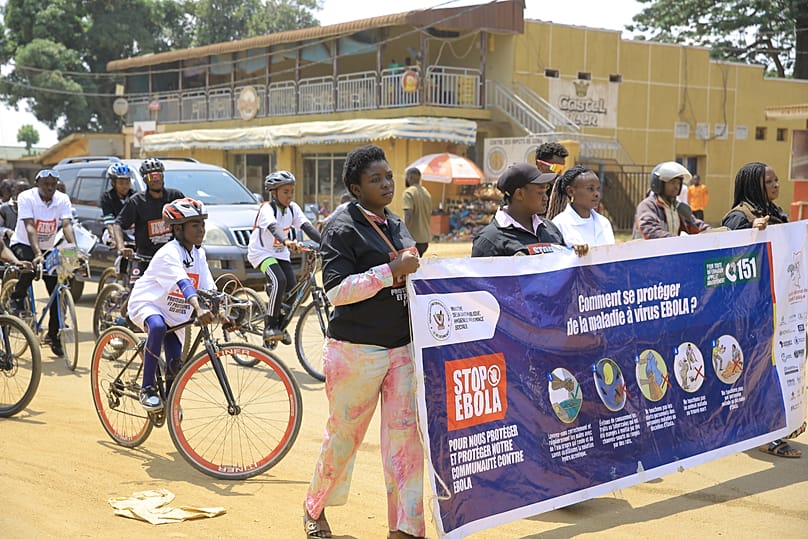
The virus has hit regions in the north and east where health infrastructure is lacking and myriad armed groups have roamed for decades.
Tensions have emerged with local communities over handling of the remains of Ebola victims. Burials must be strictly supervised as the virus spreads by contact with bodily fluids, meaning corpses can remain contagious.
Driven by the rare Bundibugyo species of the virus, for which there are no vaccines or treatments, the outbreak is the biggest in the DRC's history.
A total of 2,557 deaths from 5,375 confirmed cases of Ebola have been registered in the DRC, according to the WHO.