















This article was produced and funded by GSK
 ADVERTISEMENT
‘Partner Content presented by’ is used to describe brand content that is paid for and controlled by the advertiser rather than the Euronews editorial team. This content is produced by commercial departments and does not involve Euronews editorial staff or news journalists. The funding partner has control of the topics, content and final approval in collaboration with Euronews’ commercial production department.
Antimicrobial resistance is a health security threat. Europe can lead global action
Antimicrobial resistance (AMR) is a global threat that no country can tackle alone.¹ World AMR Awareness Week, from 18 to 24 November, puts this shared responsibility into focus: countries must work together to preserve effective medicines and support the development of new treatments.
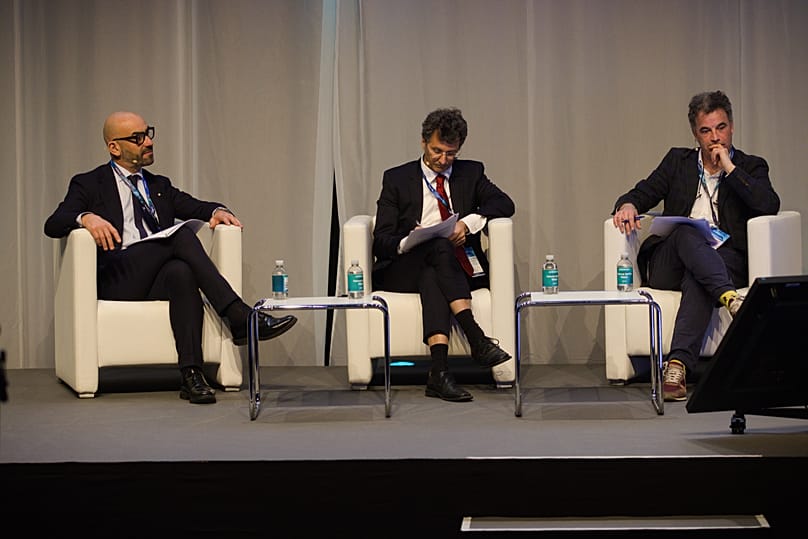
AMR raises the risk of serious complications and death from common infections. It is already putting pressure on health systems across the world.¹ Europe can play a key role in the global response to this issue, but only if the European Union (EU) and national governments implement effective support and rewards for antimicrobial innovation alongside existing stewardship policies. This article draws on discussions at a GSK-hosted educational AMR workshop at the European Society of Clinical Microbiology and Infectious Diseases (ESCMID) conference earlier this year and includes expert insights from:
· Florian Wagenlehner, Director, Clinic of Urology, Paediatric Urology and Andrology, Justus Liebig University, Giessen, Germany
· Jorge Mestre-Ferrandiz, Associate Professor, Charles III University of Madrid, Spain
· Matteo Bassetti, Director, Infectious Diseases Unit, AOM – IRCCS San Martino Polyclinic Hospital and Department of Health Sciences (DISSAL), University of Genoa, Italy

AMR is not tomorrow’s problem
AMR occurs when microbes, including bacteria and fungi, evolve to resist medicines designed to treat them, known as antimicrobials.¹ Globally, it is directly responsible for more than one million deaths each year and roughly €61 billion in direct healthcare costs.¹ ′ ² In Europe alone, the annual toll exceeds 35,000 lives and costs health systems around €11.7 billion.³ ′ ⁴
Europe is not on track to meet four of the five AMR targets set by the EU Council for 2030.⁵ These include ambitions to reduce overall antibiotic use, increase the proportion of prescribed antibiotics made up of first-choice “Access” antibiotics, and cut bloodstream infections caused by three major resistant bacteria.⁵ Failure to meet these targets will make it harder to reach the United Nations’ goal of reducing global AMR-related deaths by 10% by the same year.⁶ Without intervention, the burden of AMR on patients, healthcare systems and society will continue to grow.⁷
"For a patient, AMR becomes real when an antimicrobial does not work as expected," says Wagenlehner. "That can mean more complex treatment, more uncertainty and more time before we get the infection under control. When effective treatment options are limited or delayed, resistant infections can become life-threatening."
Responsible use matters – but new medicines are also needed
Misuse and overuse of antimicrobials remain the main drivers of AMR.¹ The more frequently microbes are exposed to antimicrobials, the greater the likelihood that resistance will develop.¹ This is why stewardship policies and practices that promote the careful and appropriate use of antimicrobials to slow down resistance are essential.
"Stewardship balances providing patients with the antimicrobials they need, while avoiding unnecessary use that would drive resistance," Wagenlehner explains. "For example, antibiotics are one type of anti-infective. They treat bacterial infections, not others such as viral ones, and using them when they are not needed can drive resistance."
However, stewardship alone is not enough. Europe also needs new antimicrobial options if it is to stay ahead of evolving resistance. These priorities are complementary; effective stewardship preserves today’s medicines, while innovation ensures we continue to stay ahead of resistance.
Why are we not getting enough new treatment options?
Since 2017, 17 new antimicrobials have been authorised globally, with only two of these representing new classes of antimicrobials.⁸ This means few new and differentiated treatments are coming forward.⁸ ′ ⁹ Innovation is therefore not keeping pace with the rise in drug resistance observed in microbes that cause infections, and we are not sufficiently addressing the diversity of ways in which microbes continue to outsmart the treatments that we have today.⁵
"When an infection becomes resistant to an antimicrobial, we need new medicines with diverse ways of overcoming that resistance," says Bassetti.
One of the main reasons resistance continues to outpace innovation is the increasingly challenging economics of antimicrobial research and development (R&D), exacerbated by ineffective funding models for antimicrobials once they become available.¹⁰ ′ ¹¹
The combination of high R&D costs and strong, appropriate stewardship creates a financial barrier to investment in innovative antimicrobials.¹⁰ ′ ¹¹ Traditional pharmaceutical business models rely on recouping R&D costs through sales volumes, yet novel antimicrobials are designed to be used sparingly to slow the development of resistance, creating a fundamental mismatch.¹⁰ ′ ¹¹
"Unlike medicines for common diseases, new antimicrobials are often held in reserve or used as a last resort, so companies may never recoup their R&D costs," says Mestre-Ferrandiz. "That is why many developers have stepped back from antimicrobial research, and why new economic incentives are needed."
Alongside the financial disincentive, health technology assessments (HTA) – the formal process used by health authorities to evaluate the value and costeffectiveness of new medicines and inform pricing and reimbursement decisions¹² – often fail to capture the full societal value of antimicrobials.¹³ This includes the readiness and resilience they bring to health systems and can lead to them being undervalued.¹³
"Innovative antimicrobials offer the best chance of getting ahead of resistance, rather than relying on variations of existing medicines," says Mestre-Ferrandiz. "Part of the value of a new antimicrobial is knowing there are additional options to treat infections if they become resistant to existing treatments."
Today, fewer developers are investing in antimicrobial R&D, resulting in a smaller group of new antimicrobials currently being researched or developed, with too few and insufficiently diverse products reaching the market.⁸ ’ ¹¹ Without intervention, this trend will only continue.
A new way of valuing antimicrobials is emerging
Governments are increasingly recognising this market failure and introducing "pull incentives", mechanisms that reward developers for bringing antimicrobials to market.¹¹ Some models delink financial returns from sales volumes, incentivising successful innovation regardless of how much of a product is sold.¹¹ “Appropriately funded pull incentives that delink payment from volume (i.e., payments independent of sales volume) and HTA processes that comprehensively assess the true societal value of antimicrobials are likely to be the most effective,” argues Mestre-Ferrandiz.
The UK's subscription model is the clearest example; it pays a fixed fee linked to National Health Service (NHS) value rather than volume, explicitly supporting stewardship and predictable supply.¹⁴This makes an antimicrobial available for use in the country, even if clinicians use it sparingly. This is a global first,¹⁴ but other countries have followed suit; Sweden has piloted a partially delinked revenue-guarantee model that rewards companies for keeping antibiotics of particular medical value available and ready for delivery.¹⁵
"Rewarding availability and clinical and societal value, rather than utilisation, can provide the predictability developers need without creating pressure to oversell antimicrobials that should be used responsibly," says Mestre-Ferrandiz.
Elsewhere in Europe, other forms of pull incentives have been implemented. Italy has created a €100 million fund to support development of, and access to, new innovative antimicrobials,¹⁶ while Germany has introduced a “reserve” antibiotic pathway that exempts qualifying products from part of the standard benefit-assessment process.¹⁷
The EU has signalled its intention to coordinate region-wide policies in a similar direction.¹⁸ This is an important step to support countries across the region in creating sustainable environments for antimicrobial innovation.
"A few promising examples do not yet add up to a stable system," cautions Bassetti. "The issue now is scaling these to create a sustainable market for antimicrobials across Europe."
Fair share: why European coordination matters
There is growing consensus amongst experts: delinked, value-based national pull incentives should be funded at fair share levels, an approach where countries contribute funding in proportion to the size of their economies.¹⁹ In 2019, analysts estimated $310 million (US) in global annual revenue, per priority antibiotic, across 10 years would be needed to support continued antibiotic R&D, helping bring more new and more diverse antimicrobials to patients.¹⁹ Splitting the financial commitment in proportion to the national gross domestic products (GDPs) of G7 and EU27 countries, a “fair share” approach, would spread costs and stabilise the market.¹⁹ However, currently only the UK and Italy are likely to meet their fair share targets.¹⁹
"Fair share is ultimately about solving the collective action problem," says Bassetti. "Broad participation, proportionate to economic capacity, is how you build a durable global system that supports innovation, supply resilience and access."
Every country benefits from new antimicrobials, but if only a few establish sufficient incentives, it will not be enough to increase R&D investment and will limit new options coming onto the market.¹¹ ’ ¹⁹
The next steps for Europe
Europe has an opportunity to drive the AMR response by setting a clear direction to implement solutions at scale across countries. The EU has already made this a political priority,¹⁸ but real change will only be realised if this is accompanied by national action.
This is an opportunity for European finance and health ministers to come together and look at AMR as an imminent threat to health security and economic stability.²⁰ ’ ²¹ Appropriate pull incentives can respond to the distinctive economics of AMR: antimicrobials require substantial investment to develop but must be used sparingly to preserve their effectiveness.¹⁰ ’ ¹¹ By rewarding value and availability rather than sales volume, these incentives can help reverse declining investment in antimicrobial R&D and support the development of effective new treatments for patients now and in the future.¹¹
"Europe already has the policy tools, scientific base and some early country examples," says Mestre-Ferrandiz. "The challenge is turning those pieces into a system for sustained progress."
World AMR Awareness Week is an opportunity to turn awareness into coordinated action that rewards antimicrobial value, promotes stewardship and strengthens health security and resilience. With 2030 targets approaching, Europe needs cross-sector collaboration to urgently address the growing burden of AMR.⁶
_____________
References:
Content Lab code: NP-GBL-NA-ADVR-260002
Date of preparation: November 2026
¹ World Health Organization. Antimicrobial resistance. 16 July 2026. Available at: https://www.who.int/news-room/fact-sheets/detail/antimicrobial-resistance. Last accessed November 2026.
² World Organisation for Animal Health and World Bank. Forecasting the Fallout from AMR: Economic Impacts of Antimicrobial Resistance in Humans. 24 September 2024. Available at: https://www.woah.org/app/uploads/2024/09/forecasting-fallout-amr-economic-impacts-antimicrobial-resistance-humans-27924-compressed.pdf. Last accessed November 2026.
³ European Centre for Disease Prevention and Control. Key messages: Health burden of antibiotic resistance. 17 November 2022. Available at: https://antibiotic.ecdc.europa.eu/en/get-informed/key-messages/health-burden-antibiotic-resistance. Last accessed November 2026.
⁴ World Health Organization Regional Office for Europe. Antimicrobial resistance. 19 September 2024. Available at: https://www.who.int/europe/news-room/fact-sheets/item/antimicrobial-resistance. Last accessed November 2026.
⁵ European Centre for Disease Prevention and Control. Time to act and not react: how can the European Union turn the tide of antimicrobial resistance? 18 November 2025. Available at: https://www.ecdc.europa.eu/en/news-events/time-act-and-not-react-how-can-european-union-turn-tide-antimicrobial-resistance. Last accessed November 2026.
⁶ World Health Organization. World leaders commit to decisive action on antimicrobial resistance. 26 September 2024. Available at: https://www.who.int/news/item/26-09-2024-world-leaders-commit-to-decisive-action-on-antimicrobial-resistance. Last accessed November 2026.
⁷ Naghavi M, Vollset SE, Ikuta KS, et al. Global burden of bacterial antimicrobial resistance 1990–2021: a systematic analysis with forecasts to 2050. The Lancet. 2024; 404, 1199-1226. Available at: https://www.thelancet.com/journals/lancet/article/PIIS0140-6736%2824%2901867-1/fulltext. Last accessed November 2026.
⁸ World Health Organization. WHO releases new reports on new tests and treatments in development for bacterial infections. 2 October 2025. Available at: https://www.who.int/news/item/02-10-2025-who-releases-new-reports-on-new-tests-and-treatments-in-development-for-bacterial-infections. Last accessed November 2026.
⁹ World Health Organization. Analysis of antibacterial agents in clinical and preclinical development: overview and analysis 2025. 2 October 2025. Available at: https://www.who.int/publications/i/item/9789240113091. Last accessed November 2026.
¹⁰ Access to Medicine Foundation. 2026 Antimicrobial Resistance Benchmark. 10 March 2026. Available at: https://accesstomedicinefoundation.org/resource/2026-antimicrobial-resistance-benchmark. Last accessed November 2026.
¹¹ Global AMR R&D Hub and World Health Organization. Incentivising the development of new antibacterial treatments 2024. 14 October 2024. Available at: https://cdn.who.int/media/docs/default-source/2021-dha-docs/g7progress%5F2024%5Fhub%5Fwho.pdf?sfvrsn=e7beafa2. Last accessed November 2026.
¹² World Health Organization. Health technology assessment. Available at: https://www.who.int/health-topics/health-technology-assessment. Last accessed November 2026.
¹³ Office of Health Economics. Capturing the Broader Value of Antibiotics. 23 November 2023. Available at: https://www.ohe.org/publications/capturing-the-broader-value-of-antibiotics/. Last accessed November 2026.
¹⁴ NHS England. Antimicrobial Products Subscription Model: guidance on commercial arrangements. 8 May 2024. Available at: https://www.england.nhs.uk/publication/antimicrobial-products-subscription-model-guidance-on-commercial-arrangements/. Last accessed November 2026.
¹⁵ Public Health Agency of Sweden. Availability to antibiotics of particular importance: A Swedish pilot study of an alternative reimbursement model. 17 February 2023. Available at: https://www.folkhalsomyndigheten.se/contentassets/700919bb88944affbfe814c1b23e53ed/availability-to-antibiotics-of-particular-importance.pdf. Last accessed November 2026.
¹⁶ Italian Medicines Agency (AIFA). 2025 AIFA Report on Antibiotics. 4 March 2025. Available at: https://www.aifa.gov.it/en/-/rapporto-aifa-2025-sugli-antibiotici. Last accessed November 2026.
¹⁷ Robert Koch Institute. Reserve antibiotics: exemption from the benefit assessment by standardized criteria according to 35a Social Code Book (SGB) V. 24 January 2025. Available at: https://www.rki.de/EN/Institute/Organisation/Departments/Department-3/Unit-37/Downloads/Pathogen%5Flist%5Fand%5Fcriteria%5Freserve%5Fantibiotics.pdf?%5F%5Fblob=publicationFile&v=8. Last accessed November 2026.
¹⁸ European Parliament. Press release: Parliament adopts its position on EU pharmaceutical reform. 10 April 2024. Available at: https://www.europarl.europa.eu/pdfs/news/expert/2024/4/press%5Frelease/20240408IPR20308/20240408IPR20308%5Fen.pdf. Last accessed November 2026.
¹⁹ Goh M, McEnany M, Freeman R, et al. Bridging the fair share gap for antibacterial innovation: an observational analysis of antibacterial revenues in the G7 and EU27. EClinicalMedicine. 2025;88:103485. Available at: https://www.sciencedirect.com/science/article/pii/S2589537025004183. Last accessed November 2026.
²⁰ World Health Organization. Global call to action to address antimicrobial resistance: An appeal for keeping our medicines against infectious diseases effective to save lives. 7 October 2025. Available at: https://www.who.int/publications/m/item/global-call-to-action-to-address-antimicrobial-resistance. Last accessed November 2026.
²¹ Department of Health and Social Care, et al. Confronting antimicrobial resistance 2024 to 2029. 8 May 2024. Available at: https://www.gov.uk/government/publications/uk-5-year-action-plan-for-antimicrobial-resistance-2024-to-2029/confronting-antimicrobial-resistance-2024-to-2029. Last accessed November 2026.