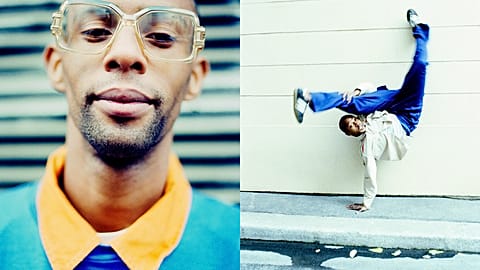
















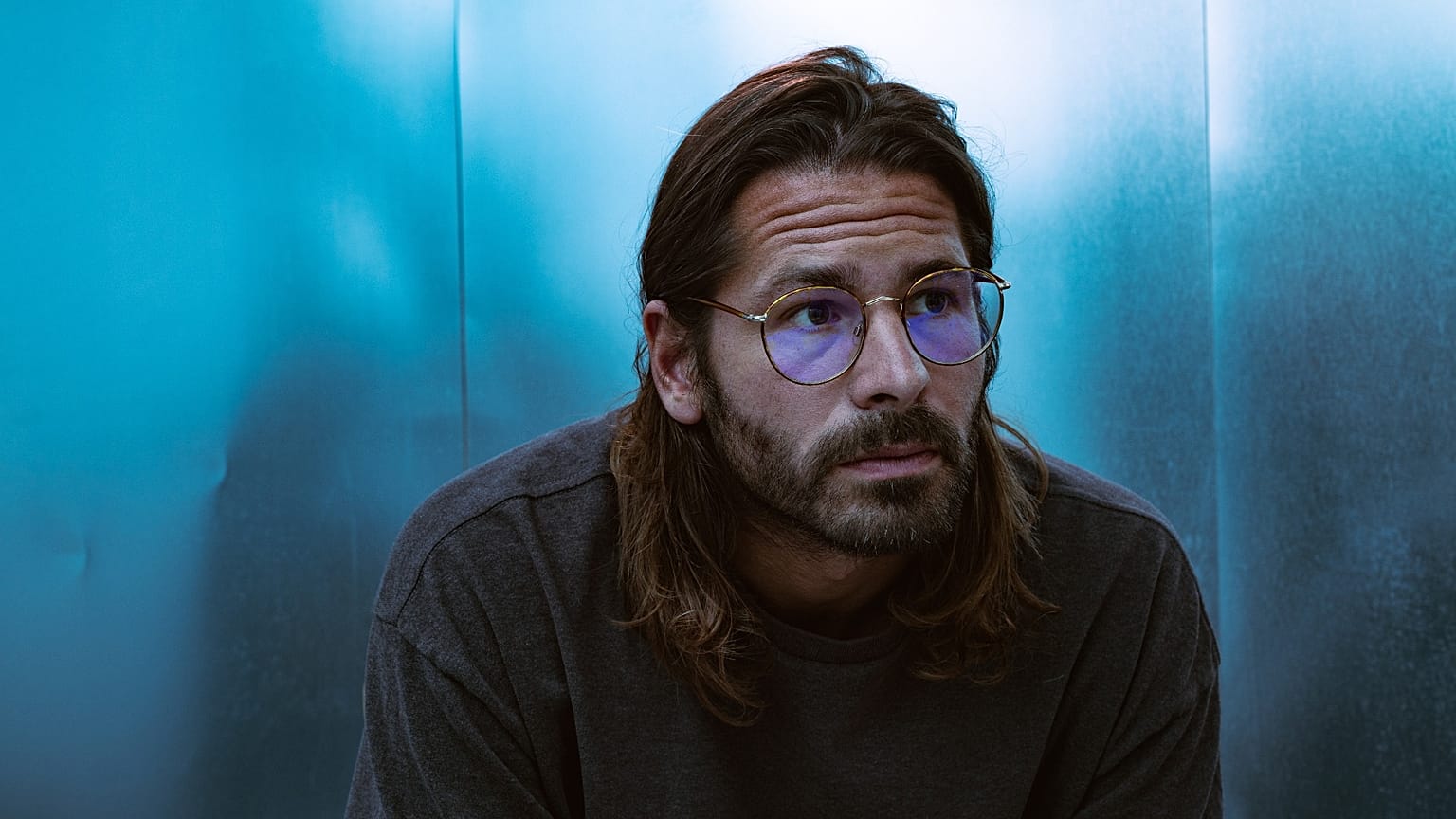














Two loves define Radzimir Dębski, aka Jimek - classical music and hip-hop. The Polish composer, conductor and producer has won praise from Beyoncé, Snoop Dogg and Nicki Minaj alike. Now he's talked to Euronews about his new album, featuring twelve Polish rappers and... a symphony orchestra.
Radzimir Dębski's creative life is crawling with the number twelve. On June 12, 2026, his album "Études for Piano, Sampler, Orchestra and Friends" came out, on which he invited twelve rappers, and on September 12 of that same year he'll be sharing the stage with them at a concert in Warsaw's Bemowo district.
 ADVERTISEMENT
ADVERTISEMENT
ADVERTISEMENT
And that's not all. It was back in 2012 that he won the remix contest for Beyoncé's single "End of Time," beating out more than three thousand creators from 25 countries. He happened to be in Berlin when Beyoncé herself called to tell him, "I wanna congratulate you because you are the winner." It was Queen B. herself who opened the door to a string of foreign gigs that have kept multiplying ever since. He's collaborated with, among others, Snoop Dogg at the BET Awards 2025 in Los Angeles and, in December of that same year, at "Snoop's Holiday Halftime Party" in Minneapolis.
The album "2015," which he made with Miłosz "MIUOSH" Borycki (a recording of a concert held at the headquarters of the National Symphony Orchestra of Polish Radio in Katowice), caught the attention of the legendary Deutsche Grammophon. Video clips from the concert were shared with admiration by stars including Ashton Kutcher, Mobb Deep, and Nicki Minaj. His artistic activity isn't confined to Poland and the United States, though. He's performed in Japan, Germany, and Kenya, among other places.
Jimek Chooses Poland Again
Despite these global opportunities — bolstered by the universalism of classical, symphonic music — Jimek is once again choosing Poland, and it's in Poland that he's preparing his next big musical project, one that completes his hip-hop-classical trilogy. In an interview with Euronews, he explains why:
"First of all, being at home, meaning going back to where you're from, is something that's become a need for me, and at the same time a way of searching for my own balance. If my own identity gets warped, that's something dangerous for me. But at the same time it's also an enormous pleasure and relief. Being yourself in Warsaw in the summer... There aren't many places in the world I like more. And I don't just mean Warsaw, but Poland in general," he says, adding that these are "down-to-earth" reasons.
There are also artistic reasons behind it. The album "Études (...)" (org. "Etiudy na pianino, orkiestrę, sampler i kolegów") is the result of a journey that, after many twists and turns, is coming full circle.
"First there was the story of American hip-hop, and because of how it spread, I understood right away that I'd have to do the story of Polish hip-hop too. At the same time, I dreamed from the start that all the artists I might want to include would be together on stage. Logistically, that was almost impossible."
Three Acts of One Story
The first concert at Bemowo (2022) was a test of whether it was even possible to get that many rappers in one place. The second — with the National Symphony Orchestra of Polish Radio at Silesian Stadium in 2023 — was a bigger risk, but it worked out. The third chapter is a concert with people he met while working on those earlier projects, with whom Jimek created songs from scratch.
"This concert will be different in that, having had all these opportunities, we also recorded a new album — new tracks came out of it, which might give this whole story its best possible punchline," Jimek explains to Euronews.
Just as in the previous two editions, both classic tracks and new material are featured.
An Album with Friends After 20 Years in the Basement
Classical music is clearly the glue holding the entire album "Études for Piano, Sampler, Orchestra and Friends" together, with the titular piano as the lead instrument — though it's clear that Jimek, as the host, approaches each of the twelve artists individually, trying to uncover what they need. In the case of Bedoes 2115's Étude No. 3, for instance, a guitar makes an appearance.
"When you've spent 20 years sitting alone in a basement with a computer, at some point you also want to meet another human being and see what different creative decisions get made in someone else's company," Jimek tells Euronews. "So I went looking for exactly that — a situation with another person that changes our decision-making process right from the start, just to see where it would take these tracks."
Polish Hip-Hop and the Power of Language
Jimek makes no secret of having two musical loves — classical and hip-hop. Especially the Polish kind, which, in his view, is among the best in Europe.
"This is completely biased, and I won't even apologize for it. Polish hip-hop is one of the best in Europe. It's very strong musically. That also comes from the samples — from the fact that it grew out of old Polish records, Polish jazz, Polish film scores, Polish popular and entertainment music, sometimes even electronic music," he lists.
"Maybe it's a coincidence, maybe it's the fact that our parents listened to good music. Under communism, jazz was the language of freedom. This Polish hip-hop never tried to be American, never tried to be different. It was Polish from the start, in that same genuine, honest way that a truly genuine and honest person doesn't even realize they're genuine and honest. And that's something you come to appreciate in hindsight — that introversion, the problems that came up in it, those lyrics," he adds, speaking with Euronews.
"I often translate Polish lyrics — from Polish tracks — for friends from abroad. And they're deeply surprised by how good it sounds, how much content is in there, philosophically too, all sorts of heavier things show up in it, and that it's something different. That's also the power of a language that has seven cases."
Études Against AI
The titular piano études are no accident.
"The piano was something I really missed while I was traveling so much. I managed to get hold of a piano for a longer stretch of time. And it was like going back to practice playing — while at the same time bringing back memories of walking to school, listening to hip-hop. Those two things didn't fit together at all, so in fact almost every track grew out of a little miniature like that, which I'll definitely write down — I think we might even put out a little notebook of these études. In case someone wants to practice something on the piano that's a bit different emotionally — hip-hop for piano."
The record is unpolished, unrefined. You can hear a lot of back-and-forth between the artists — comments, discussions, whistling, interaction.
"These times really are very polished right now. Absolutely. This is a protest against that. So in that sense it's some kind of reaction, a rebellion. Maybe a few years ago I wouldn't have gone this far with it."
Jimek explains that this "rawness" is also a nod to traditional hip-hop skits.
"Skits used to be those little interludes between tracks that, back before streaming and view-counting existed, made up the whole atmosphere of an album. You'd listen to the whole LP, and all those interludes were often conversations in a shop, conversations in a car, conversations in the studio — the whole backstage. For me, artistically, that backstage of the piano, of the process in the studio, is exactly that skit — and often it happens right within a track itself."
Manhood, Being a Guy, Sensitivity
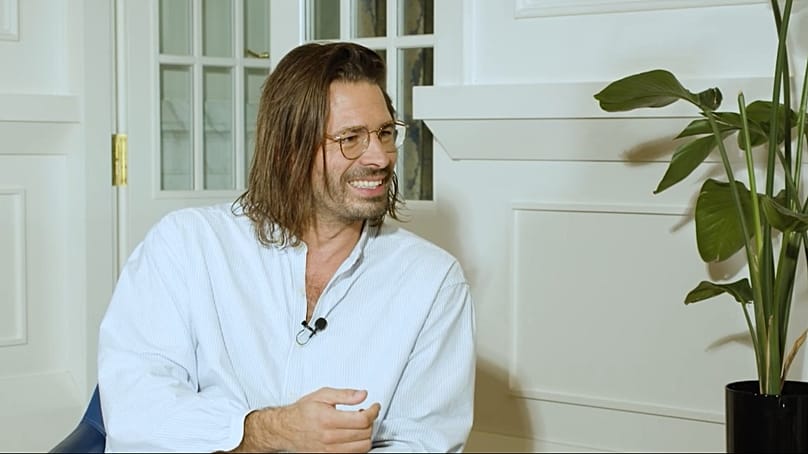
There are no female rappers on the album. All twelve invited artists are men. Jimek explains to Euronews:
"It just happened on its own. At some point I noticed it and decided not to change it — quite the opposite, to turn it into an asset. Rap that's changing is also something we talk about a lot. It comes up in the lyrics. It used to be, maybe, kind of a men's sport, but today masculinity, being a guy, is a subject worth exploring. What does it even mean? We have different approaches to it. That sensitivity... how do you show it? That's a dilemma for a guy. Maybe in my generation there's this internal dialogue going on: what kind of man should I be, who should I become, what does the world need? Not long ago there was a mood in which traditional manhood was seen as passé. Now we're at a moment where maybe we're seeing again that it's needed."
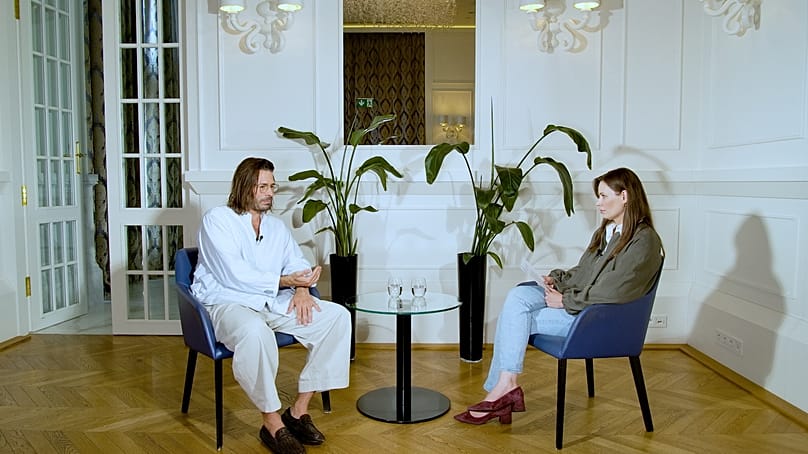
The interview was conducted at the Hotel Polonia Palace in Warsaw.