














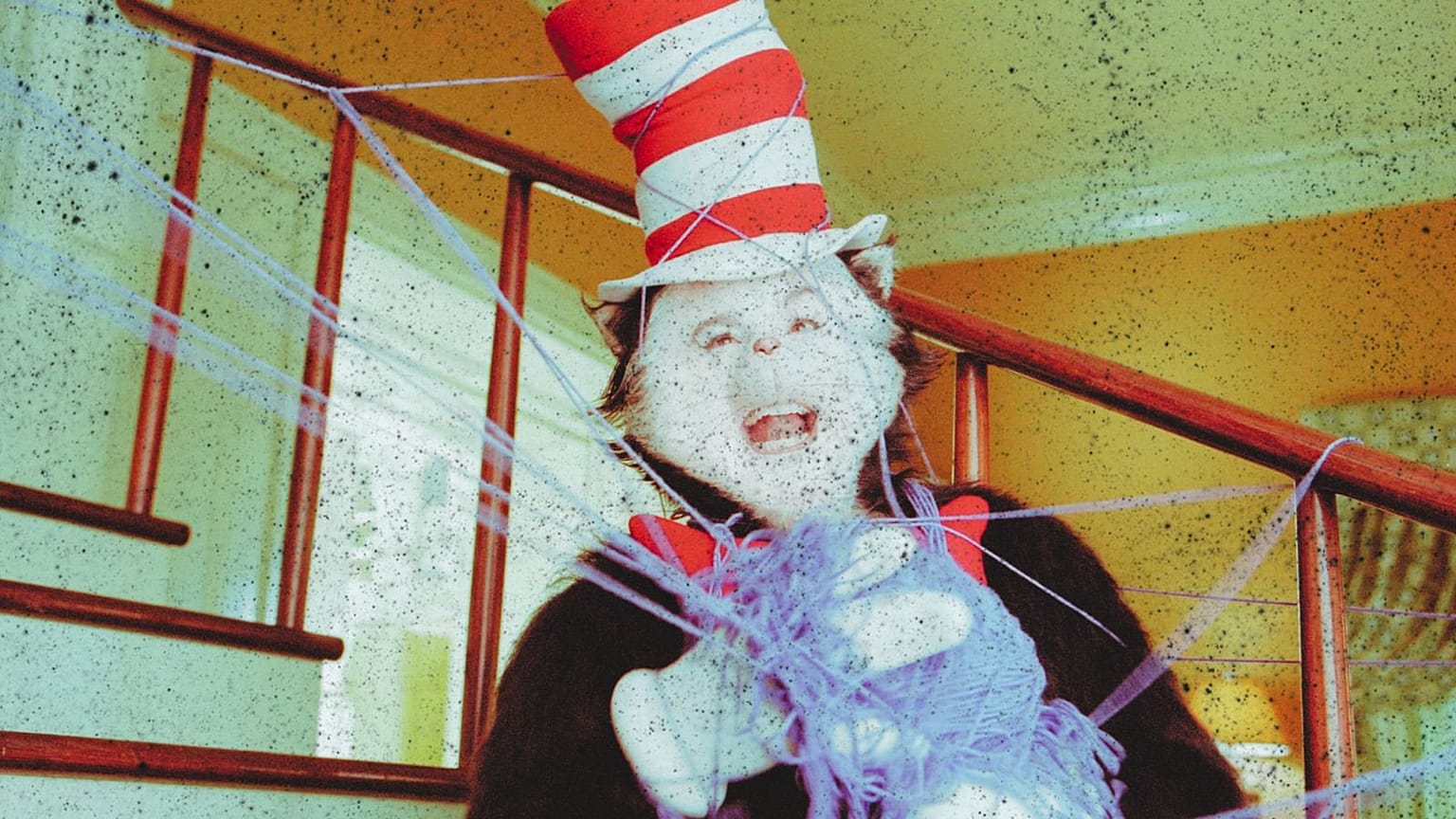













A new fear has been unlocked — and it's wearing a top hat. Police have since issued a statement after some TikTok users became concerned a life-sized version of The Cat in the Hat was stalking the streets in the UK and Ireland.
Picture this: You're walking home late one night. It's dark, but amidst the flicker of a few street lamps, you catch a glimpse of a pale figure wearing a crooked top hat. Almost feline in form, it grins menacingly — and sends a chilling whisper into the breeze: "It is fun to have fun but you have to know how."
 ADVERTISEMENT
ADVERTISEMENT
ADVERTISEMENT
For most people, this is nothing more than an absurd, shudder-inducing thought. But for some young people on TikTok, the idea of seeing Dr. Seuss's Cat in the Hat mischievously wandering the streets has become a shared source of paranoia.
It all started back in late June, when a TikTok user uploaded a clip of Mike Myers as The Cat in the 2003 movie adaptation dancing to an eerie soundtrack. It was captioned: "How mfs be dancing at prom just to overdose 2 weeks later."
The now deleted video reached over 4.4 million views within a week — and sparked a viral trend in which people continued to take innocent clips from The Cat in the Hat and turn them into something disturbing.
Things escalated after the original costume from the movie went up for auction via Propstore: a haunting, hollow-eyed husk that further inspired the fictional character's new horror lore.
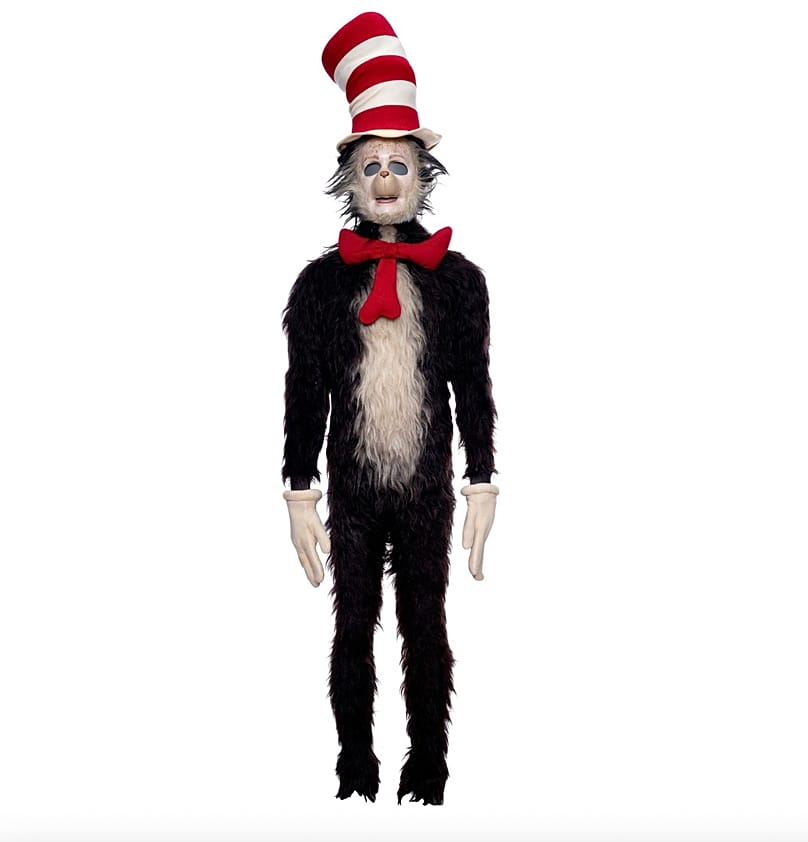
Since then, increasingly unsettling videos of the Cat in the Hat have emerged, including ones in which the character — or an even more terrifying rendering of them — appears to be spotted in public; specifically in the United Kingdom and Irish counties of Limerick and Wexford.
Sometimes he appears staring into windows, other times in driveways, filmed by a ring doorbell. Most of the videos have a found footage quality, shakily filmed with grainy imagery.
"Just heard someone shout "I'm gonna get you" outside my house, then I hear footsteps amd [sic] see no one, it's actually starting to get creepy, its 11pm and I don't normally believe any stuff like this but it now feels too real," wrote one commenter.
"Green eggs and SCRAM bro," wrote another.
Such was the genuine fear among some people that police in the UK and Ireland have since issued statements confirming that the videos are fake and generated by artificial intelligence (AI).
"In an unusual turn of events we are hearing a lot about an illusive Dr Seuss character doing the rounds online, apparently causing havoc in neighbourhoods and towns across the country," wrote a spokesperson for Wexford Garda wrote on Instagram.
"Fortunately, we can rule out the issue, which is essentially an AI prompt that places the character into images/videos of familiar places," they continued.
"To be clear, the Cat in the Hat was not in your driveway while you were out and he is not currently hiding out in Curracloe."
Creepypasta and blurred realities
This isn't the first time — and won't be the last — that social media generates collective fears. In 2016, a series of reports about clown sightings led to a surge of user generated content and pranks that blurred the lines between reality and online urban myth.
In a similar vein, social media has long been a way for people to tell scary stories in a more immersive way, creating horror legends (commonly known as creepypasta) that develop and deepen as others share them across the internet.
Some of these have even become inspiration for horror movies, like Slender Man, We're All Going to the World's Fair and, more recently, Backrooms.
When contained within specific online communities, these viral legends can be a great source of connection and creativity. It's when they spread to much younger audiences — and into the real world — that issues can start to arise.
The rapid advancements of AI in particular have made it even more difficult to decipher what's fake and what isn't, amplifying the need for greater protection of younger users — more effective interventions by social media companies.
But at least for now, we can all rest assured that a life-sized anthropomorphic cat won't be bothering us any time soon.
Unless you happen to live near whoever buys that 2003 costume...