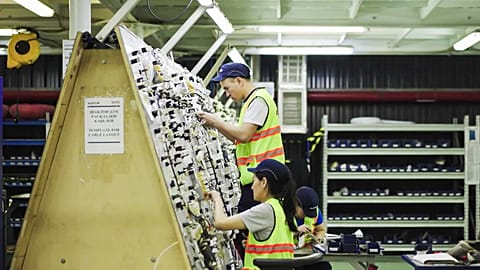

















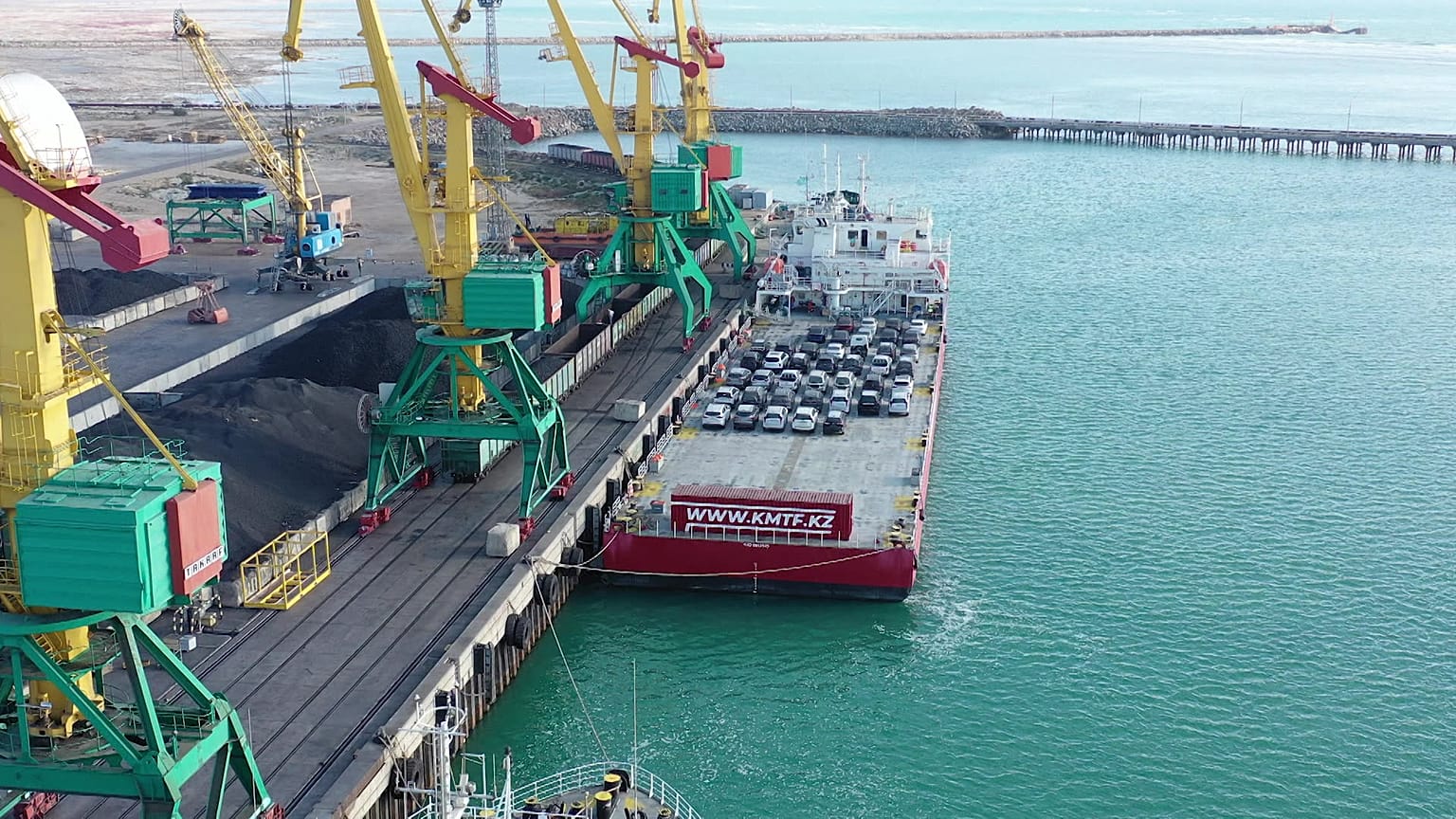














Kazakhstan is turning its reliance on imported processed goods into an opportunity for investors to build local enterprises, substitute imports and expand the country’s export basket.
The Central Asian nation accounts for around 2% of global oil supply and is also a major supplier of natural uranium and chromium. It is now seeking to diversify its exports beyond raw commodities.
 ADVERTISEMENT
ADVERTISEMENT
ADVERTISEMENT
The government sees part of the solution in attracting investors to tap into rising domestic consumption, with projects aimed at substituting imports and expanding the country’s export potential.
According to QazTrade, Kazakhstan recorded a trade surplus of over €7.5 billion, with trade turnover reaching nearly €62 billion.
China remained Kazakhstan's largest trading partner in the first half of the year, followed by Russia and Italy. Turkey, France, Uzbekistan, the Netherlands, Germany, the United States and South Korea completed the top ten.
Imports accounted for nearly 44% of total trade turnover in the first half of the year, rising 5.4% year on year.
Imports reached €27 billion, driven by demand for natural gas, power-generation equipment, railway locomotives, gold, enriched uranium, petroleum products and machinery.
According to the country’s trade agency, the industries best positioned for import substitution include machinery, pharmaceuticals, advanced processing of agricultural products and construction.
“Localising production and implementing investment projects in Kazakhstan can help meet domestic demand while also serving growing demand in neighbouring Central Asia and Eurasian Economic Union,” said QazTrade Deputy General Director Nurlan Kulbatyrov.
He noted that Kazakhstan’s economy grew 4.1% in the first half of the year, with manufacturing among the main drivers of growth.
The biggest shifts driving trade
One of the biggest shifts is taking place in the commodity export base. Oil exports fell by 3.3%, gas plunged by 60.4%, and petroleum products dropped by 51.7%. Together, the decline points to weaker momentum in parts of the commodity sector that has traditionally generated much of Kazakhstan’s trade surplus.
Another shift is geographical. Exports to Turkey rose by 94%, to France by more than 45%, and to Uzbekistan by nearly 40%, while exports to Italy, Kazakhstan’s largest buyer after China, fell by roughly 15%.
Italy accounts for more than 17% of Kazakhstan’s total exports, but barely features among the main destinations for processed goods, suggesting that its demand remains heavily concentrated on oil.
While trade with some major partners remains heavily reliant on commodities, diversification is taking place in newer, less prominent destinations such as Turkey, the UK, where exports grew 2.5 times, and Singapore, where they rose 2.9 times.
Move towards processed exports
Crude oil remained Kazakhstan’s largest export, accounting for 46.5% of the total, followed by copper and copper products, uranium, ferroalloys and wheat.
Although energy and metals continue to dominate Kazakhstan’s export basket, non-resource exports are gradually gaining ground.
Exports of processed goods grew nearly 18% year on year in the first half of 2026. However, Kazakhstan continues to rely heavily on imports of finished products, creating opportunities to expand domestic production.
Animal feed shipments surged nearly 80% to €378 million, while sunflower oil exports rose almost 57% to €460 million.
The rise of Kazakhstan’s oilseed sector
Kazakhstan has the largest agricultural land area in Central Asia and natural and climatic conditions well suited to growing oilseed crops.
It is already a major global supplier of sunflower oil and among the EU’s top three suppliers of sunflower meal.
The country now aims to increase exports of fats and oils to €1.3 billion by 2028, around 60% above current levels.
The National Oilseed Processors Association attributes the sector’s rapid growth to government support, a strong raw-material base, Kazakhstan’s geographical position and the development of export logistics.
“We’re also seeing accelerated diversification towards oilseed crops. For example, sunflower has seen the largest increase in planted area, growing 2.3 times over the past five years”, said Chairman Yadykar Ibragimov.
The potential goes further, with sunflower cultivation capable of expanding to more than four million hectares across the country.
Attracting investment for import-substitution
Over the past four years, Kazakhstan has signed 62 investment agreements worth around €32 billion. These can provide up to 25 years of legislative stability for projects worth around €52 million.
In 2025, Kazakhstan signed a further 173 investment contracts worth around €2.6 billion. Qualifying projects may benefit from tax incentives, exemptions from import customs duties on equipment and components, and in-kind state grants.
Foreign investment also increased. In 2025, gross foreign direct investment inflows amounted to nearly €18 billion, up 14.4% year on year.
With trade ties to some major partners still heavily reliant on commodities, Kazakhstan is looking to attract foreign investment into import substitution and domestic production, reducing its reliance on imported goods while broadening its export base.