












With European gas prices hitting the highest since early 2023, the International Energy Agency says governments should consider strategic reserves, more flexible contracts and closer international cooperation to prepare for future natural gas shortages.
Europe’s benchmark wholesale gas price, the front-month Dutch TTF contract, traded above €79 per megawatt-hour on Wednesday morning, its highest level since early 2023.
 ADVERTISEMENT
ADVERTISEMENT
ADVERTISEMENT
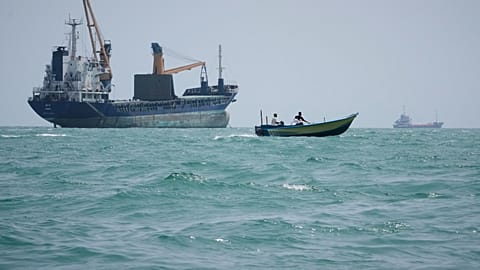
Prices have risen as fighting between the US and Iran has intensified concerns about LNG shipments through the Strait of Hormuz.
Before the conflict, the waterway carried about 20% of global LNG trade. Its effective closure has blocked those shipments for several months.
The continuous front-month TTF contract has traded between about €26.50 and €79/MWh since the beginning of the year, as the conflict added a growing risk premium to European gas prices.
It has also become less attractive for traders to put gas into storage. Summer gas is normally cheaper than winter gas, allowing companies to buy it, store it and sell it later.
But the Middle East crisis has pushed up near-term prices, while markets expect supply conditions to improve later in the year. That has weakened the financial incentive to refill storage in certain European countries.
European storage levels are unusually low, although that does not mean the continent is about to run out of gas.
According to Oxford Economics, EU gas consumption remains around 15% to 20% below its 2021 level, allowing the bloc to operate with lower storage levels. However, this increases its reliance on LNG imports during winter.
Europe is also facing a prolonged reduction in supplies from Qatar. Strikes in March heavily damaged two LNG production units at the Ras Laffan complex, removing 17 billion cubic metres of annual capacity. Repairs are expected to take between three and five years, according to the IEA.
That is equivalent to about 17% of Qatar’s annual LNG export capacity, according to the Institute for Energy Economics and Financial Analysis.
If Middle Eastern exports recover only gradually, Goldman Sachs analysts have estimated that the December 2026 TTF price may need to rise above €100/MWh to attract enough LNG to Europe. This compares with Goldman’s base case, which was €50/MWh.
Higher energy costs are also adding to inflation concerns. Markets are almost fully pricing in a quarter-point interest-rate increase from the European Central Bank on Thursday, which would take its deposit rate from 2.25% to 2.5%.
Eurozone inflation reached 3.3% in August, largely because of higher energy prices, even as underlying price pressures eased.
Those concerns have also affected government debt markets. Investors have sold European bonds on fears that expensive energy will keep inflation and interest rates higher for longer. The resulting rise in yields increases borrowing costs for governments as they refinance their debt.
IEA: Strategic gas reserves could provide help in crisis
As natural gas prices have been significantly under pressure, the International Energy Agency (IEA) has published its latest recommendations to governments across the globe, including Europe.
In its Gas Reserve Mechanisms and Flexibility Options report, released on Wednesday, the IEA says governments should rethink how they prepare for shortages—using strategic reserves, flexible buying rules and international cooperation instead of relying solely on rigid storage targets and competition for LNG cargoes.
The report highlights that Europe has lost some of its flexibility. The bloc now relies more heavily on globally traded liquefied natural gas, after it sharply reduced its dependence on Russian pipeline gas after the Ukraine war started in 2022.
And even though Europe has installed more than 50 bcm a year of LNG import capacity since the 2022–23 crisis, terminals do not guarantee gas supplies: Europe must still attract and pay for the cargoes.
Current rules require EU countries to fill their gas storage to 90% by 1 November, although they can deviate when market conditions are unfavourable.
The IEA argues that strategic reserves, holding gas outside the commercial market for release only in an emergency, could provide complementary, reliable support in a crisis.
Several EU countries, including Italy, Poland and Spain, already hold national strategic gas reserves. According to the IEA, in total, an estimated 12 bcm of gas was held as strategic reserves across the European Union in 2025, representing around 3.5% of annual gas consumption and 12% of working gas storage capacity.
The IEA says governments could expand these arrangements and explore whether reserves could be coordinated at the EU or international level.
Many of the IEA’s recommendations support measures already included in AccelerateEU, the European Commission’s strategy to cut energy costs and reduce Europe’s dependence on volatile fossil fuel markets. Both call for countries to coordinate gas purchases, use storage targets more flexibly, reduce demand and protect households and businesses from higher prices.
The IEA also argues that Europe could consider storing between 10 and 15 bcm of gas in Ukraine once the war is over and the sites are safe.
According to the report, countries could also pay to hold emergency gas in another country or jointly secure the right to buy extra LNG cargoes during a shortage. More flexible contracts and swaps would make it easier to redirect cargoes to where they are most needed. The report also looks at using older LNG ships as temporary storage and releasing some of the gas normally kept inside underground storage sites.
The IEA says these ideas need more study. Governments would have to decide who owns the gas, when it can be released and who pays for it. Holding emergency supplies also costs money, but the agency says being unprepared for a crisis could prove far more expensive.