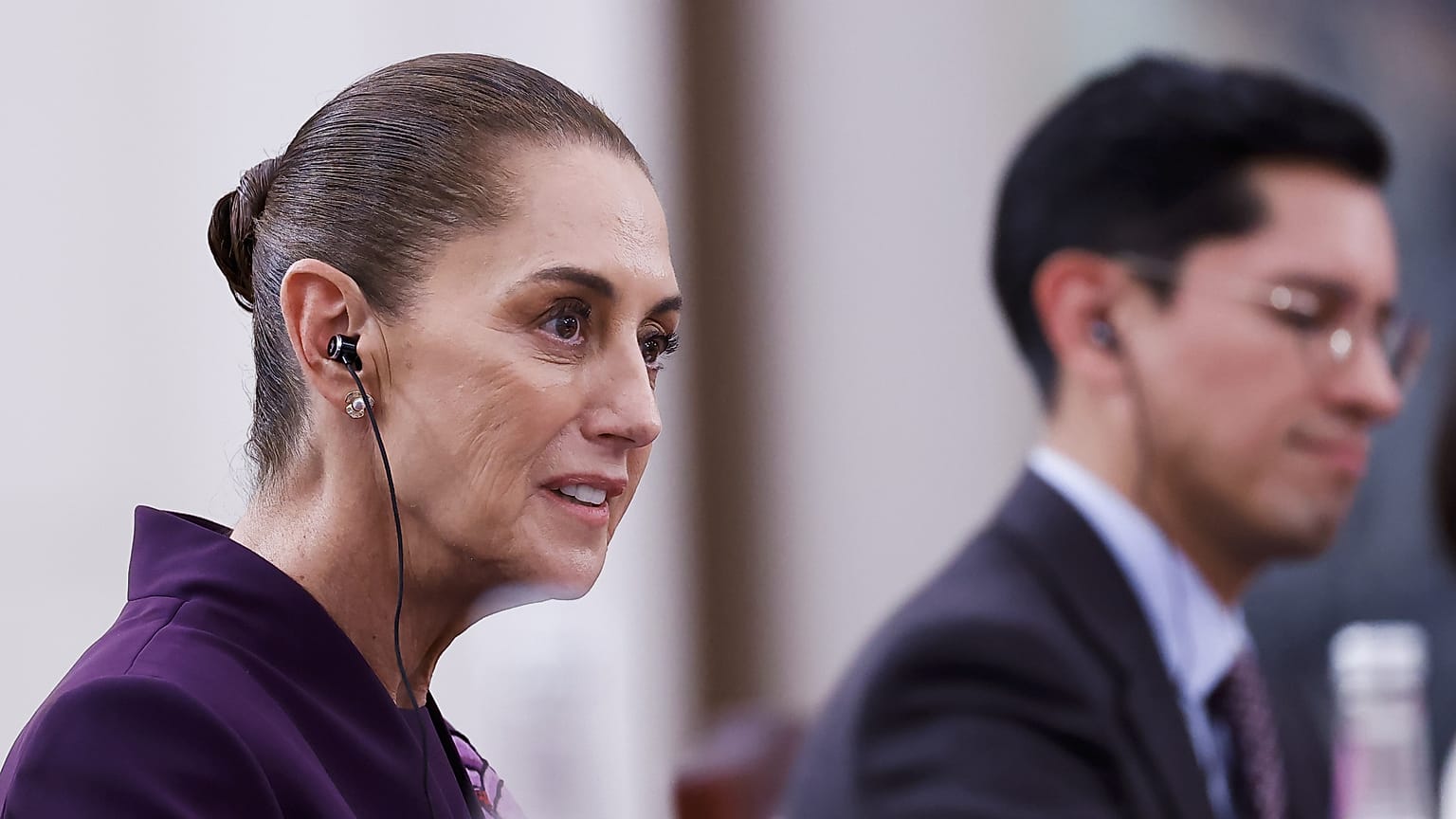













Mexican President Claudia Sheinbaum denounced on Friday the US hotline for reporting drug cartel activities as foreign interference.
Mexican President Claudia Sheinbaum lodged a formal complaint with the US for setting up a hotline dedicated to reporting drug cartel activities and corrupt officials in Mexico.
 ADVERTISEMENT
The US Drug Enforcement Administration said on Wednesday it would open channels for Mexican citizens to anonymously report individuals, public officials and money laundering networks linked to the Sinaloa cartel. The US has previously designated the Mexican cartel as a terrorist organisation.
The announcement stirred the ongoing struggle between the US and Mexico over who has the right to take action against cartels in Mexico.
"We have made it very clear that our relationship with the United States is one of coordination, not subordination," Sheinbaum said.
Sheinbaum said it had lodged a formal complaint with US Ambassador Ron Johnson, as she slams the hotline as a form of interference.
"We have to say what we are thinking, and furthermore it is an obligation to do so because we have to defend our sovereignty," she said in a news conference.
'We're all fed up'
Juan Manuel Partida Valdez, president of the Sinaloa Journalists Association, has welcomed this US hotline by being among the first to write to the tip line on Thursday.
He said he sent information about alleged ties between politicians from the Sinaloa region and criminal groups. Partida Valdez said that he got a quick response and that his move was motivated by the authorities' failure to put an end to violence and corruption in northern Mexican regions.
"I talk to so many people — in the streets, on social media, on WhatsApp and in chats — and you realise what people think: We’re all fed up," the 67-year-old journalist said on Friday. "We’re fed up with narco-governments."
In May, Sinaloa Governor Rubén Rocha Moya — a powerful figure of Sheinbaum's party — was forced to step down after he was indicted by the US on drug-trafficking charges. He returned to office in August to step down another time just a day after coming back.
For Partida Valdez, this case is one of the main reasons that led him to reach out to the tip line, saying it was a "very clear example of what we’re suffering because of these governments that do absolutely nothing but protect criminals."
"This whole song and dance about sovereignty is just collusion with the politicians tied to drug trafficking who are being protected in our country," he added.
While several warned of the dangers of the US DEA's strategy, some academics and politicians like Lilly Téllez, a senator for Mexico’s National Action Party, a weakened opposition party, have celebrated the line.
The politician from the US-Mexico border state of Sonora said on X that it was "a good way to cooperate against the common enemy of both countries" and strengthens efforts to combat cartels.
A balancing act for Sheinbaum
Despite the significant expansion of security cooperation between the two countries, US President Donald Trump's administration has continued putting intense pressure on Sheinbaum to crack down on her country's drug gangs.
Trump has repeatedly threatened to take unilateral action against Mexican cartels if Mexico didn't step up against organised crime.
A difficult position for Sheinbaum, as she wishes to extend a free-trade deal with the US and Canada, while staying firm on her country's sovereignty and security.
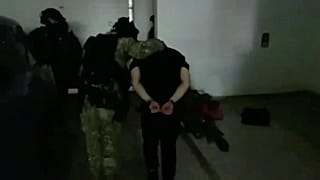
Last week, Mexico's military captured a drug lord named Fausto Isidro Meza alias Chapo Isidro, one of the FBI's most-wanted fugitives.
Sheinbaum's left-wing government has insisted on keeping the drug lord at home to judge him before considering a US extradition.
Homicide rates have plunged in Mexico as the government took out several top cartel bosses, often using US intelligence to do so.