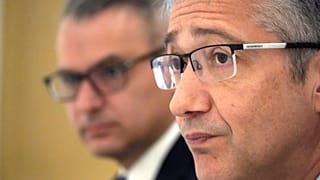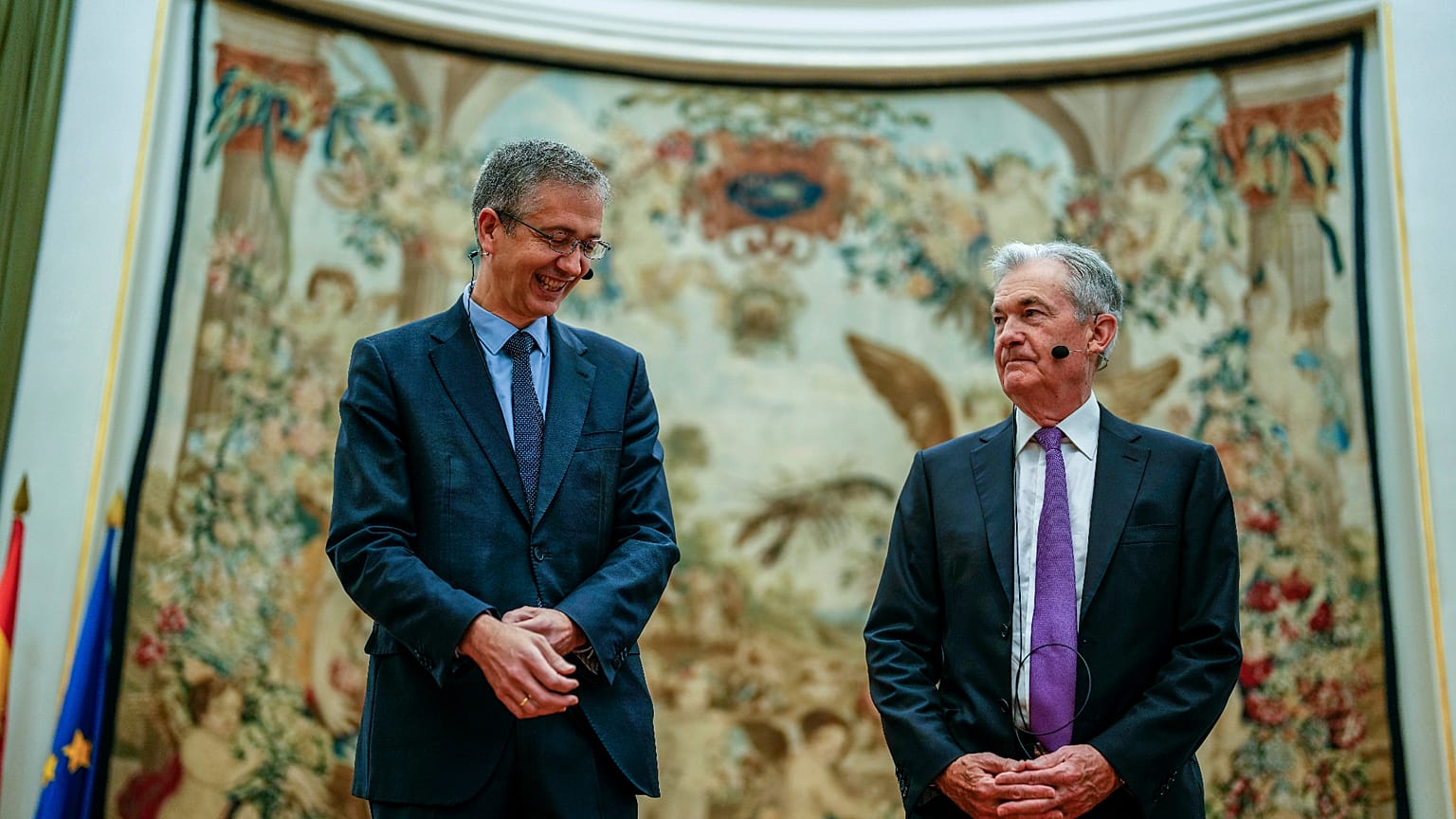













Pablo Hernández de Cos is set to succeed Christine Lagarde with eurozone inflation at twice the ECB’s target. Analysts expect broad policy continuity, but say he could take a more direct role in shaping interest-rate decisions.
European leaders have backed Spain’s former central bank chief, Pablo Hernández de Cos, to succeed Christine Lagarde as president of the European Central Bank, which sets interest rates for the eurozone, home to 359 million people.
 ADVERTISEMENT
This comes as the eurozone faces high inflation driven by the Iran war, and concerns over high government debt and borrowing costs across Europe.
Leaders from the 21 EU countries that use the euro also backed candidates for two other top posts at the ECB.
Hernández de Cos is currently general manager of the Bank for International Settlements, which is dubbed the central bank of central banks, in Basel, Switzerland. He served on the ECB’s rate-setting Governing Council from 2018 to 2024 as head of Spain’s central bank and has a reputation for backing lower interest rates and monetary stimulus.
Hernández de Cos built a reputation in Spain as a consensus builder. Analysts expect him to bring that approach to the ECB while taking a more active role than Lagarde in shaping monetary policy.
Andrew Kenningham, chief Europe economist at Capital Economics, told Euronews Business that "Pablo Hernández de Cos is an economists’ economist". He described him as "technically highly competent and respected" and said he takes an interest in the details of monetary policy.
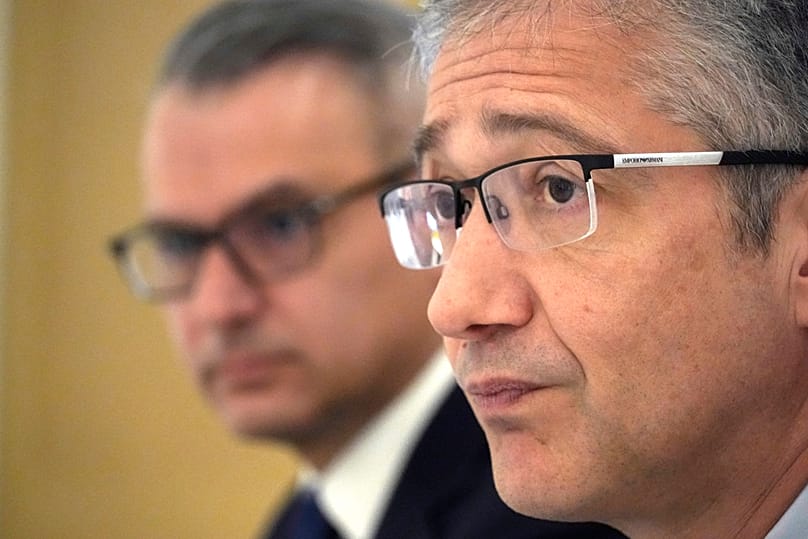
Kenningham does not expect him to change the course of monetary policy much in the near term, "but he will be more likely to challenge advice from the Chief Economist than his predecessor".
Kenningham sees Hernández de Cos as leaning towards lower rates, in line with Capital Economics' forecast that the ECB may raise rates by just another quarter of a percentage point before starting to cut them by the end of 2027.
Eurozone inflation was 4% in October, above the bank’s 2% target. The ECB could still raise rates on 17 December, when Christine Lagarde will chair the meeting.
How Hernández de Cos might steer the ECB
ING's global head of macro, Carsten Brezski, told Euronews Business that he expected Hernández de Cos to play a more hands-on role. "We will now get a president (again) who will leave a clearer personal mark on monetary policy than his predecessor."
Brezski said he expected Hernández de Cos to continue building consensus on the Governing Council, as Lagarde had, while taking a more active role in shaping policy. He said investors would pay closer attention to the president’s speeches for clues about where interest rates were headed.
A review of his speeches by Commerzbank analysts “suggests that de Cos is among the monetary policy doves,” or policymakers who lean toward lower rates to support growth.
In 2020, Hernández de Cos backed the ECB’s pandemic bond-buying programme, which was expanded to €1.85 trillion. It helped keep borrowing costs down as closures and travel restrictions hit the economy. In a speech that year, he said the programme “has been clearly successful in curbing financial market deterioration in all euro area countries” and had lowered borrowing costs for eurozone governments and companies.
Commerzbank analyst Marco Wagner said that “especially against the backdrop of rising government debt in numerous countries ... many governments are likely to prefer a dovish ECB president.” France in particular is struggling with high debt and rising interest costs.
Brezski sees Hernández de Cos as a pragmatist. "It’s hard to put De Cos into the dove-hawk category. In my view, he will simply be a very pragmatic central banker."
Two other seats on the ECB board
Hernández de Cos won out over another leading contender, former Dutch central bank head Klaas Knot, who was regarded as a hawk, or someone who favours higher rates to ward off inflation.
The European Council also put forward France’s Laurence Boone, who heads Santander’s corporate and investment banking business in France, and Germany’s Markus Brunnermeier, a professor at Princeton University, for two seats on the ECB’s six-member executive board.
Brezski said France appeared to have played a key role in securing backing for Hernández de Cos. "It seems as if the French were key, shifting their support from Knot to De Cos." He suggested France may have put more weight on securing the role held by Isabel Schnabel, who oversees market operations, including the implementation of any future bond purchases.
The ECB can buy bonds in certain circumstances to bring down government borrowing costs when it judges that market turmoil is unwarranted and threatens the way monetary policy works across the eurozone. Analysts say the bank is unlikely to step in if France’s borrowing costs rise because its politicians cannot agree on how to cut the deficit.
Kenningham sees Boone as more likely to favour lower rates than Isabel Schnabel, whom she would replace. He sees Brunnermeier as more likely to favour higher rates than Philip Lane, whom he would replace.
"The net impact on policy will probably therefore be small, though it remains to be seen what positions they take up when they are in post", he said.
The European Parliament and the ECB’s Governing Council will be consulted on all three candidates before EU leaders make the formal appointments.
Lagarde is leaving before her term ends
Lagarde, 70, announced on 29 October that she would step down on 7 February 2027, around nine months before the end of her eight-year term. She has said she decided to leave early so she could speak more freely about issues beyond monetary policy.
As for her plans, in an exclusive interview with Euronews, Lagarde said in July that she was "not a candidate for anything", playing down speculation that she might run in France’s presidential election.
In October, she declined to say whether she would back a candidate or what job she would take next. However, in November, Lagarde said a leadership role at the World Economic Forum was “one of the options” after she leaves the ECB. She already sits on the forum’s board of trustees.
Lagarde is regarded as having taken a pragmatic approach, building consensus among the national central bank governors who sit on the rate-setting council. She resisted being labelled a hawk or a dove, saying she was an “owl,” the bird associated with wisdom in Greek and Roman mythology.
She congratulated Hernández de Cos on Thursday, praising his “intellect, warmth and good humour” in a note posted online.
“If he is confirmed, I know these qualities will serve him well as ECB President,” she said.