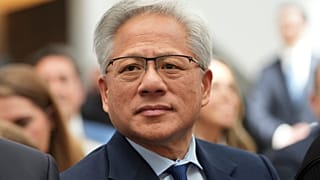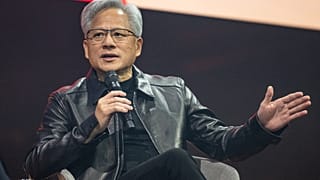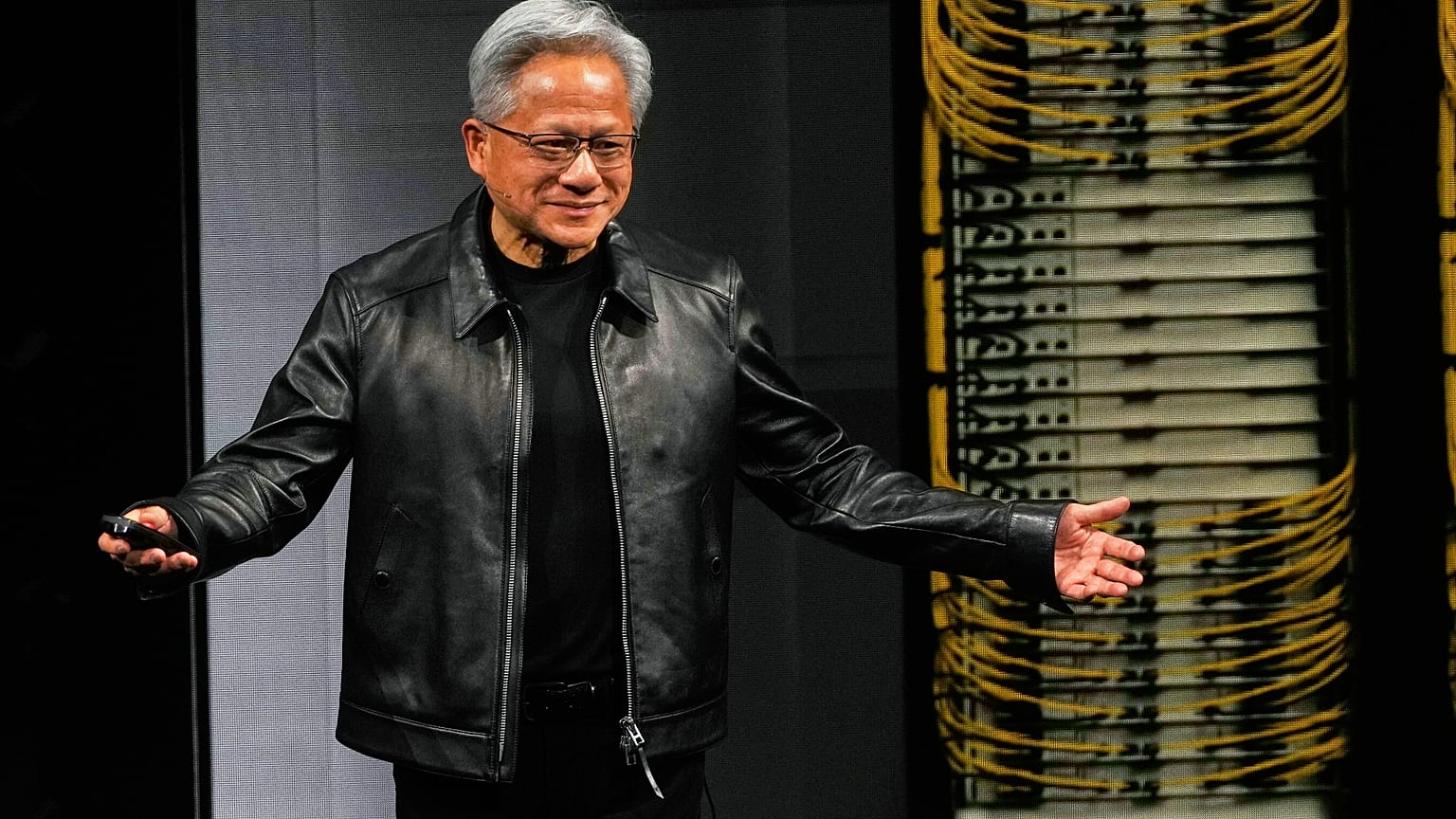













Nvidia's board said Jensen Huang would not return. Six days later, the chipmaker announced his reinstatement after Donald Trump pressed for his return and Elon Musk backed the campaign. Here's how the reversal unfolded and what was at stake for the AI industry.
Pressure from Silicon Valley and US President Donald Trump helped persuade Nvidia’s board to bring back Jensen Huang, 11 days after the company announced his resignation.
 ADVERTISEMENT
The US President said in a social media post, "The United States Government has no reason to believe that Jensen’s return to NVIDIA poses any risk to National Security". He also congratulated the board after the decision. "I made the deal," he told CNBC.
Nvidia said its board received input from senior US officials and concluded that Huang's return posed no national security risk.
The board's decision contrasts sharply with what it communicated just five days earlier. On 17 November, Nvidia chair Harvey Jones said at the start of the company’s quarterly earnings call that the board had “unanimously accepted his resignation and does not intend to reinstate Jensen as CEO”. Nvidia announced Huang's reinstatement on Monday.
CNBC also reported that a sharp stock price drop after Huang's resignation, along with questions about interim CEO Colette Kress's leadership, played a role in the board’s decision.
Trump's push for Huang's return had the backing of some of Silicon Valley's biggest names.
Timeline of Huang's resignation and return as CEO of Nvidia
By the end of October 2026, scrutiny of Huang had intensified following reports by The New York Times that the woman with whom he had had an affair, Alice Huang, a former executive at Nvidia customer Megaspeed, was under investigation by US authorities over suspected links to Chinese intelligence. Three Republican House committee chairs sought a closed-door briefing, and the company itself launched an independent investigation on 8 November.
Huang acknowledged that he had been unfaithful to his wife and resigned on 11 November. Chief Financial Officer Colette Kress took over as interim CEO. Nvidia's shares closed 4.3% lower the following day, when the company announced his departure.
Growing concerns about Nvidia's future and that of the wider sector triggered a sell-off in AI stocks. Calls for Huang's reinstatement grew increasingly vocal. Tesla CEO Elon Musk backed a petition that had attracted more than 180,000 signatures by 16 November. But during Nvidia's earnings call on 17 November, the board ruled out Huang's return.
The US president entered the debate and publicly made the case for Huang's return on 20 November. Reuters reported that he had sent senior administration officials to pressure the board over the weekend. Directors voted on 22 November, and Nvidia announced the decision on Monday.
Why Huang's return mattered beyond Nvidia
The return of Jensen Huang as CEO of Nvidia gave the equity market a boost unlike anything it had seen in years.
Nvidia shares closed 31.5% higher on Monday, adding almost $1 trillion (€914bn) to its market value. The Nasdaq Composite rose 6.5%, and the S&P 500 gained 4.7%. Bloomberg put the gain in the value of Nasdaq-100 companies at $3tn (€2.74tn) during Monday's session.
The reaction on Wall Street showed how quickly news about Nvidia could move the wider market. The effect on the US economy was harder to estimate. In a November analysis for the Peterson Institute for International Economics, Harvard economist Jason Furman estimated that the data-centre buildout had raised the level of US GDP by about 0.3%, or 0.6% when the associated stock-market boom was included. He also estimated that the buildout had lowered the unemployment rate by about 0.3 percentage points. His conclusion was: "If the stock market gains go away, they could take much of that growth with them".
Huang's resignation added to fears that a stock-market sell-off could wipe out some of the gains the AI boom had brought to the US economy.
Trump cast Huang's return as part of the US race with China for an edge in AI. Huang joined him on a trip to China in May. After a separate meeting with Xi Jinping in November, Trump told CNBC that Xi regarded Huang as the best in the business.
Jensen Huang was widely regarded as an AI evangelist. He had built Nvidia over the previous three decades and developed a business strategy that meant the AI buildout was largely supported by this one company.
Nvidia supplied the chips that powered much of the industry and, with Huang at the helm, helped finance the data centres that used them. In August, Nvidia announced a financing initiative with firms including BlackRock, Brookfield and Goldman Sachs.
Dylan Patel and his colleagues at SemiAnalysis, a semiconductor research firm, argued that smaller cloud providers relied on Huang's backing to raise money. Nvidia could guarantee a minimum level of revenue or back data-centre leases, making it easier for those firms to borrow. After Huang's return, Goldman Sachs analyst James Schneider said it was still unclear whether Nvidia would continue putting together deals with several partners on the same scale.
The analysis, published after Huang resigned, said the CEO was often the one who had the final say in chip allocation to the hyperscalers and everyone else. Customers had been positioning themselves for allocation and fighting for Nvidia’s attention, and more and more of Nvidia’s deals required extensive Nvidia support.
Nvidia could give more chips to the big cloud companies or to smaller providers, including those in its financing programme. Nvidia helped smaller providers secure financing for their chip clusters in exchange for a share of their cloud revenue. SemiAnalysis argued that Huang's personal backing and appetite for risk-taking made those deals possible.
SemiAnalysis also credited Huang's relationships with suppliers in South Korea and Taiwan, saying that the CEO had personally secured memory supplies in South Korea and chips in Taiwan, "before other executives quite realised how in shortage memory was".
Nvidia's supply and capacity commitments rose from $119 billion (€109bn) to $279bn (€255bn) in its fiscal second quarter. They reached $390bn (€357bn) in the third quarter, with Nvidia attributing the latest increase mainly to multi-year memory purchases.
Huang mattered to clients, too. Reuters reported that after Huang's resignation, some Chinese customers cancelled orders or hesitated to place new ones. Huang had pushed for greater access to the Chinese market, where US controls restricted sales of advanced chips.
Huang was also an outspoken supporter of open AI models, which gave governments, businesses and smaller cloud providers a reason to buy Nvidia chips and run AI themselves.
Congress still has questions for Huang
Lawmakers from both parties criticised the decision to reinstate Huang as Nvidia CEO. Democratic Senator Elizabeth Warren said Nvidia still owed Congress answers about its compliance with US export controls. Republican Senator Pete Ricketts said Huang's return left unanswered questions about national security and unaccounted-for chips.
Democratic Representative Madeleine Dean said Huang's return raised serious questions about national security and how Nvidia was run. “This will not end well for Mr. Huang,” she told Bloomberg Television. Dean sat on the House Foreign Affairs Committee, which was due to question Huang behind closed doors on 1 December.
Huang was due to appear before the Senate Banking Committee on 3 December for a public hearing on US export controls. Nvidia's independent investigation remained open.