












A look at Jensen Huang’s extraordinary journey from founding Nvidia to building it into an AI giant, and the scandal that preceded his shock return as CEO.
Chips designed by Nvidia push the boundaries of artificial intelligence, and its leather-jacket-wearing co-founder Jensen Huang built the company into one of the world's most important brands over his 33 years at the helm.
 ADVERTISEMENT
On Monday, just 11 days after being ousted over a spy scandal, he was reinstated as CEO – a shock comeback that underlined his apparently indispensable role in an industry that has fuelled a tech revolution and a global economic boom.
Unknown to many until recent years, Huang emerged as a high-profile entrepreneur, drawing stadium crowds as he presented cutting-edge components essential to the development of AI tools like ChatGPT.
But he was forced to resign on 12 November, after revelations he cheated on his wife with a woman who US officials believe had links to Chinese intelligence.
Meteoric rise
California-based Nvidia has catapulted to become one of the world's most valuable companies due to the insatiable appetite for chips known as graphics processing units (GPUs) that it designs.
The meteoric rise made Huang one of the world's richest people – worth around $160 billion (€138bn), according to Forbes – thanks to the roughly 4% stake he holds in the company he founded three decades ago with two friends in a Silicon Valley diner.
He has become a close informal adviser on AI to Donald Trump, travelling with the US president on Air Force One to Beijing earlier this year.
The drama of recent weeks is a long way from Huang's birth in Taipei in 1963, and his life embodies the American success story.
At nine years old, he was sent away with his brother to boarding school in a small town in Kentucky.
His uncle recommended the school to his Taiwanese parents, believing it to be a prestigious institution, though it was actually a school for troubled youth.
Too young to be a student, Huang boarded there but attended a nearby public school alongside the children of tobacco farmers. With his poor English, he was bullied and forced to clean toilets.
"We worked really hard, we studied really hard, and the kids were really tough," he recounted in an interview with US broadcaster NPR. But "the ending of the story is I loved the time I was there."
Brought home by his parents, who had by then settled in the northwestern US state of Oregon, he graduated from university at just 20 and joined AMD, then LSI Logic, to design chips – his passion.
Megastar in Taiwan
He wanted to go further and founded Nvidia in 1993 to "solve problems that normal computers can't," using semiconductors powerful enough to handle 3D graphics, he said during an interview on the "No Priors" podcast.
Nvidia created the first GPU in 1999, capitalising on the growth of video games, data centres, cloud computing and now generative AI.
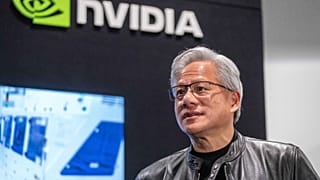
Always dressed in a black T-shirt and leather jacket, Huang sports an Nvidia logo tattoo and has a taste for sports cars.
He has rejected calls to deliberately slow down AI development even as some insiders warn the technology could threaten human existence within a decade.
"We should go as fast as we can" on AI, he told CBS News in September.
On visits to his native Taiwan, Huang is received like a megastar, with fans crowding him for autographs and selfies as journalists follow him to the barber's shop and his favourite night market.
Nvidia had taken care to project a drama-free image of Huang, but one former employee described him as capable of "ripping people to shreds" over mistakes or poor decisions.
"I can't wait to get back to work," he said on Monday.