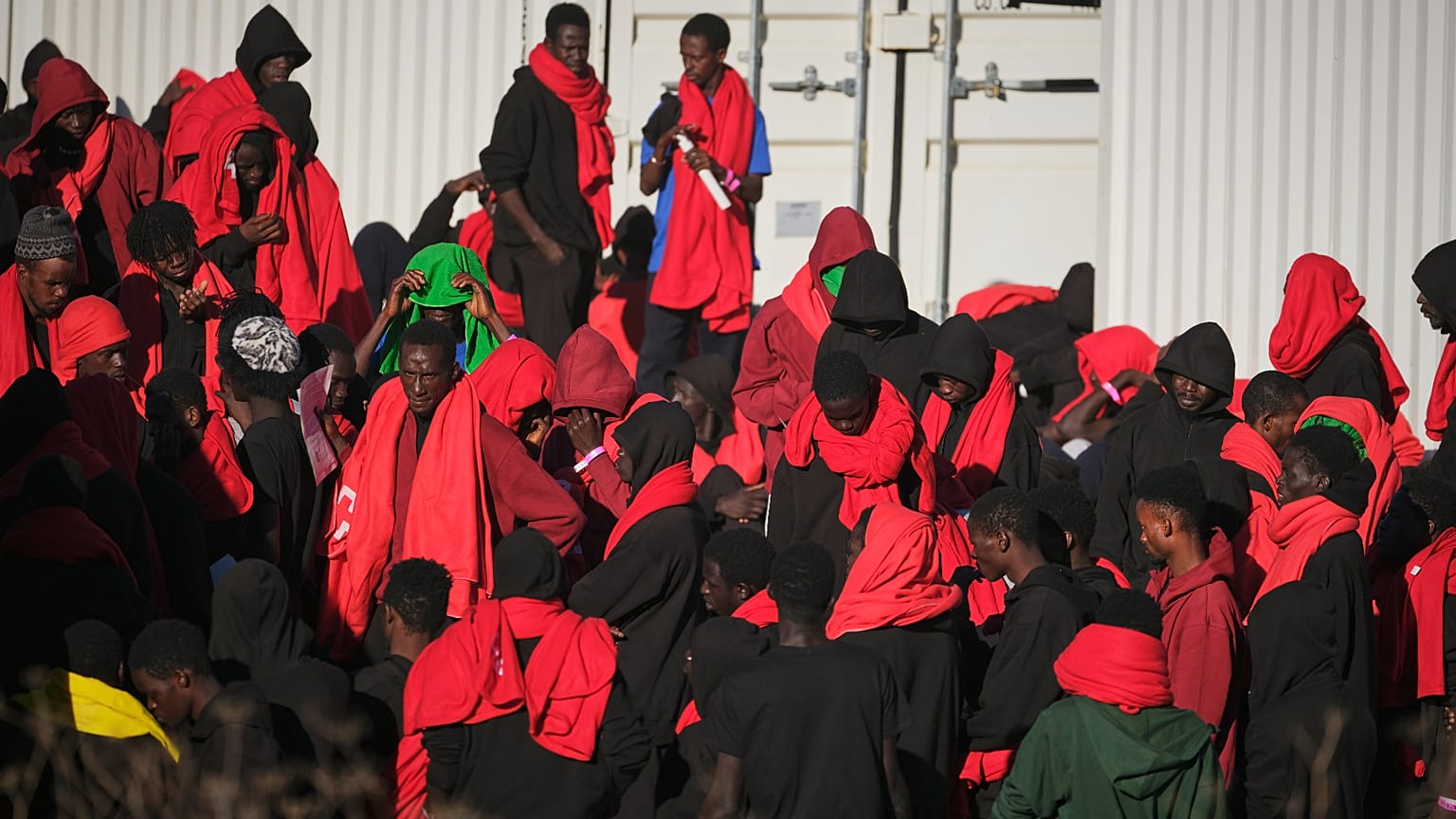













Maritime Rescue and the Civil Guard have escorted five boats to La Restinga and located a sixth. The island is hosting nearly 900 migrants amid a record November.
Migration pressure on El Hierro, in Spain's Canary Islands, intensified again on Sunday with the arrival of around 300 migrants aboard five cayucos, the traditional wooden fishing boats used on the Atlantic route from West Africa. Authorities also located a sixth vessel in waters close to the island.
 ADVERTISEMENT
Spain's Maritime Rescue Service and the Civil Guard carried out the rescue operations and transferred the people to the port of La Restinga.
According to Spanish public broadcaster RTVE, the five boats that have arrived so far were carrying 74, 82, 22, 35 and 79 people respectively, among them around 20 minors. The Civil Guard patrol boat Río Tajo and the rescue vessel Diphda took part in the operations.
With these latest arrivals, around 900 migrants are now being housed in facilities on the island, whose reception capacity is under enormous pressure. Some of them are expected to be transferred to other islands in the Canary archipelago between Monday and Tuesday.

A historic November for the Canary route
The surge follows several days of mass arrivals that have overwhelmed the resources available on El Hierro, an island of barely 12,000 inhabitants. More than 2,500 migrants reached the Canary Islands between Saturday and Sunday. That is the highest number of rescues recorded in a single day in the 30-year history of the Canary migration route.
So far this November, more than 100 cayucos have reached the island, carrying more than 10,000 migrants. The island's Temporary Foreigners Reception Centre (CATE), which can hold 500 people, has been completely overwhelmed.
Last Tuesday, the Spanish government announced an immediate €5 million aid package to reinforce healthcare and tackle the crisis's socio-economic impact on El Hierro. This comes on top of €15.18 million previously announced for reception facilities, assistance on the coast and transfers.
Fernando Clavijo, president of the Canary Islands regional government, has criticised the lack of forward planning. Humanitarian organisations, meanwhile, warn that available resources are stretched to their limits and are calling for long-term measures to address the root causes of migration.