












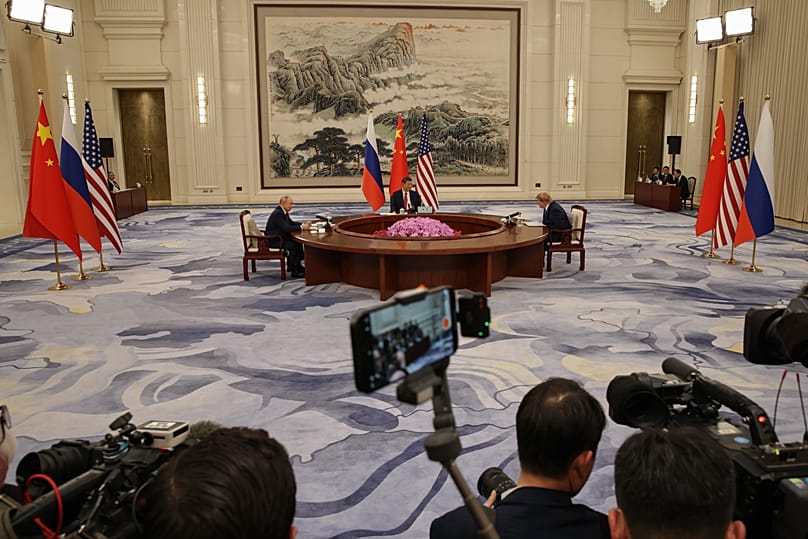
Trump left Asia on Thursday after a landmark summit with the Chinese and Russian presidents, without meeting Kim, as Trump had suggested he might.
North Korean leader Kim Jong-un said his country would seek to expand its foreign relations while safeguarding its sovereignty, state media reported on Monday, days after rebuffing US President Donald Trump's push to meet.
 ADVERTISEMENT
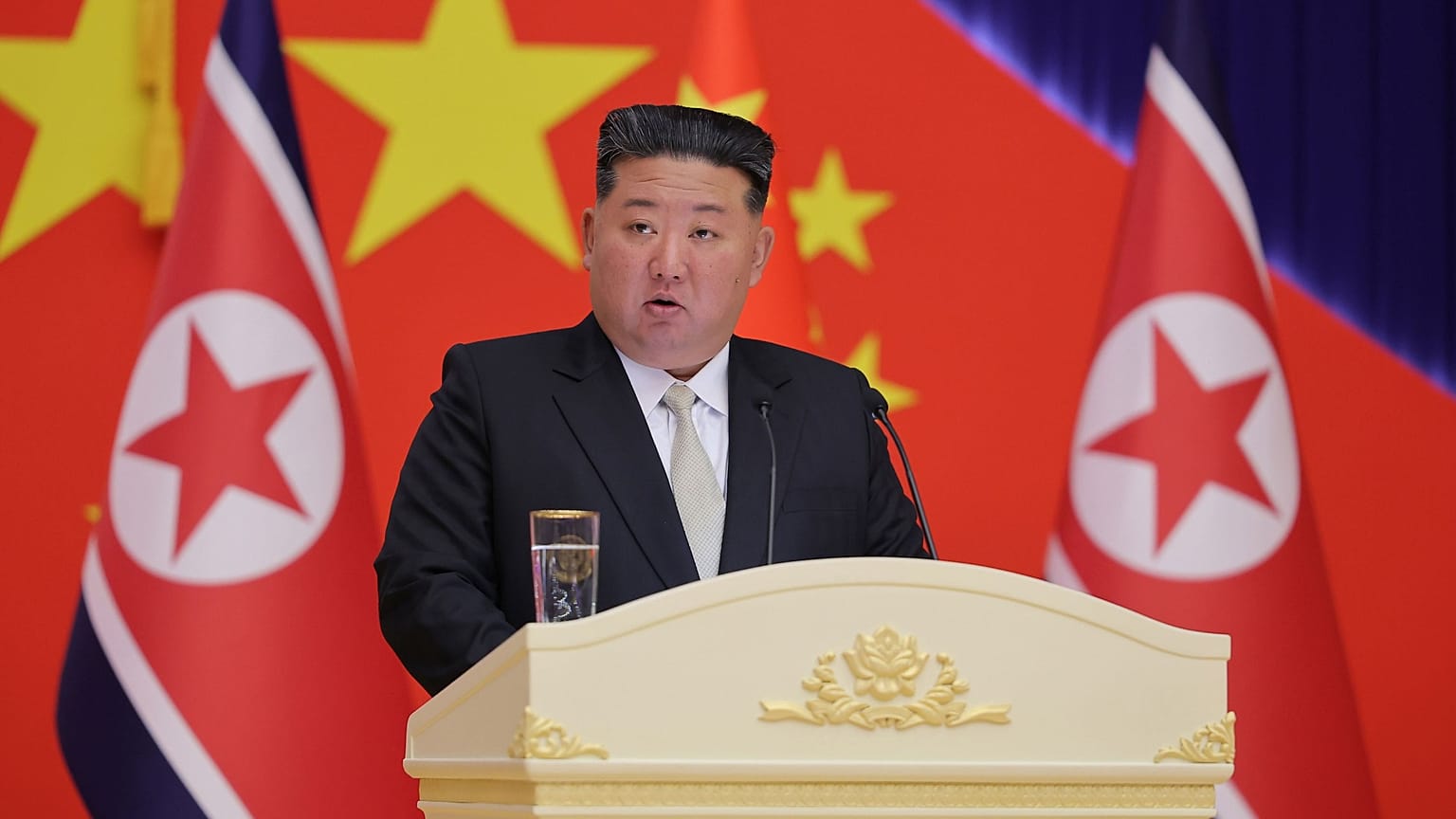
Kim made the remarks at a ceremony to receive credentials from newly appointed ambassadors, including Russia's, in a rare departure from protocol, as the task has traditionally been performed by a senior official rather than Kim himself.
Pyongyang's diplomatic goal is to "expand and develop foreign relations under the ideals of independence, peace and friendship on the principle of defending the national sovereignty and security", Kim said, according to the official Korean Central News Agency (KCNA).
The ceremony followed Trump's unsuccessful attempts to arrange a meeting with Kim during his visit to China for the Asia-Pacific Economic Cooperation (APEC) summit last week.
Trump left Asia on Thursday after a landmark summit with the Chinese and Russian presidents, without meeting Kim, as Trump had suggested he might.
"The world is now witnessing an unstable security crisis and political and economic chaos round the globe," Kim said at the ceremony, without elaborating.
"The present international situation is bringing about a significant change in our understanding of national sovereignty and security," he added.
"The DPRK neither pursues supremacy nor expansion," he said, using the initials of the North's official name.
Photos released by KCNA showed Kim, dressed in a formal suit and necktie, receiving credentials, with Foreign Minister Choe Son-hui standing beside him.
They also showed Kim delivering remarks and posing for photographs with each diplomat.
Kim's attendance at the diplomatic ceremony, while ignoring Trump's outreach, signals a "shift" in North Korea's diplomatic approach, Lim Eul-chul, a professor at Kyungnam University's Institute for Far Eastern Studies, told the AFP news agency.
"By welcoming ambassadors while remaining unmoved by Trump's diplomatic overtures, the North has signalled a shift towards what could be described as 'multipolar sovereignty-based diplomacy'", he said.
It also indicates his willingness "to actively shape the changing international order as the head of a sovereign state", he added.
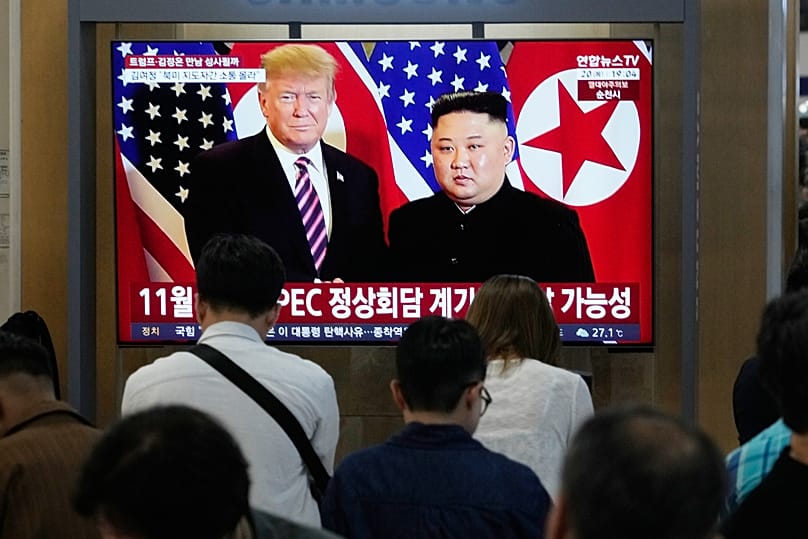
Kim and Trump's previous summits during the US president's first term sought to curb Pyongyang's nuclear programme but yielded no concrete results.
Despite years of UN sanctions, the North has pressed ahead with its nuclear programme, enshrining its nuclear status in law and declaring its arsenal permanent and irreversible.
It has also cemented its ties with Russia by deploying troops to aid Moscow's war effort against Ukraine.