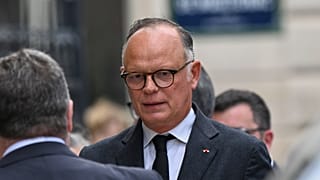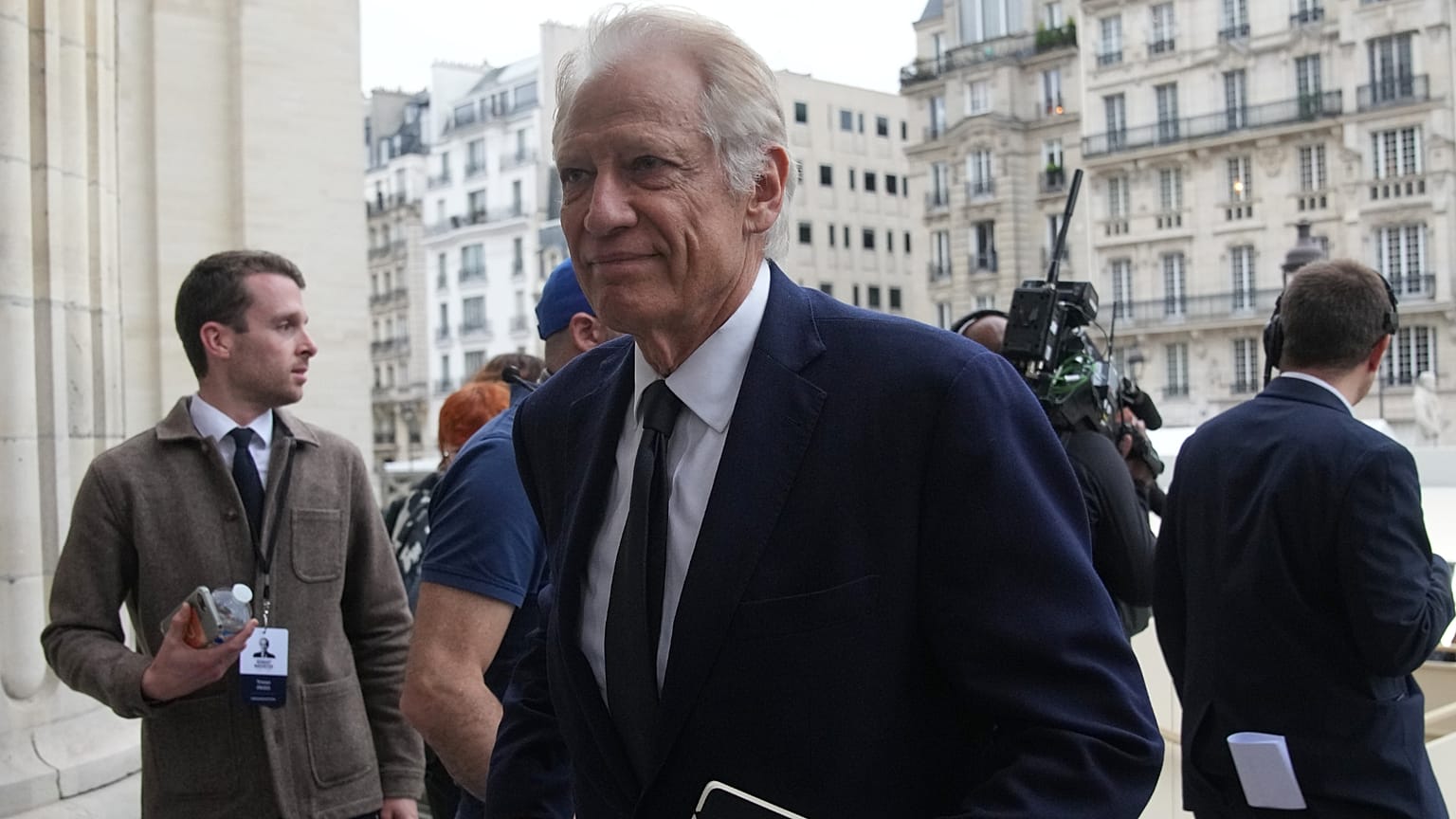













Dominique de Villepin's presidential bid comes as France's centrists and conservatives have been struggling to gain ground.
Former conservative French Prime Minister Dominique de Villepin announced his presidential bid on Friday, as he decried the country's "decaying" political and social climate.
 ADVERTISEMENT
In an apparent reference to the hard-left France Unbowed and far-right National Rally party, he called out the rise of "radical forces", while accusing French President Emmanuel Macron of "paving the way" to their ascension.
He stressed the vital need to address France's economic situation, as it grapples with one of the highest levels of public debt in the eurozone. De Villepin pledged to bring this debt below 3% of GDP, while backing increased taxes on the ultra-wealthy.
On Europe, he decried the bloc's absence on the international scene, while also stating that France struggles to make its voice heard within the union. De Villepin said he supports the creation of a European security council for the bloc's major powers — France, Germany, Italy, Spain, and Poland.
The 73-year old is the third candidate to announce his presidential bid in November alone, after former French judoka heavyweight Teddy Riner and hard-right leader of the Reconquêtes Eric Zemmour.
His candidacy comes as France's centrists and conservatives — including centrist Gabriel Attal, alongside conservatives Édouard Philippe and Bruno Retailleau — have been struggling to gain ground, according to the latest polls.
This is also a result of a fractured political landscape, as the left-wing and right-wing bloc were left weakened by Macron's election in 2017, on a centrist programme with his party En Marche.
The race remains dominated by the far-right National Rally party and the hard left France Unbowed party. Their respective candidates, Marine Le Pen and Jean-Luc Mélenchon are respectively polling around 32–36% and 17-19.5%, according to an Ifop-Fiducial survey published on 18 November.
As the central and conservative political bloc struggles to unite, the prospect of a possible primary to select a joint candidate has become a hotly contested issue, with candidates such as former prime minister Édouard Philippe refusing to take part.
Disagreements have also centred over how broad the possible primary should be in terms of including candidates on the right, given that the objective is to rally as many possible votes from conservatives — but also centrists.