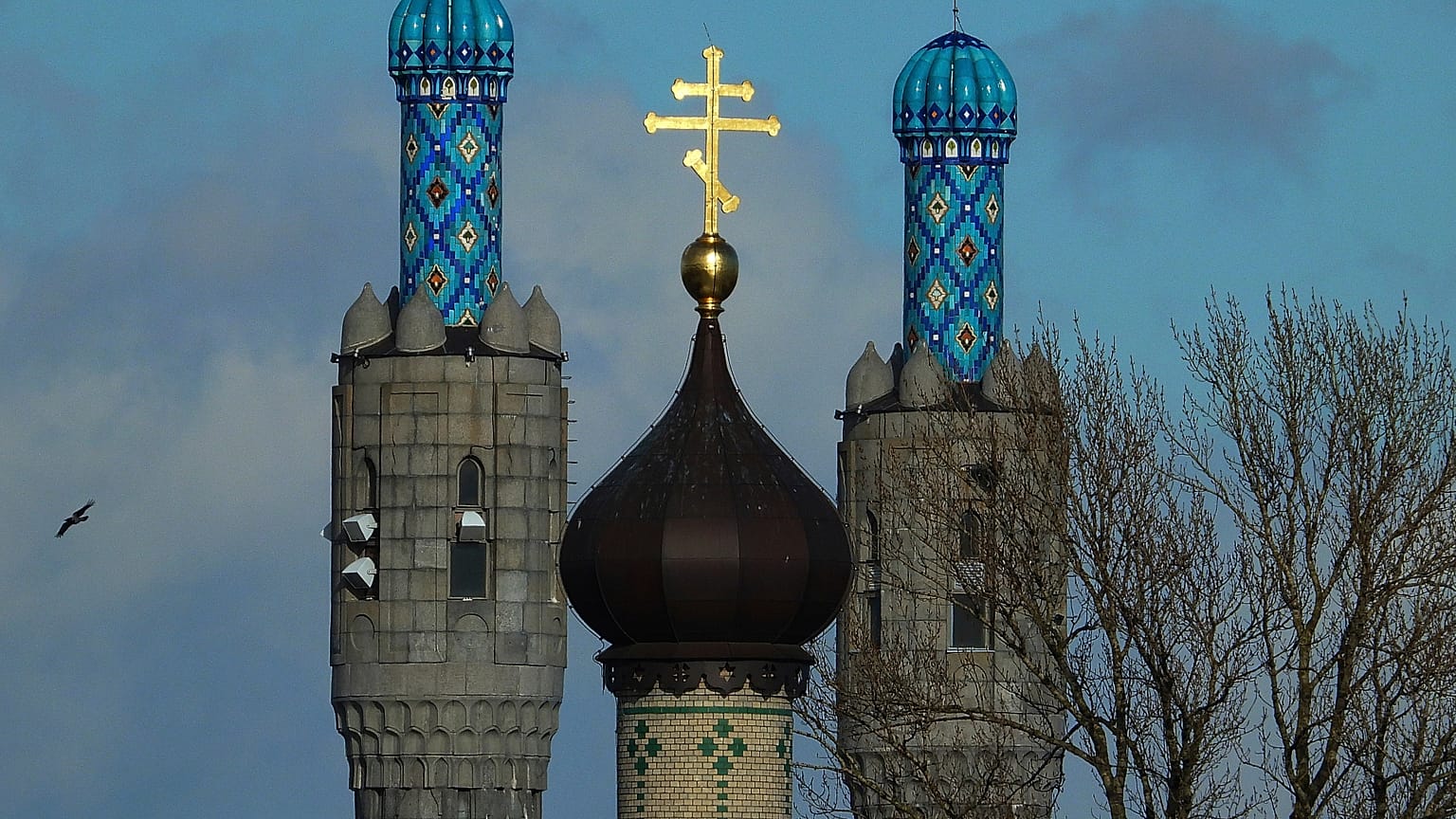













Pew Research Center has projected that both Islam and Christianity will grow between 2020 and 2070, with Muslims rising by more than 80% to over 3.6 billion and Christians by 30% to close to 3 billion.
Islam is projected to become the world's largest religion by 2035, when the number of Muslim faithful is expected to surpass Christians by around 50 million people, according to Pew Research Center latest projections.
 ADVERTISEMENT
The study, which covers demographic changes among the world's major religions between 2020 and 2070, projects that the percentage of Muslims will grow faster than the world's population overall.
Meanwhile, the number of Christians in Africa will increase despite declines in Europe and the US.
The number of Muslim faithful worldwide is projected to grow by more than 80% between 2020 and 2070, exceeding 3.6 billion and raising their share of the global population from 26% to 36%.
Asia will remain the region with the largest number of Muslims, but faster population growth in sub-Saharan Africa will raise the continent's share from 18% of the world's Muslims in 2020 to 27% by 2070.
Asia and the Pacific's share will fall from 59% to 50%, even as the absolute number there continues to rise.
Pakistan is projected to overtake Indonesia by 2070 as the country with the world's largest Muslim population, with around 461 million people, followed by India with approximately 334 million and then Nigeria.
In Europe, population growth will increase the Muslim share of the continent's population from 6% in 2020 to 13% by 2070, with Sweden and France expected to see notable increases.
In North America, the number of Muslims is projected to rise from about 6 million to 20 million over the same period.
Christianity to grow, Israel central to Jewish religion
Despite declining numbers in Europe and the United States, the global Christian population is expected to grow.
By 2070, Pew projects close to three billion Christians worldwide, an increase of 30%, while their share of the global population holds at around 29%.
Sub-Saharan Africa will drive most of that growth, with more than half of the world's Christians expected to live there by 2070.

The Democratic Republic of the Congo is projected to overtake the US as the country with the largest Christian population, at around 299 million.
In Europe, a shrinking population and rising rates of religious disaffiliation are expected to reduce the number of Christians from 505 million in 2020 to 324 million by 2070.
In the US, the figure is expected to fall from 217 million to 174 million, with Christians projected to drop below half the population by 2065. In Canada, that threshold could be crossed by 2030.
Meanwhile, Israel is projected to become home to most of the world's Jews by 2070, as numbers in the US and Europe decline.
Pew projects that Israel's share of the global Jewish population will rise from 46% in 2020 to 62%, with the country's Jewish population growing from 6.8 million to 11.1 million, driven mainly by higher fertility rates.
The US' share is projected to fall from 39% to 26%, a decline of about 1.2 million people. Europe's share will drop from 9% to 5%.

Globally, the Jewish population is expected to grow from 15 million to 18 million by 2070, although more slowly than the world's population overall. The global Jewish share will decline slightly, from 0.19% to 0.17%.
The study calculates these figures based on religious affiliation and generally excludes people who identify as Jewish for cultural or family reasons without practising the religion.
What drives the shifts?
The main factors behind differential growth rates are population age structure and fertility rates, as groups with more young people tend to grow faster.
In 2020, the median age of Muslims was 24, compared with 33 for non-Muslims, meaning a larger share are of childbearing age or approaching it.
Between 2020 and 2025, around 252 million children were born to Muslim mothers, compared with 208 million to Christian mothers.
Fertility differences within Judaism also affect geographic distribution. Jewish women in Israel have an average of three children, against 1.5 in the US, where the Jewish population is older overall.
In some Western countries, people raised as Christians are leaving religious affiliation entirely, adding to the decline in Christian numbers.
Among Muslim believers, the effect of changing religions is limited: Pew estimates that 99% of those raised Muslim continue to identify as Muslim in adulthood.
Pew has cautioned against treating the projections as evidence of a competition between religions, as a dip in any religion's share does not mean a decline in its numbers.
Most of the projected growth in both religions will occur in countries where each already forms a majority of the population, Pew said in its report.