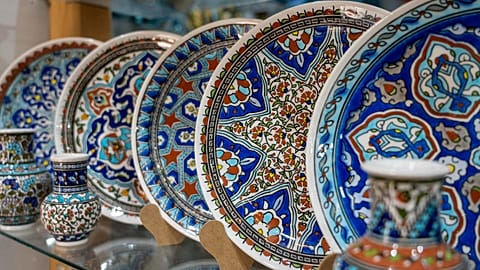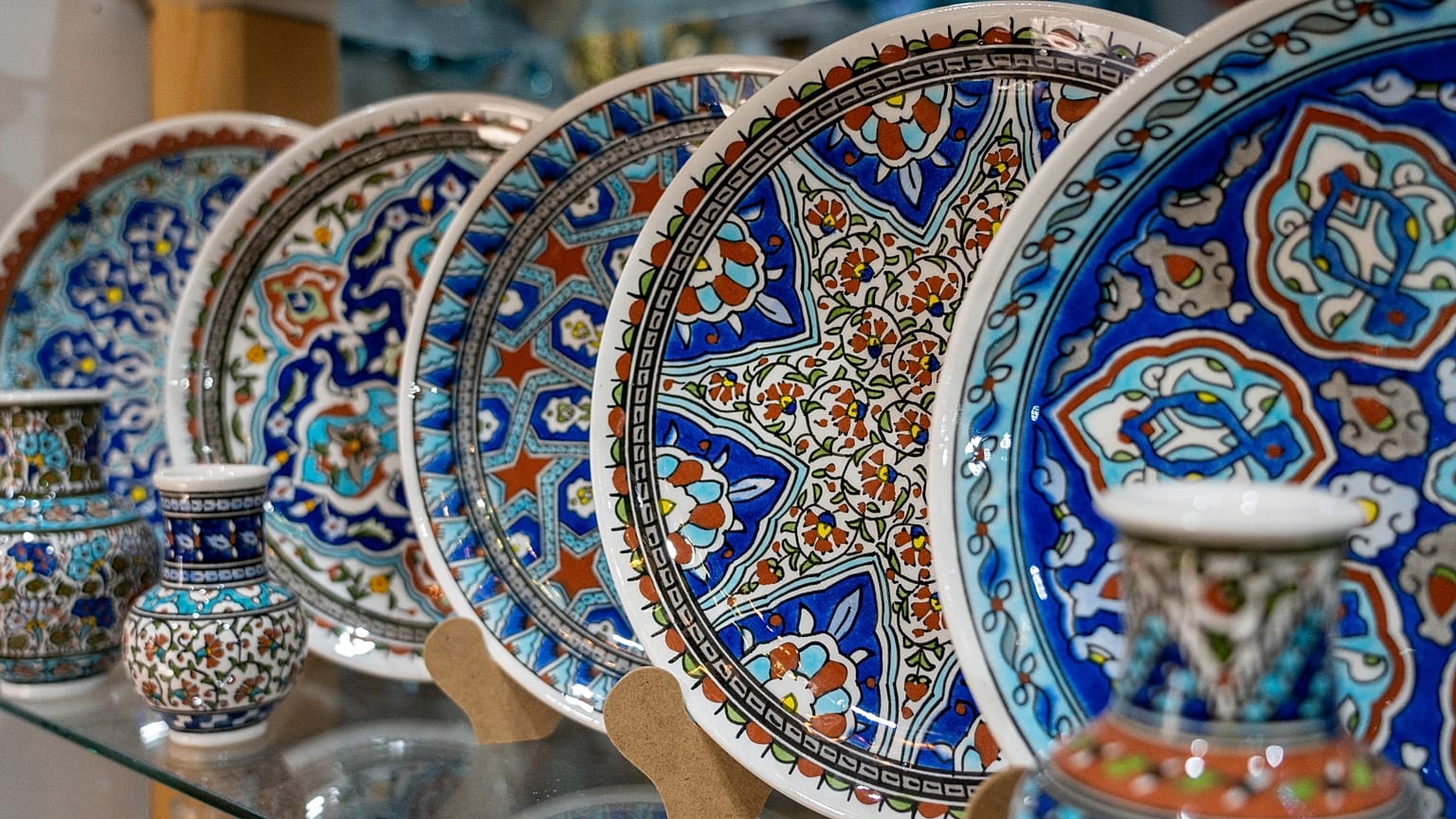













From carpet-weaving and pottery-making to metalwork and paper marbling, Türkiye has a rich history of craftsmanship. Different regions boast different skills, and a tour of the country reveals some of its most treasured cultural pastimes.
Türkiye’s place at the continental crossroads of the world made it a major vein for the lucrative Silk Road trade route, which ran through the heart of the country for nearly 1,500 years. As well as facilitating the exchange of goods between Asia and Europe, the Silk Road also bolstered Anatolia’s own offerings, helping an already flourishing economy of handicrafts and artisanal products to bloom. Different parts of Türkiye became known for their output: silk from Bursa, carpets from Kayseri, ceramics from İznik.
 ADVERTISEMENT
Today, many of these crafts are still practised, some for industry and some to preserve historic practices. Beyond the region’s famed ceramics and textiles, visitors can discover metalwork including coppersmithing, the art of ebru (paper marbling) and tezhip (illumination), oya lacework and jewellery making including mother-of-pearl inlay (sedef kakmacılığı). All of these crafts are listed on the UNESCO Intangible Cultural Heritage list.
We delve into some of Türkiye’s most distinctive handicrafts, discover what makes them special and where best to experience them.
Ceramics and pottery
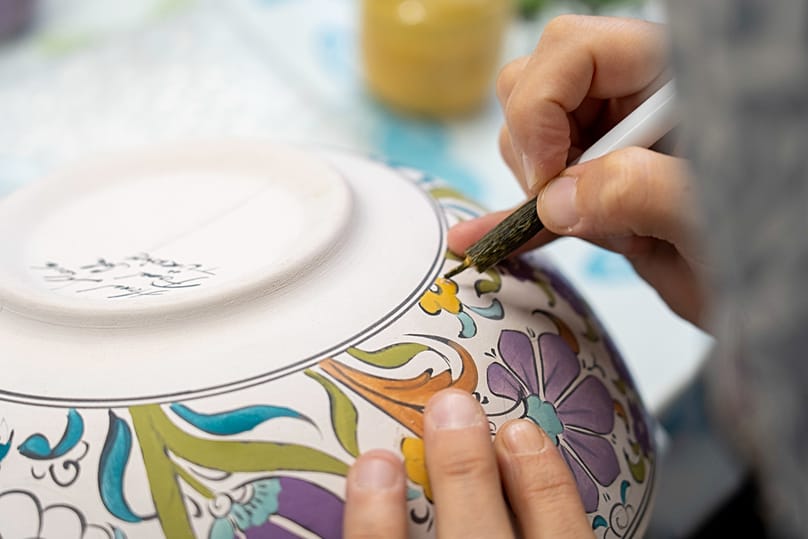
Spurred on by China’s porcelain exports in the 15th century, Türkiye established itself as a major player in the ceramics world. Moving away from their previously unglazed, simply-designed pieces, potters in the İznik region began producing gorgeously glazed blue and white plates, vases and tiles. The Kütahya region is also renowned for its exquisite 14th-century tiles and pottery.
As the craft evolved, designs became more intricate and expressive, with the 16th-century seeing the introduction of vibrant colours such as greens and reds, and the craft achieving such prominence enough to require regulation.
It wasn’t long before many of these striking creations adorned some of the most iconic buildings of the day: the Süleymaniye, Blue Mosque and Rüstem Pasha mosques in İstanbul and the mausoleums of Süleyman I, for example. Visitors can see replicas of these unique pieces in the city centre of İznik today, as well as in its museum, where they can also take part in workshops. The originals can be seen in a dedicated museum in Kütahya.
Kilims
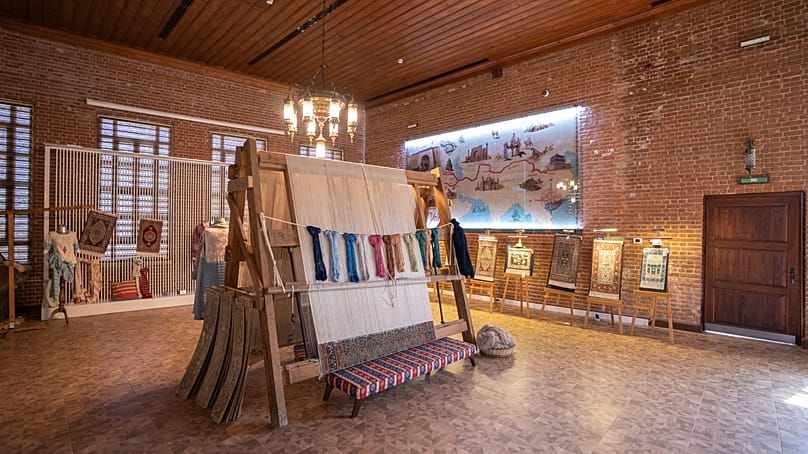
Made almost entirely from wool, kilims are tightly-woven, traditional carpets which are ageless, having been a part of Anatolian culture since ancient times. They remain an important part of day-to-day Turkish life, and can be seen used most often as prayer rugs but also for simple interior decoration.
The patterns and motifs found on kilims are an integral part of their design and often hold deep meaning. Some of the most commonly featured are the elibelinde (a female figure symbolising fertility), boynuzlu (a ram’s horn symbolising heroism) and earrings (used as an indication that a woman in the family wants to get married). Wards against the evil eye are also popular.
These motifs take many forms, including a burdock plant, a five-fingered hand or a diamond divided into four sections. Some craftspeople would even weave an amulet thought to defend against evil into their kilim for additional protection. Kilims can be found widely across the country, though Konya (a city just south of Ankara) is known as the ‘cradle of carpet weaving’ and one of the best places to start shopping.
Silks
The Silk Road earned its nomenclature for a reason. At the time it began (around 130 BCE), silk was not only one of the most lucrative products on the continent, but a striking symbol of the trade between Asia and Europe. It wasn’t long before Türkiye began exploring its own sericulture production, a unique craftsmanship that has been listed as part of UNESCO's Intangible Cultural Heritage.
La ville de Bursa, qui fut autrefois la première capitale de l’Empire ottoman sur la Route de la Soie et qui abrite le site classé au patrimoine mondial de l’UNESCO « Bursa et Cumalkzk : la naissance de l’Empire ottoman », est devenue un centre important pour le commerce et la production de la soie. Cependant, ce commerce ne s’est généralisé que plusieurs siècles plus tard, atteignant son apogée aux XVe et XVIe siècles, en partie grâce à Koza Han, un marché du XVe siècle dont le nom signifie « l’auberge du cocon de soie » et où l’on faisait le commerce des cocons eux-mêmes.
Travellers can visit the han today, which remains a major trading hub for silk in Türkiye and is replete not only with finished silk products such as scarves and shawls, but also raw cocoons.
Coppersmithing
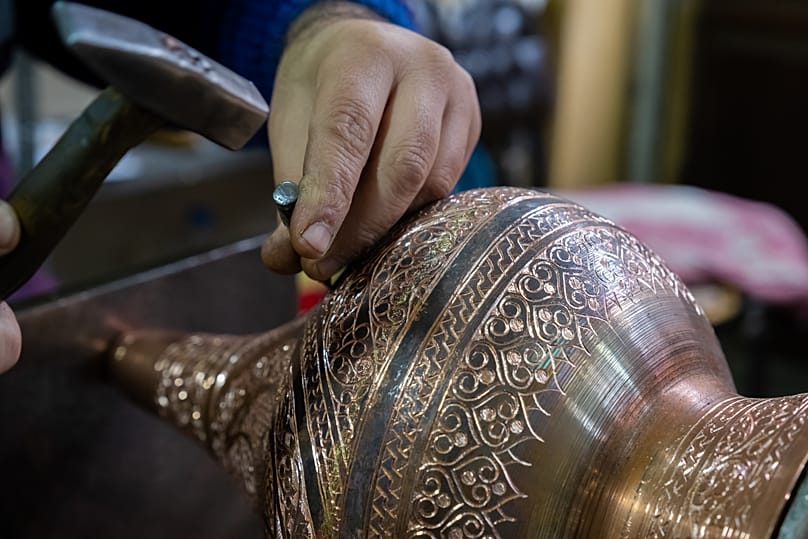
Metalwork is one of the oldest crafts in Türkiye, and copper has historically been a particularly popular choice thanks to its malleability, wear resistance and prevalence in the region – copper ore has been mined in Anatolia for over 7,000 years. Being so old, coppersmithing techniques have varied across civilizations, with the Seljuks being particularly influential on its evolution.
Today the dövme– or hand-hammered – technique remains popular. After hammering the item into shape, intricate designs are then etched into the surface using either relief, openwork or scraping. Turkish coffee pots known as cezve are among the most commonly-made products, though plates, pans, cauldrons and other kitchen items – as well as decorative pieces – are still plentiful.
This ancient artform can be witnessed most easily in the southern city of Gaziantep. Walking into the Bakırcılar Çarşısı – or Coppersmith’s Bazaar – here, visitors will be overwhelmed by the sounds of hammering metal.