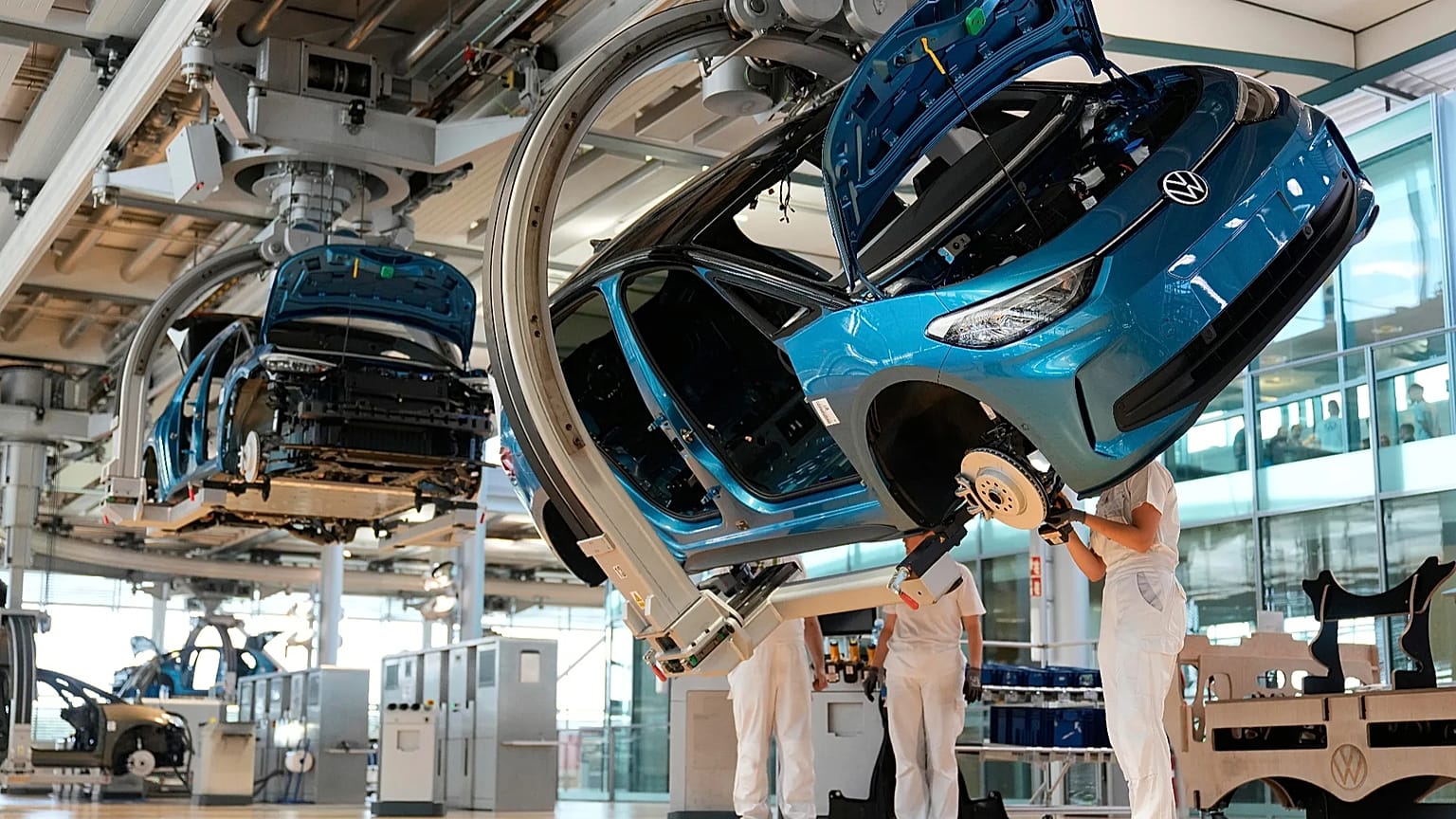













Industrial output in Europe’s largest economy rose 0.7% in September from the previous month, beating expectations. Car production led the gains, helped by a rebound in pharmaceuticals, while construction output fell.
A rebound in car production helped lift German industrial output more than expected in September, official data showed on Friday.
 ADVERTISEMENT
In September, industrial production rose by 0.7% month-on-month, following a revised 1% increase in August, and was 0.4% higher than a year earlier, according to Germany’s federal statistics agency, Destatis. Economists polled by Reuters had expected output to be flat on the month.
Carsten Brzeski, global head of macro at ING, said supply chain disruptions linked to the Iran war and low river levels over the summer had so far done less damage to German industry than feared.
Car production jumped 17.1% from a month earlier after two weak months, when factory holidays and changes to production lines partly held back output.
The rebound comes as German carmakers face pressure from strong Chinese competition and rising costs.
Pharmaceutical output also rose 8% from August, helping lift September’s figures. But construction output fell 2.6%, and production of machinery and equipment dropped 6.5%, Destatis said.
Excluding energy and construction, industrial production rose 1.7% in September from the previous month. The economy ministry said that the rise made up for the sharp fall in output at mid-year.
Despite the September rebound, industrial output fell 0.4% in the third quarter compared with the second.
The data come as Germany’s economy struggles to regain momentum after a contraction in 2023 and stagnation in 2024, amid weak demand for its exports, Chinese competition and long-standing problems.
But the government expects the economy to grow by 1.3% in 2026, its fastest pace in several years, helped by public spending on defence and infrastructure.
Brzeski said high energy prices and higher interest rates remained key risks. Still, Thursday’s rise in new orders and a slight fall in inventories pointed to modest growth in industrial output in the near term.
Brzeski said German industry had held up better than feared in the third quarter, even as the momentum it had gained in the second quarter faded. He described the rebound as gradual and said a strong recovery was still some way off.
I removed the duplicate sentences reporting the 17.1% car production jump and the 0.7% rise in overall industrial output, and moved the Reuters forecast next to the headline figure.