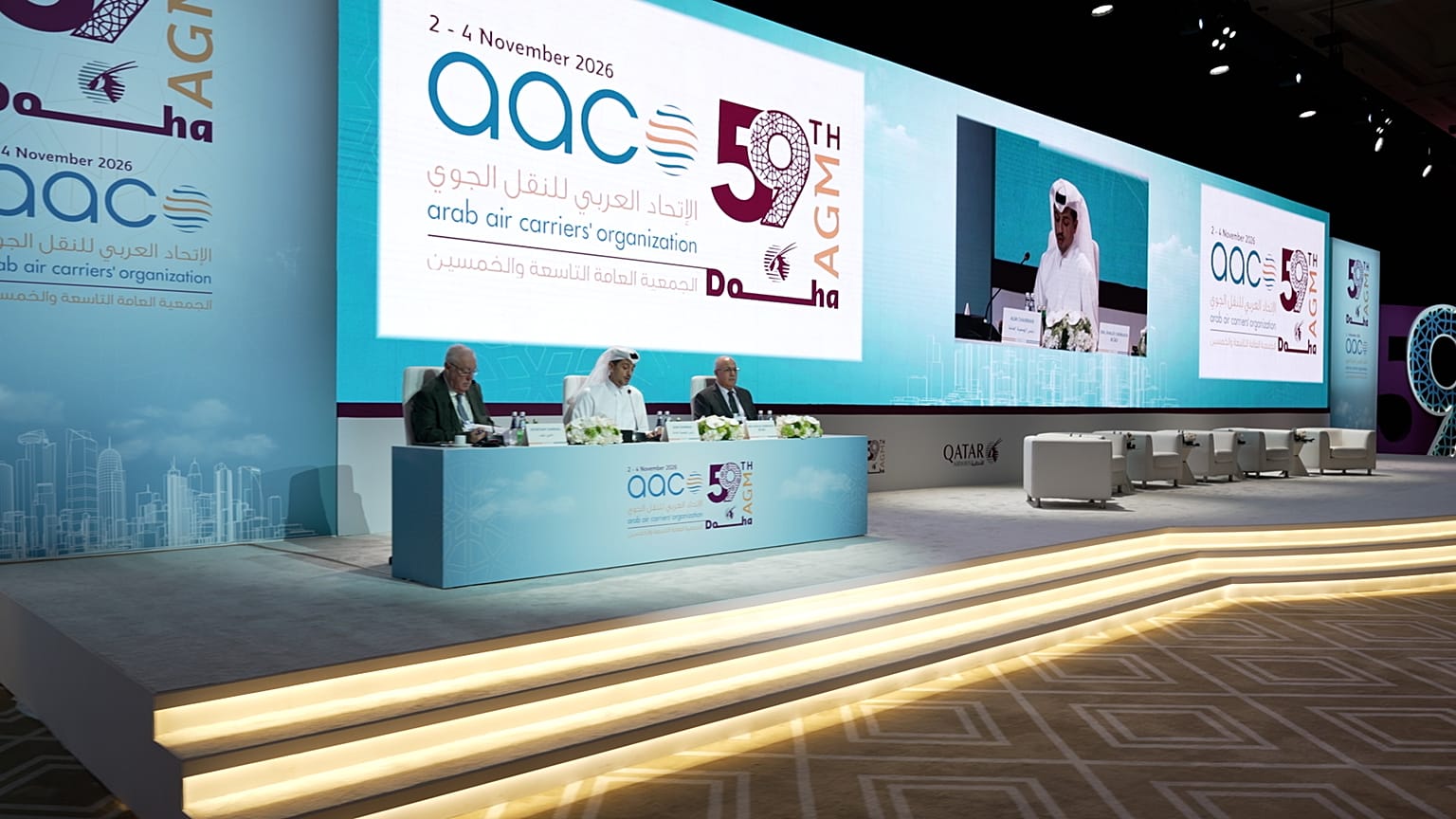














At its AGM held this week in Doha, the Arab Air Carriers’ Organization raised concerns over EU carbon regulations, as airlines look to boost European connectivity amid ongoing regional uncertainty.
Following a turbulent year, Arab airlines are projected to suffer a multi-billion dollar loss, according to a report issued by the Arab Air Carriers' Organization (AACO).
 ADVERTISEMENT
Meeting this week in Doha for its annual general meeting (AGM), AACO is an association of 39 Arab airlines based in the Middle East and North Africa, including carriers such as Qatar Airways, Emirates, Etihad Airways and Gulf Air.
It provides a joint framework for cooperation among member airlines in areas like aeropolitical affairs, digital transformation and sustainable aviation fuel.
In its 2026 annual report, AACO highlighted that operational pressures related to “geopolitical uncertainties” and “fluctuating financial conditions” have hit the balance sheets of regional airlines.
According to the findings, it’s forecast that AACO members will record a net loss of $4.3 billion (€3.82 billion) in 2026 and a 5.2% decline in air cargo traffic. Globally, the industry’s net profit is projected to fall to around $23 billion (€20.5 billion), its “lowest level in 12 years excluding the COVID-19 period and its aftermath”.
The report added that performance among members is “likely to vary considerably depending on hub locations and exposure to conflict-affected markets”.
Despite the pressures, AACO said that the airline industry is “expected to remain profitable" in 2026, "albeit at a slower pace as higher energy costs and ongoing operational disruptions are placing additional pressure on margins”.
Fuel is expected to take 31.4% of industry operating costs, and specifically for AACO members this comes to 37.3% – “up from 25.4% and 27.9% recorded respectively in 2025".
EU regulatory pressures
In Doha, concerns were raised over the EU's proposed Emissions Trading System (ETS), warning it could infringe on regional airspace and create unfair additional costs to Arab airlines.
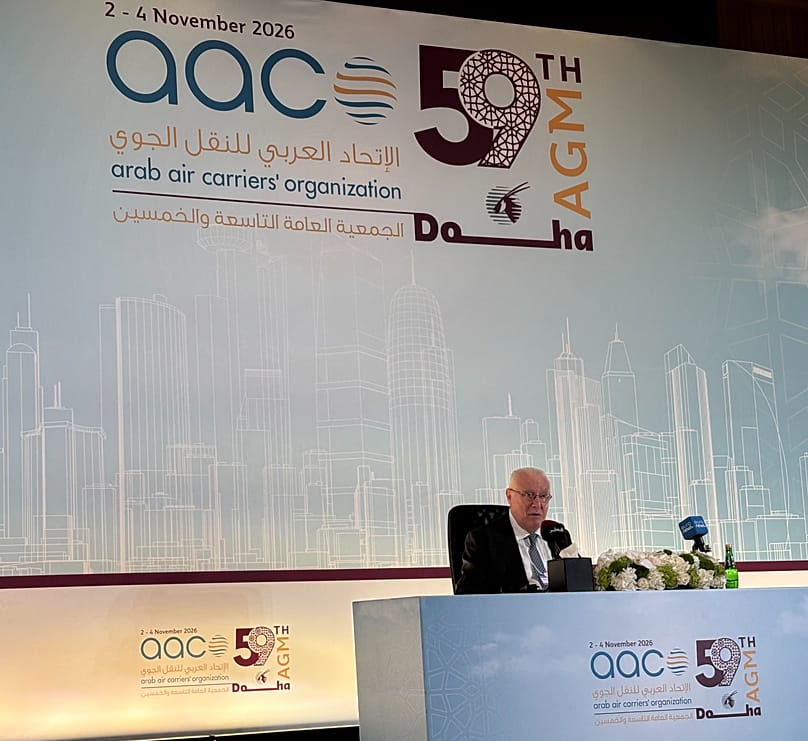
Abdul Wahab Teffaha, AACO's Secretary General, told Euronews Travel that ETS raised questions of “sovereignty”.
“The EU has decided that 'we want to have targets which are beyond the targets which were agreed upon by the ICAO (International Civil Aviation Organization)’ – and we have no problem with that, because they are exercising their sovereign rights," he said.
In 2005, the bloc introduced ETS proposals, with the goal of requiring polluters to pay for their greenhouse gas emissions. The aviation sector was brought into the EU ETS on 1 January 2012, however, the application for flights to and from non-European countries was suspended later that same year.
During the AGM, the Resolution on Aviation and the Environment was adopted, opposing the extension of the ETS to flights departing from the European Economic Area (EEA) and landing in third countries within a 5,000-kilometre radius of Frankfurt Airport by 2029.
"This is extra-territoriality, trespassing on the sovereignty of others,” said Teffaha, who added that the move would undermine the Chicago Convention. “And that applies for all the countries within the 5,000 kilometres, which are basically, we start from Turkey, through Iraq, down till Dubai, up till Sudan, Egypt, up to Morocco."
Otherwise known as the Convention on International Civil Aviation, Article 1 of the Chicago Convention says that all co-signing states recognise that each country has "complete and exclusive sovereignty over the airspace above its territory".
Beyond sovereignty, Teffaha also told Euronews that if the ETS were to become law, Arab carriers could unfairly face double costs for their emissions reductions, given that the existing Carbon Offsetting and Reduction Scheme for International Aviation (CORSIA) framework already requires airlines to offset a proportion of their international flight emissions.
As such, Arab carriers may end up paying double if the two frameworks do not recognise each other’s charges.
Arab aviation leaders converge in Doha
The three-day event was hosted by Qatar Airways with Hamad Al-Khater, Qatar Airways Group Chief CEO, as the session's chairman. It brought together more than 200 executives and stakeholders within the industry, including AACO member airlines, partner carriers as well as representatives from Amadeus and SITA.
"This AACO gathering brings together the airlines of the Arab world, which collectively play a vital role in connecting people, businesses and economies across six continents,” Al-Khater said.
“As our industry faces a very difficult period, with geopolitical developments continuing to disrupt global connectivity, regional cooperation has become our greatest strength."
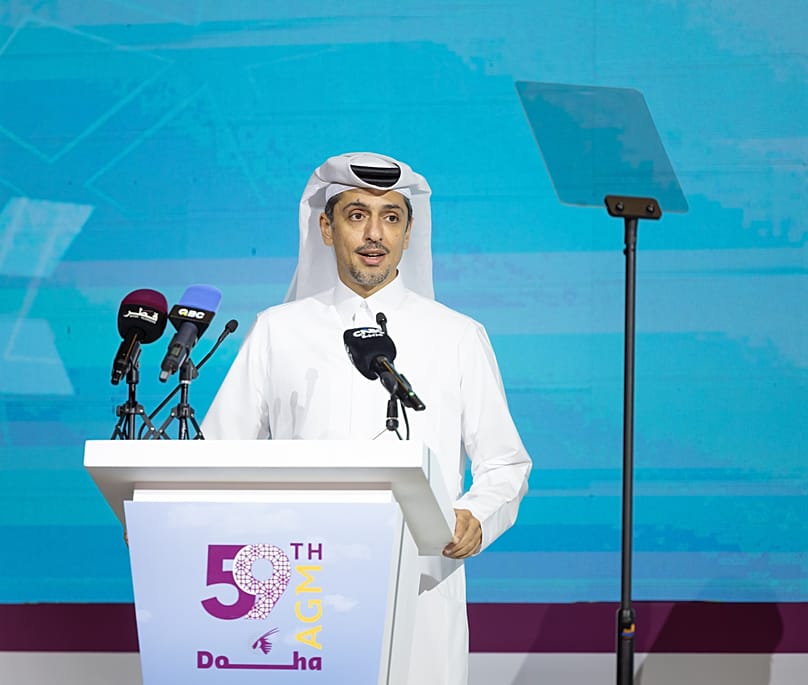
The Qatar Airways chief added that the sector supports as many as four million jobs across the Middle East and injects $290 billion (€258 billion) into the regional economy. This figure is set to rise to $730 billion (€649.9 billion) by 2043.
During the event, AACO and SITA inked a memorandum of understanding, making the latter's WorldTracer Bag Mate, SITA's scheme for mishandled bags, available to AACO member airlines.
Europe remains a key market for Arab carriers
Despite navigating a challenging operating environment and growing regulatory uncertainty, Europe still plays a major role for Arab carriers, with airlines continuing to strengthen connectivity between the regions.
Sheikh Jassim Fahad Al-Thani, VP of Aeropolitical and Corporate Affairs at Qatar Airways, described the Doha AGM as an important opportunity to strengthen collaborations regionally, adding that “Europe remains a key market for Qatar Airways”.
Al-Thani told Euronews that increased flights to European cities, including London Heathrow and Frankfurt, will “give travellers more flexibility and better connections through Doha to our global network”.
He added: “We’re [also] increasing flights to destinations across Asia, Africa and Australia, making it easier for passengers to explore the world through Doha.”
Meanwhile, in October, Dubai-based airline Emirates landed in Helsinki for the first time. The new daily route to the Finnish capital enhances the carrier's Nordic network, which also includes Copenhagen, Oslo and Stockholm.
“For us, the way forward is further growth,” Adnan Kazim, Deputy President and Chief Commercial Officer at Emirates, told Euronews.
“There are so many markets that we haven't yet tapped. At the same time we're working with enhancing corporations with many European carriers to add value – but for us Europe definitely remains core in the Emirates strategy”.
Despite the uncertain times and fluctuating fuel prices, Kazim also said that this hasn't shaken the airline's plans for growth, saying that it continues retrofitting its fleet, backed by $7 billion (€6.2 billion) worth of investments.
"Dubai never stopped any projects," he said. "We're continuing and that's the DNA we have in terms of looking forward."
Regional instability, however, has placed pressure on airlines’ operational planning, with security assessments and real-time intelligence becoming increasingly important, according to Hany Bakr, SVP Aviation and Maritime Security at MedAire.
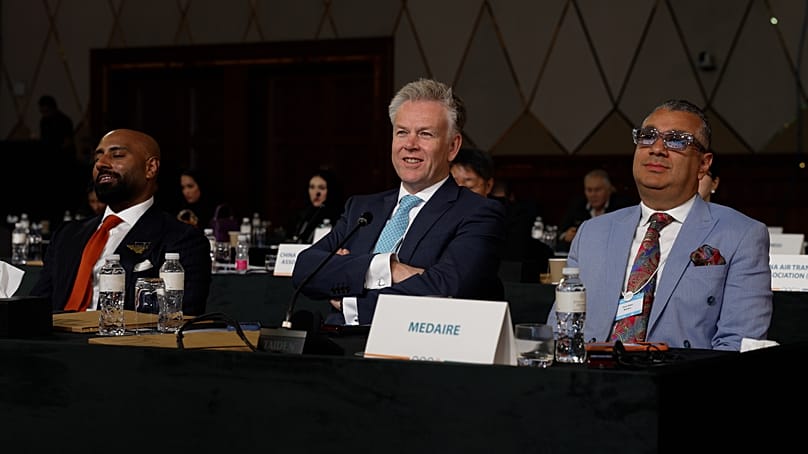
Bakr, whose organisation works with more than 250 airlines and cargo operators to provide health and security risk management, told Euronews that the current situation in the region has experienced a "very volatile" period, with "direct threats" impacting the industry. MedAire analysts have been working to provide carriers with intelligence to help inform operational decision making.
For passengers, Bakr’s advice was to maintain situational awareness and have faith in air carriers' risk management frameworks.
"A lot of those events today are beyond the control of airlines and are due to regional events,” he said. “Air carriers are building a great level of resilience to continue to fly and to get people from A to B safely."