




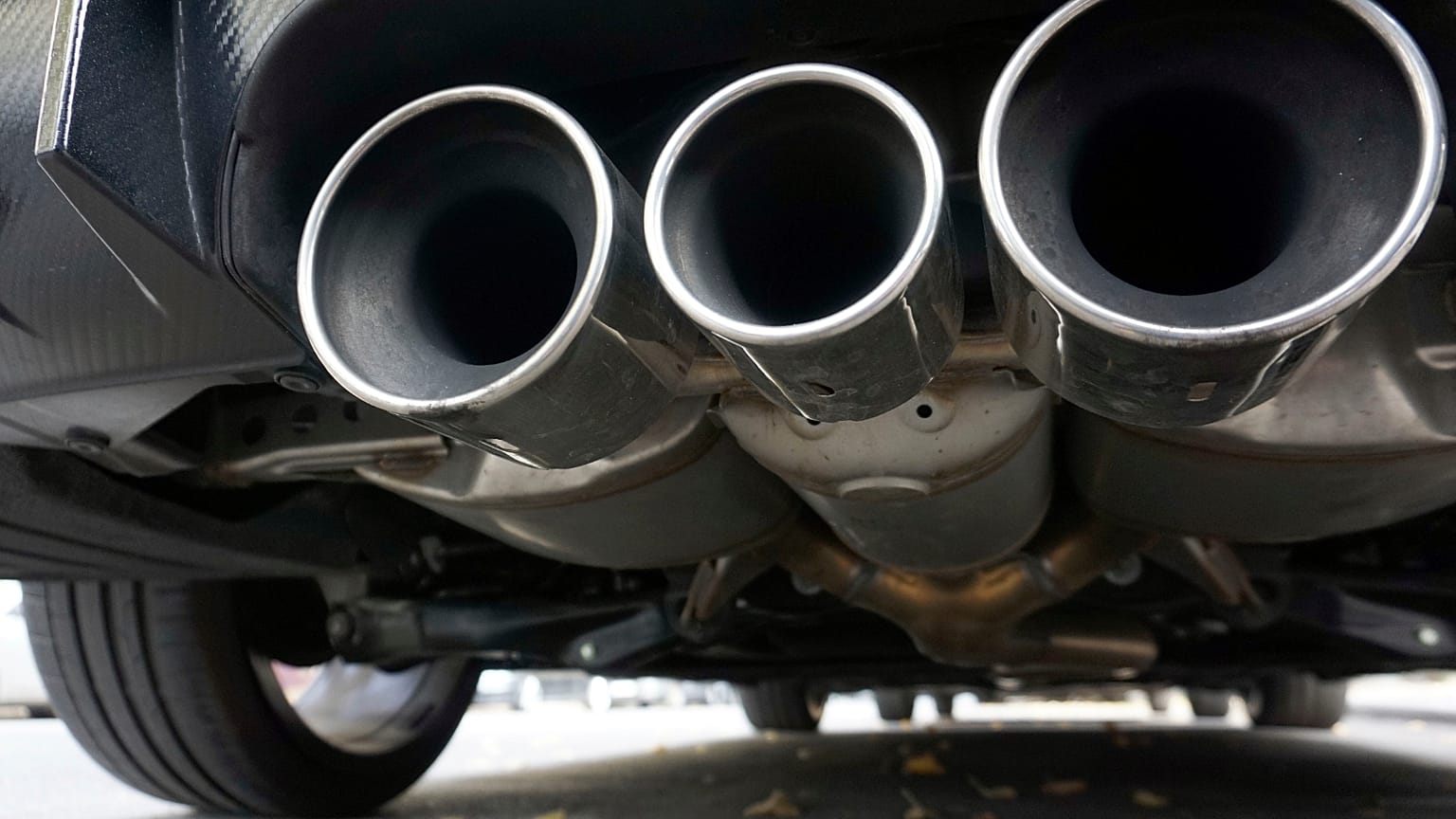













The reversal marks a striking political U-turn from 2023, when the EU agreed to effectively end sales of new petrol and diesel cars by 2035. Today's vote to give carmakers more flexibility comes after heavy pressure from the auto sector and EU governments.
European Parliament lawmakers on Wednesday backed a relaxation of the EU’s 2035 car emissions target from 100% to 87.5%, as pressure mounts on Brussels to give the struggling automotive industry more flexibility in its transition to electric vehicles.
 ADVERTISEMENT
MEPs on the Parliament’s environment committee voted to ease emissions requirements for new cars and vans, allowing manufacturers more leeway to meet their climate obligations.
The move goes further than the European Commission’s proposal, which would have lowered the 2035 target from a 100% reduction in emissions to a 90% cut.
Under the parliamentary compromise, manufacturers using climate-friendly steel would receive an additional 7.5% credit, while the target for vans would fall from 90% to 80%.
The vote marks a significant shift in EU climate policy and the balance of power in Parliament, where a broad political consensus once supported progressively tighter CO2 emissions standards.
With soaring energy costs threatening Europe's industrial competitiveness, lawmakers are increasingly focused on protecting the automotive industry. EU car production remains roughly 19% to 20% below pre-pandemic levels in 2019, according to the think tank Bruegel.
The compromise was negotiated by the centre-right European People's Party (EPP), the centre-left Socialists and Democrats (S&D) and the centrist Renew Europe group, reflecting the EPP's longstanding demands for greater flexibility for carmakers facing fierce competition from China, sluggish electric vehicle sales and rising production costs.
The three groups had already reached a compromise, with a similar version approved by Parliament's transport and industry committees on October 22.
Italian MEP Massimiliano Salini, the EPP's lead negotiator on the legislation, hailed the vote as a victory for his group's campaign to relax the restrictions on combustion engines.
“The EPP Group managed to bring Europe’s political centre together behind a clear objective: backing our car industry, protecting European jobs and giving manufacturers the freedom to develop the best technologies,” Salini said.
The EPP, which previously helped sustain EU climate legislation alongside the Socialists, Liberals and Greens, has increasingly challenged the pace and design of the green transition, at times joining forces with the far right.
The Greens have warned that the move threatens the cross-party consensus that underpinned Commission President Ursula von der Leyen's Green Deal.
Breaking with the past
The vote marks a shift away from the EU's original plan to effectively end sales of new combustion engine cars from 2035, despite backing from several EU countries and electric lobby groups.
The Green Deal was a flagship achievement of the 2019–2024 European Parliament, when the Greens held 18 more seats than they do today.
The original 2035 zero-emission target for new cars and vans was ultimately adopted in 2023, despite resistance from parts of the centre-right. The Greens were among its strongest defenders, seeing it as essential to give manufacturers a clear investment signal and accelerate the shift to electric vehicles.
However, the current reversal is also a reflection of the political pressure that has built up since then, with several critics arguing the EU lacks adequate charging infrastructure for the uptake of EVs.
Faced with mounting demands from carmakers and national governments, particularly Germany and Italy, the Commission rolled back its original proposal in December 2025, proposing instead to weaken the 2035 target from a 100% to a 90% reduction in tailpipe emissions.
The remaining 10% could be compensated through credits linked to EU-made low-carbon steel and sustainable fuels. This would allow plug-in hybrids and even diesel- and petrol-powered vehicles to remain on the market beyond 2035 — a significant concession to the argument that the green transition must not come at the expense of industrial competitiveness.

EPP push tech flexibility
The EPP argues that carmakers need more technological leeway to remain competitive and protect jobs. The compromise with the S&D and Renew suggests that concerns about industrial competitiveness are increasingly cutting across traditional political divisions in the Parliament.
Overall, the political agreement forged on Wednesday reflects growing unease among EU governments and lawmakers about the speed and cost of the automotive transition.
Germany and France, home to two of Europe's largest automotive industries, have been among those calling for greater flexibility, carving out their own Franco-German car deal, in which climate-friendly steel plays a much smaller role.
Veteran German MEP Peter Liese, the EPP's climate policy spokesperson, hailed the political will from the different groups.
"We want climate neutrality, but with the rules we have now agreed on, we are also ensuring technology neutrality. I am personally convinced that the future belongs to electric cars. But electric vehicles with range extenders and plug-in hybrids with a long electric range will also have a role to play in 2035 and beyond," Liese said.
Green lawmakers have criticised the proposed changes, warning that weakening the 2035 requirements could slow the transition to electric mobility and undermine investment certainty for manufacturers that have already committed to electrification.
German Green MEP Michael Bloss described the vote as a "bad deal" for the European car industry, saying the political back-and-forth is more harmful than the high production costs in Europe.
"While sales of electric cars are skyrocketing, the majority of the European Parliament is sending a signal of uncertainty. The fact that Social Democrats and Conservatives are helping to jeopardise investment security and industrial jobs is a contradiction that could hardly be more glaring," Bloss told Euronews.
"Europe has the factories and skilled workers to build top-of-the-line cars for the electric age, but it needs clear political support for this direction.”
The deal must still secure the backing of Parliament's full plenary and survive negotiations with EU member states before becoming law.